European Union
 Confederate
 Rainbow
 Other Pride
 Red Ensign
 RAF Ensign
 Yorkshire
 Cornwall
 Union Jack
 England
 Scotland
 Wales
 USA
 Ireland
 France
 Germany
 Italy
 Australia

Up Helly Aa is Shetland's fire festival, held in Lerwick on the last Tuesday of January, when hundreds of torch-carrying guizers march through the town and set a full-size replica Viking galley alight. It celebrates Shetland's Norse heritage, and the blue-and-white Shetland flag is everywhere: on buildings, in windows and in the hands of the crowd. Here is how the day works, a little of its history, and where the Shetland flag comes from.
When is Up Helly Aa?
The Lerwick festival is held on the last Tuesday in January. The following day is traditionally a local holiday in Lerwick, as most people have been up through the night.
| Year | Lerwick Up Helly Aa |
|---|---|
| 2027 | Tuesday 26 January |
| 2028 | Tuesday 25 January |
| 2029 | Tuesday 30 January |
| 2030 | Tuesday 29 January |
Smaller rural Up Helly Aas take place around Shetland from January to March, each with its own date and character. Check the official Up Helly Aa and Shetland tourism websites for confirmed dates before booking travel.
How the Lerwick Up Helly Aa day unfolds
- The Guizer Jarl. The festival is led by the Guizer Jarl, the chief guizer, who takes on the character of a figure from the Norse sagas. The role goes to a long-serving member of the organising committee, and the Jarl spends years preparing.
- The Jarl Squad. The Jarl and his squad, in Viking costume with helmets, shields and axes, parade through Lerwick during the day, visiting schools, care homes and the town's public buildings.
- The Bill. A large board known as the Bill is put up at the Market Cross. It pokes gentle fun at local people and events of the past year.
- The torchlight procession. After dark, the guizers light their torches and march through the streets, with the galley at the head of the procession.
- The burning. The torches are thrown into the galley, which burns while the crowd sings the traditional songs.
- The halls. Through the night, dozens of squads, each with its own costume and comic act, perform at a series of halls around the town, where the parties go on until the morning.
A short history of Up Helly Aa
The name comes from the old Scots for the end of the Yule season. In the first half of the nineteenth century, young men in Lerwick marked the end of the holiday by dragging burning tar barrels through the streets. This was rowdy and dangerous, and by the 1870s it had been replaced by organised guizing and a torchlight procession. Interest in Shetland's Viking past grew in the Victorian period, and the first galley was burned in 1889. Apart from interruptions for the World Wars and, more recently, the Covid pandemic, the festival has been held most years since.
The festival has also changed in recent years. For most of its history only men and boys took part in the Lerwick procession. The organisers changed this from 2023, when women and girls joined squads for the first time, and women and girls joined the Jarl Squad itself for the first time in 2024. Several rural festivals had already included women for some years.
The Shetland flag
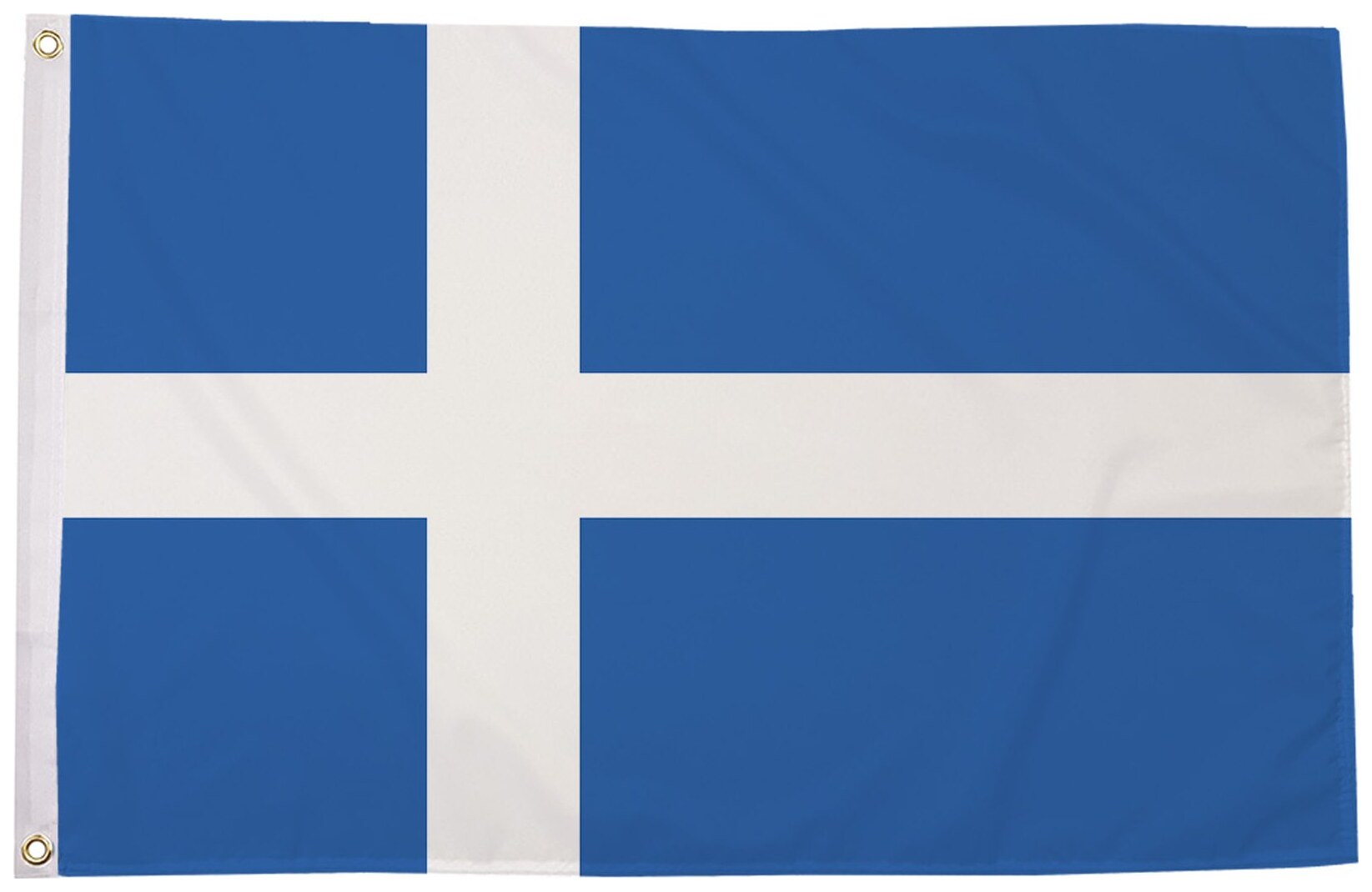
The Shetland flag is a white Nordic cross on a blue field. The blue and white come from Scotland's Saltire, and the off-centre Nordic cross reflects Shetland's links with Norway and the other Nordic nations, which ruled the islands until they passed to the Scottish crown in 1469. It was designed in 1969, the 500th anniversary of that transfer, by Roy Grønneberg and Bill Adams. It was flown unofficially for decades and was formally granted by the Lord Lyon King of Arms in 2005.
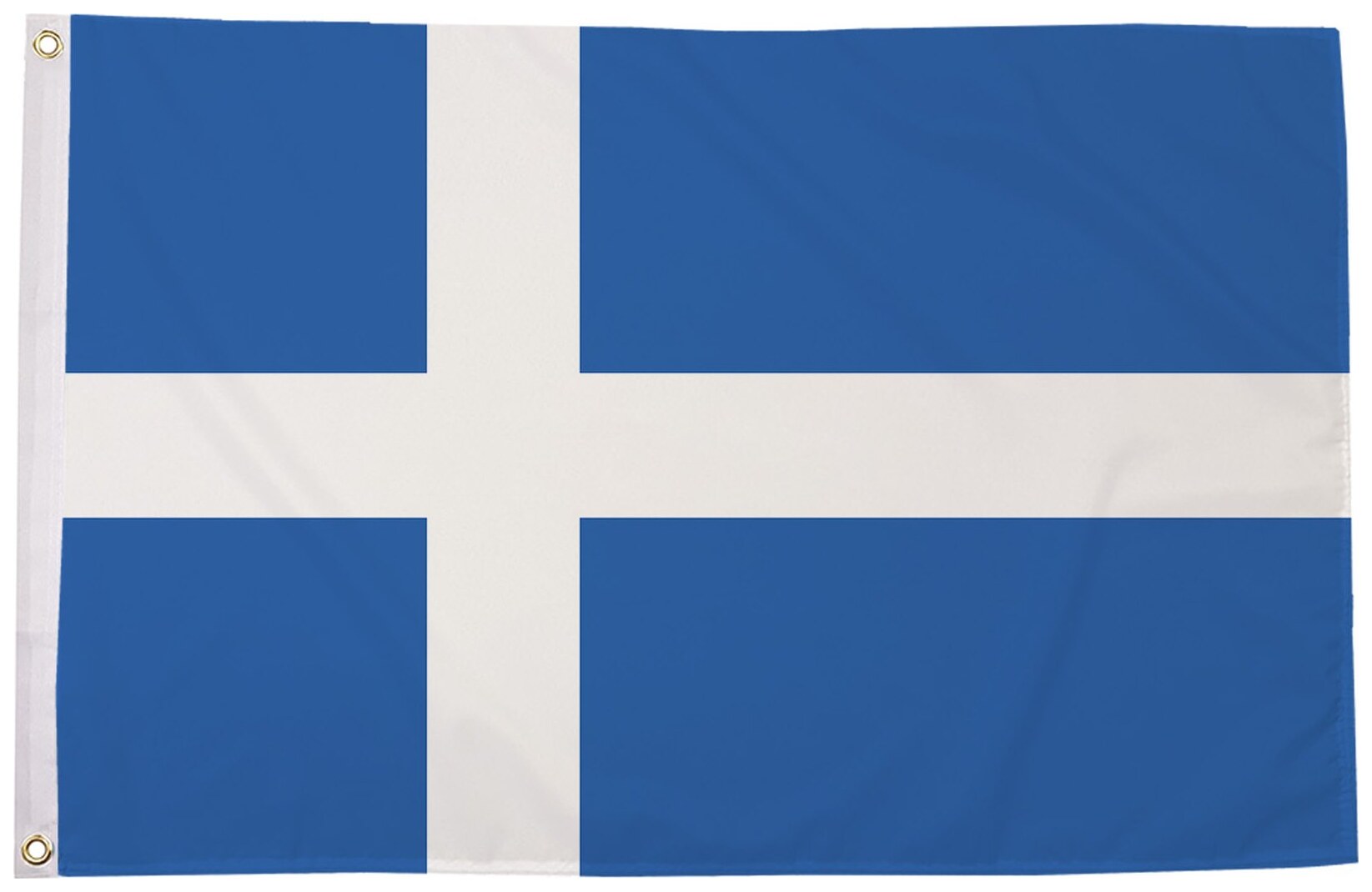
Around Up Helly Aa it is flown from buildings across Lerwick, and many households and businesses fly it all through January. Shetlanders and visitors who want to join in can choose from:
- A 5ft x 3ft printed flag for a window or a short-term display;
- A Shetland DuraFlag for a flagpole, with a reinforced header and stitched fly end to stand up to the islands' winter gales;
- Shetland bunting for a hall or function room;
- A Shetland table flag for a desk or a dinner table.
Orkney has a Nordic cross flag of its own (red and yellow on blue). For more on both island groups, see our Shetland Day and Orkney Day posts, and our guide to UK county flags.
Frequently asked questions
Can visitors watch Up Helly Aa?
Yes. The daytime parade and evening procession are free to watch from the streets of Lerwick. Entry to the halls is by ticket, and accommodation books up early.
Is Up Helly Aa a real Viking festival?
Not directly. It is a Victorian festival that grew out of older Yule customs, built around pride in Shetland's Norse past.
Can women take part in Up Helly Aa?
Yes. Since 2023 women and girls have taken part in the Lerwick procession, and they joined the Jarl Squad for the first time in 2024.
Why does the Shetland flag have a Nordic cross?
Shetland was Norse for centuries before passing to Scotland in 1469. The cross reflects that heritage, and the colours come from the Saltire.
Flying the flag for Up Helly Aa? Browse our county and regional flags, including the Shetland flag, and the wider Scotland flags range.