England
 Scotland
 Wales
 USA
 France
 Germany
 Spain
 Italy
 Australia
 European Union
 Confederate
 Rainbow
 Other Pride
 Red Ensign
 RAF Ensign
 Yorkshire
 Cornwall
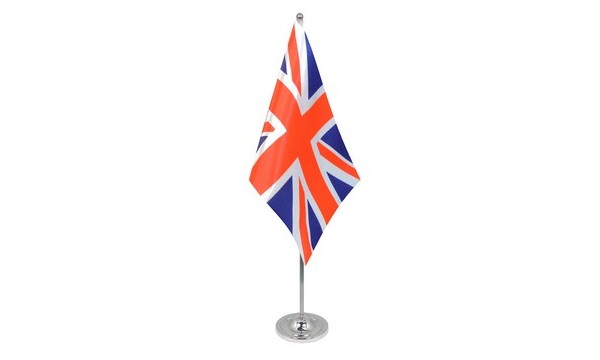
 Union Jack
 Ireland

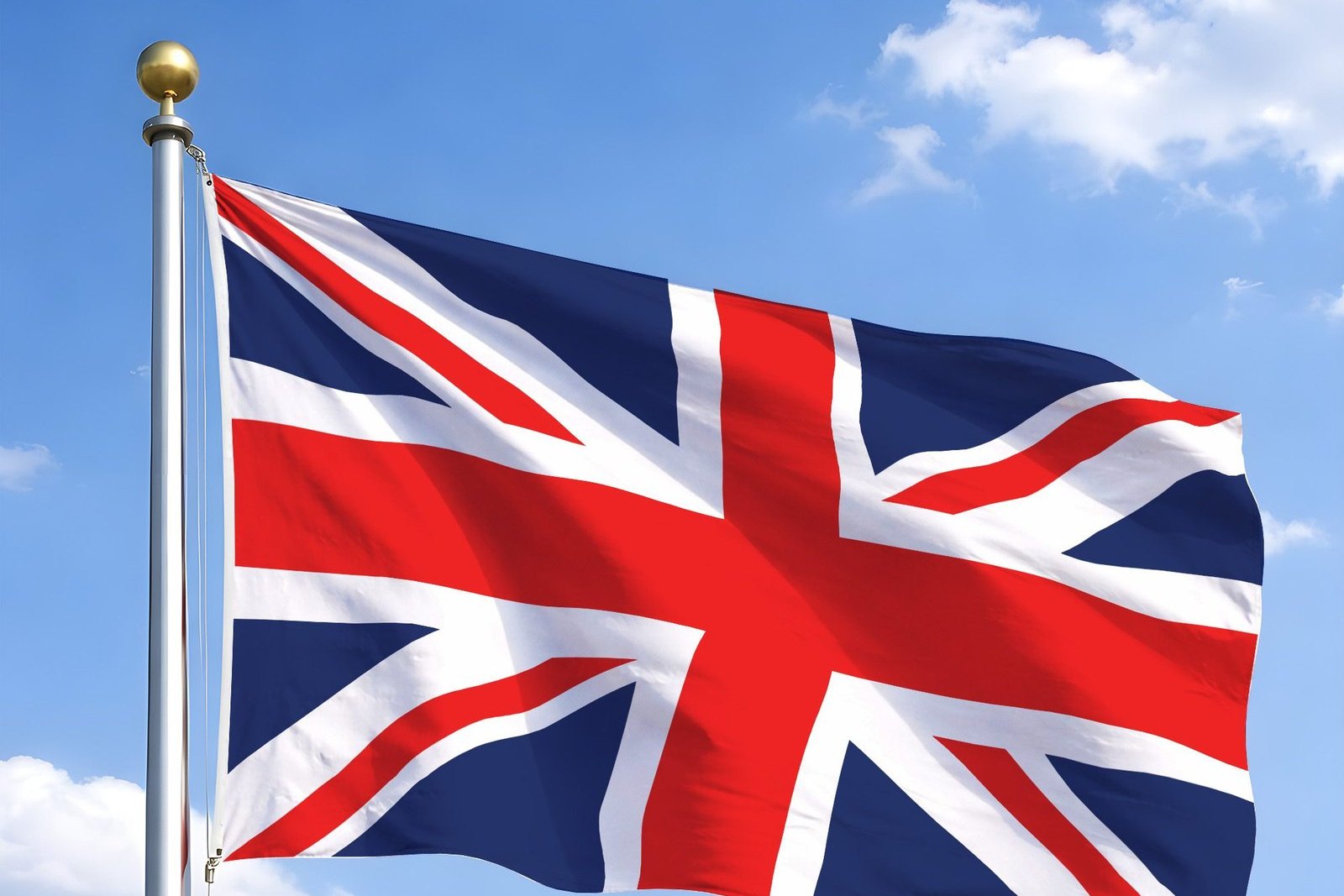
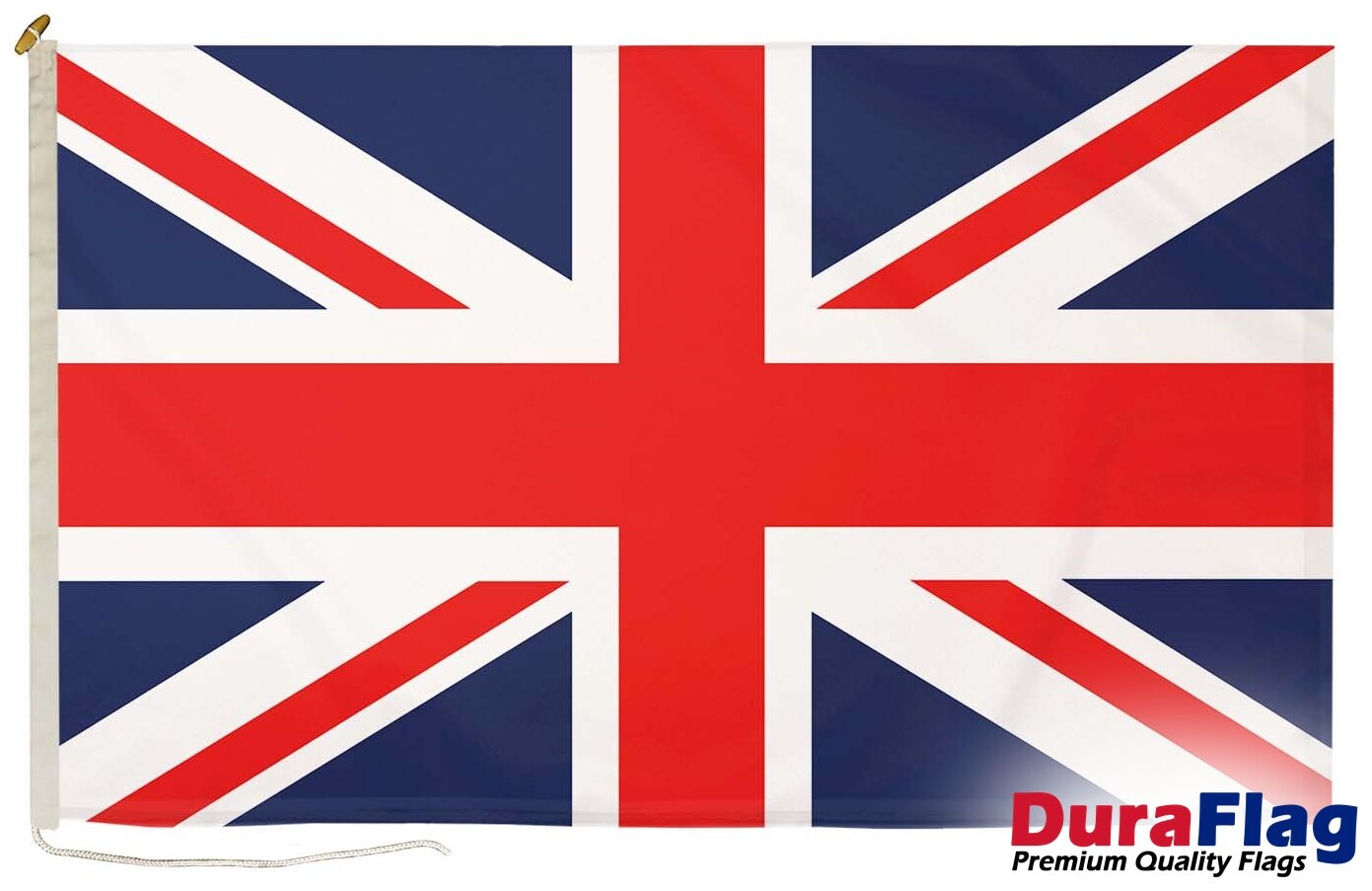
UK flag etiquette is simpler than many people think. Fly the Union Jack the right way up, with the broad white diagonal above the red in the top corner nearest the pole. You can fly it on any day, normally from sunrise to sunset or at night if it is lit, and the senior flag always takes the position of honour. Keep your flag in good condition and, when it is worn out, dispose of it respectfully.
Quick answer: right way up, any day, sunrise to sunset (or lit at night), senior flag in the position of honour, half-mast about two-thirds up the pole, full mast on Remembrance Sunday, and a worn-out flag cut into strips rather than burnt.
Flying the Union Jack the right way up
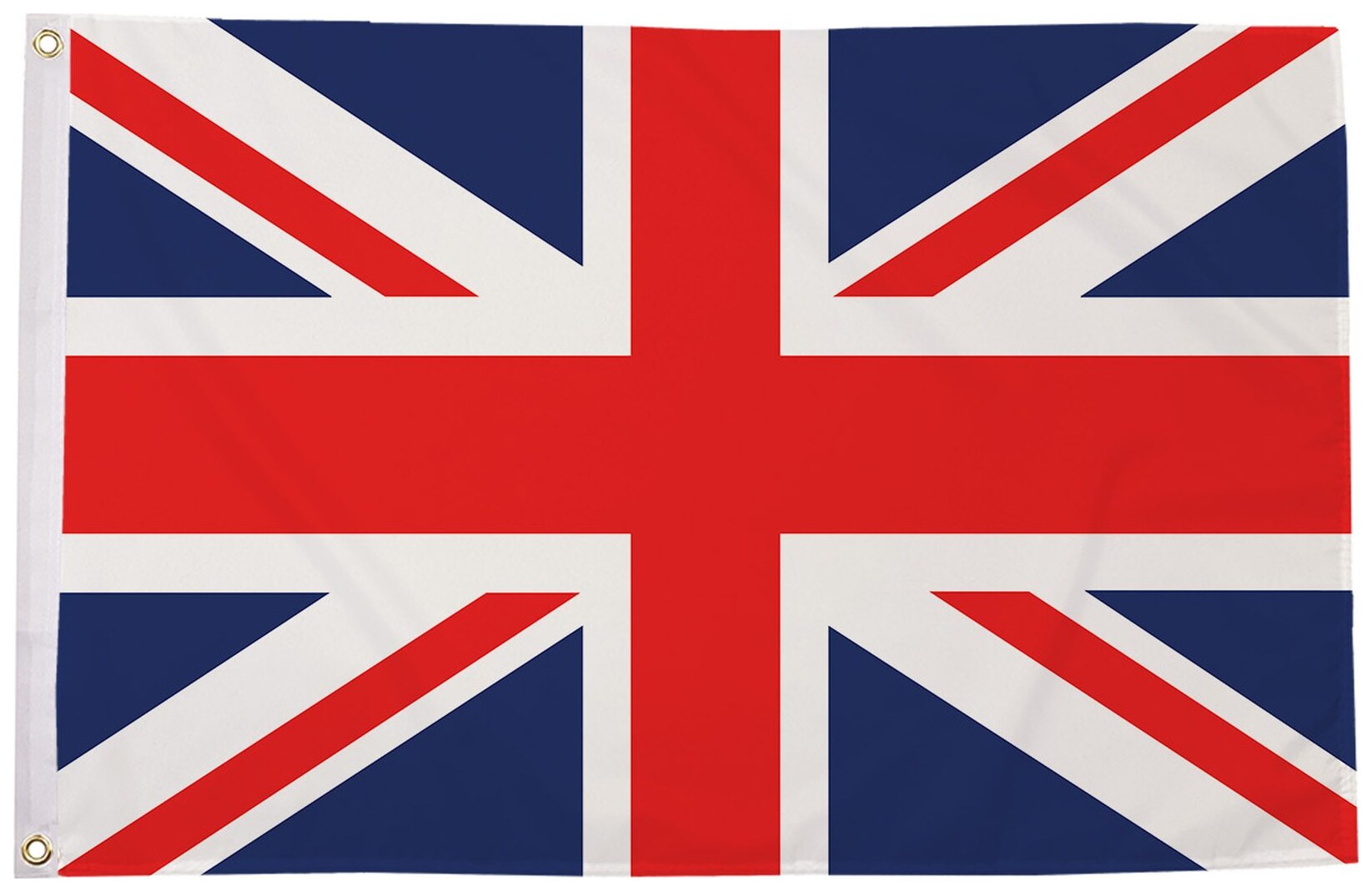
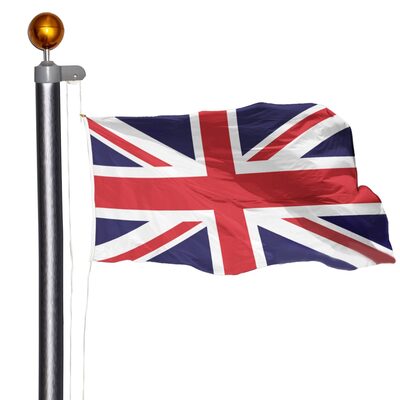
The Union Jack is not symmetrical, so it can be flown upside down by mistake. In the half nearest the pole (the hoist), the broad white diagonal should be above the red diagonal in the top corner. Flying it upside down is traditionally a signal of distress, so it is worth checking. Our guide Is your Union Jack upside down? walks through a quick five-second check.
Union Jack or Union Flag?
Both names are correct. The Flag Institute accepts both "Union Flag" and "Union Jack", and the idea that it may only be called the Union Jack at sea is a myth. You can read more in our guide Union Jack or Union Flag.
When you can fly a flag
There is no rule restricting the Union Jack to special occasions. Flags can be flown on any day of the year. By convention they are flown from sunrise to sunset, or at night if the flag is illuminated. Since 2021, government guidance has allowed the Union Flag to fly every day on UK Government buildings.
Designated flag days
The UK Government publishes a list of designated days for flying flags on its buildings. These include:
- St David's Day (1 March)
- Commonwealth Day (second Monday in March)
- St Patrick's Day (17 March)
- St George's Day (23 April)
- Coronation Day (6 May)
- The King's Official Birthday (June)
- Remembrance Sunday
- The King's Birthday (14 November)
- St Andrew's Day (30 November)
There are also a number of royal birthdays and anniversaries; the full list is published each year on gov.uk. Private flyers are free to follow it or not.
On the patron saints' days, many people choose the relevant national flag. On St George's Day, for example, the flag most people fly in England is the St George's Cross, which you will find in our England flags collection, rather than the Union Jack.
The position of honour
When flags are flown together, one of them holds the position of honour. The senior flag is raised first and lowered last.
- Parallel poles: the senior flag goes on the left as an observer faces the building or entrance.
- On a platform: the senior flag goes on the speaker's right.
Which flag counts as senior is set by the order of precedence, covered below.
Two flags on one pole
Flying two flags on a single pole is only appropriate if both flags are British. The senior flag goes on top, with a gap of about 30 cm between the two. Never fly a foreign national flag below another flag on the same pole; each nation's flag should have its own pole.
Flags of equal size
When several flags are flown together, they should ideally be the same size (the same width) and on poles of the same height. This avoids any suggestion that one nation or organisation is being given less importance than another.
Order of precedence
In the UK, the general order runs from the Royal Standards and the Union Flag, through the national flags of England, Scotland, Wales and Northern Ireland, the ensigns, other nations' flags and international organisations, down to county, city and company flags. The Royal Standard flies when the monarch is in residence, and the Union Flag when they are not. For the full order and how to apply it, see our guide to the flag order of precedence.
Half-mast
A flag at half-mast is a mark of mourning. It is flown about two-thirds of the way up the pole, with at least the height of the flag clear above it. To half-mast a flag, raise it to the top first, pause, then lower it to the half-mast position. When taking it down, raise it to the top again before lowering it fully. The Royal Standard is never half-masted.
Official half-masting happens on the instruction of the monarch or government, for example following the death of the sovereign or a member of the Royal Family, a former Prime Minister or a national tragedy. Private flyers may also half-mast for their own reasons, such as the death of a club member. Our guide to half-mast rules in the UK covers this in more detail.
Remembrance Sunday
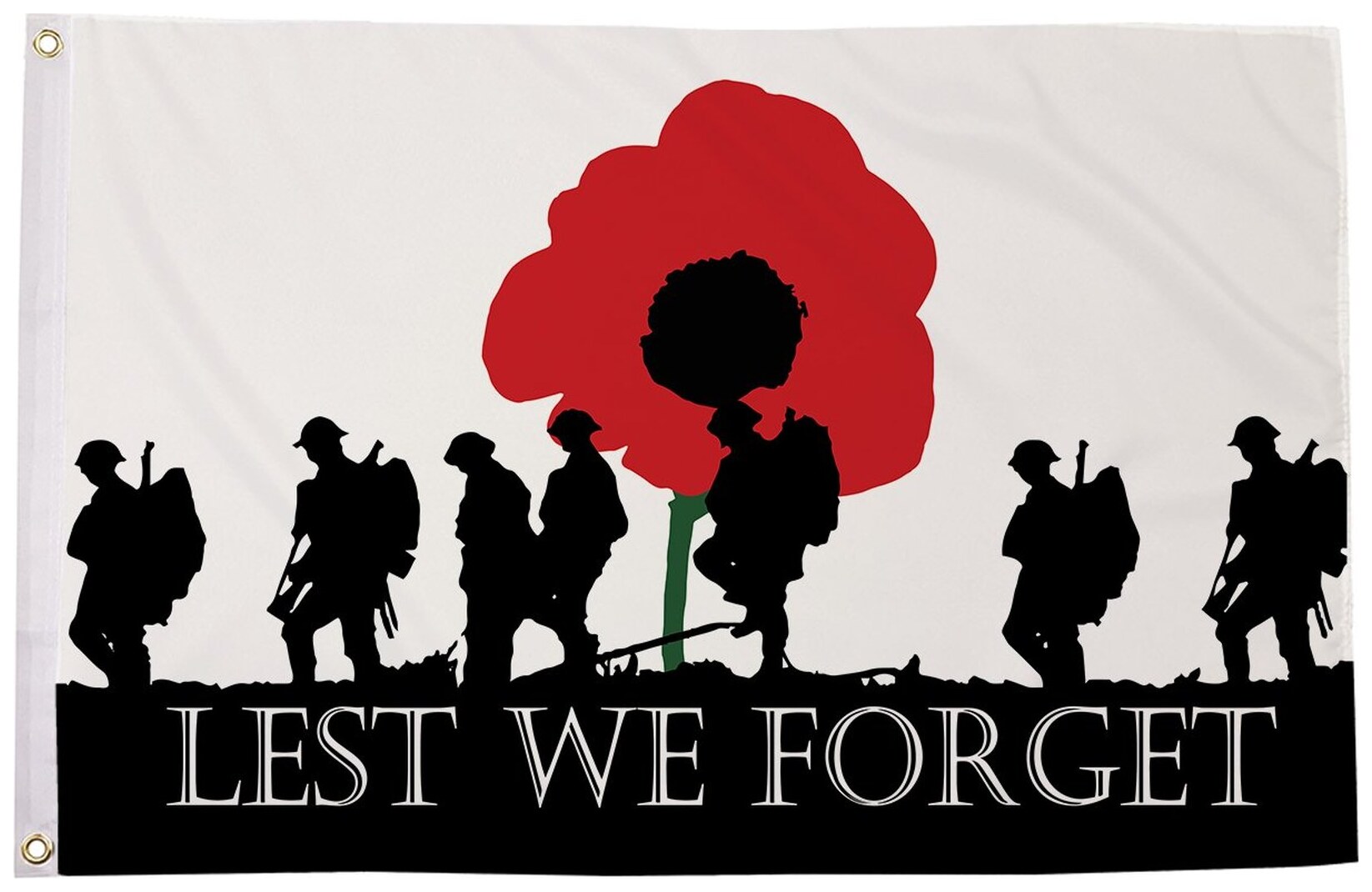
Remembrance Sunday is a designated flag day, and flags fly at full mast. It is a common mistake to half-mast flags on Remembrance Sunday; the flag is flown at the top of the pole. Many people also choose remembrance flags at this time of year, such as those in our Lest We Forget collection.
Common myths, corrected
- "Half-mast means one-third of the way up." It does not. Half-mast is about two-thirds of the way up the pole, with at least the flag's own height clear above it.
- "It is only a Union Jack at sea." Not so. Both Union Jack and Union Flag are acceptable names on land or at sea.
- "Flags go to half-mast on Remembrance Sunday." They fly at full mast.
- "You can only fly the Union Jack on special days." You can fly it on any day.
Keeping your flag in good condition
A national flag should be treated with respect, and that includes not flying it when it is badly faded, frayed or torn. Fraying starts at the fly end, so trimming and re-hemming at the first sign helps. Take flags down in strong winds, and consider owning two so you can rotate them. If you fly the Union Jack regularly, a well-made Union Jack flag kept in good order always looks its best.
Disposing of a worn-out flag
When a flag has reached the end of its life, dispose of it respectfully. The usual method is to cut it into strips so that it no longer resembles the flag. Avoid burning it, as burning polyester gives off harmful fumes.
Frequently asked questions
Can I fly the Union Jack every day?
Yes. Flags can be flown on any day, normally from sunrise to sunset, or at night if the flag is lit.
Where does the senior flag go on two poles?
On the left as an observer faces the building or entrance. It is also raised first and lowered last.
How far down is half-mast?
About two-thirds of the way up the pole, with at least the height of the flag clear above it, not one-third.
Are flags at half-mast on Remembrance Sunday?
No. On Remembrance Sunday flags fly at full mast.
Can I fly two flags on one pole?
Only if both are British. The senior flag goes on top, with about 30 cm between them. Never fly a foreign national flag below another on the same pole.
How do I get rid of an old flag?
Cut it into strips so it no longer resembles the flag, then dispose of it. Do not burn polyester flags.
Ready to fly the flag correctly? Browse our Union Jack flags in sizes and fabrics for every pole and occasion.