England
 Scotland
 Wales
 USA
 France
 Germany
 Spain
 Italy
 Australia
 European Union
 Confederate
 Rainbow
 Other Pride
 Red Ensign
 RAF Ensign
 Yorkshire
 Cornwall
 Union Jack
 Ireland
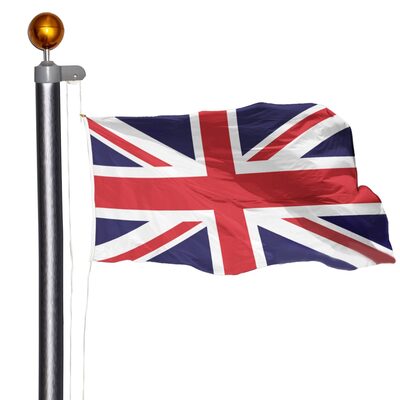

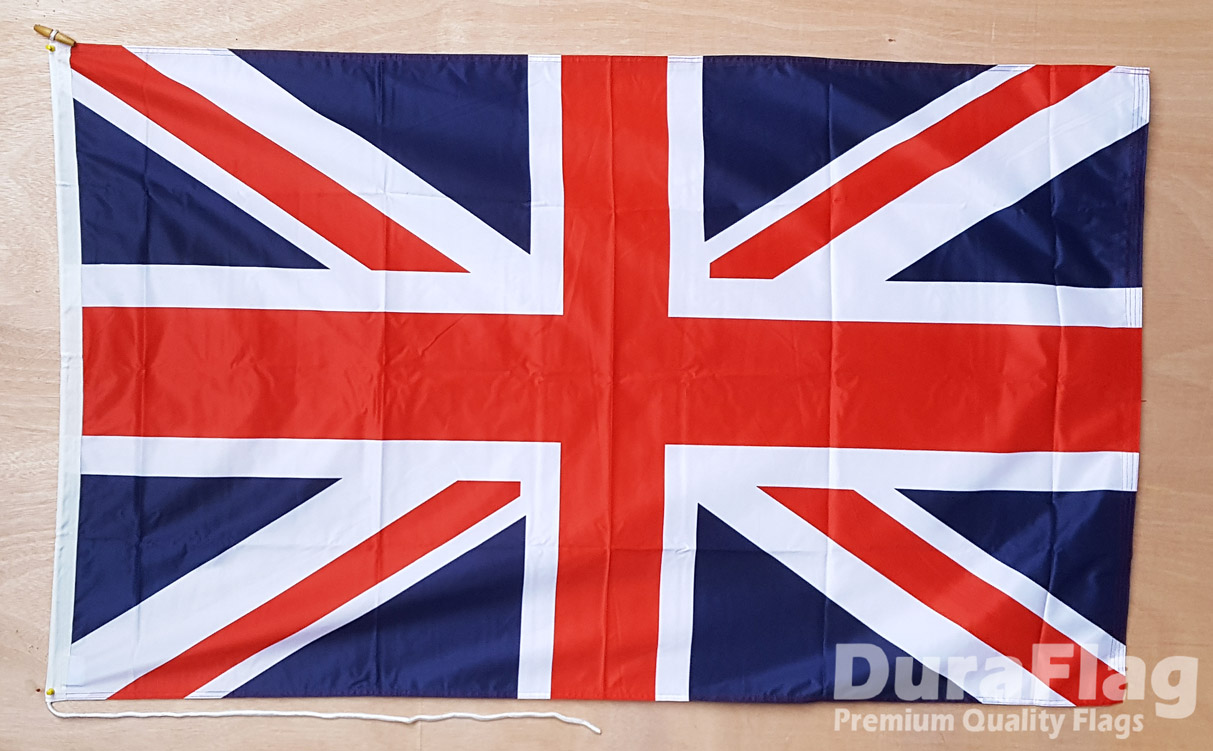
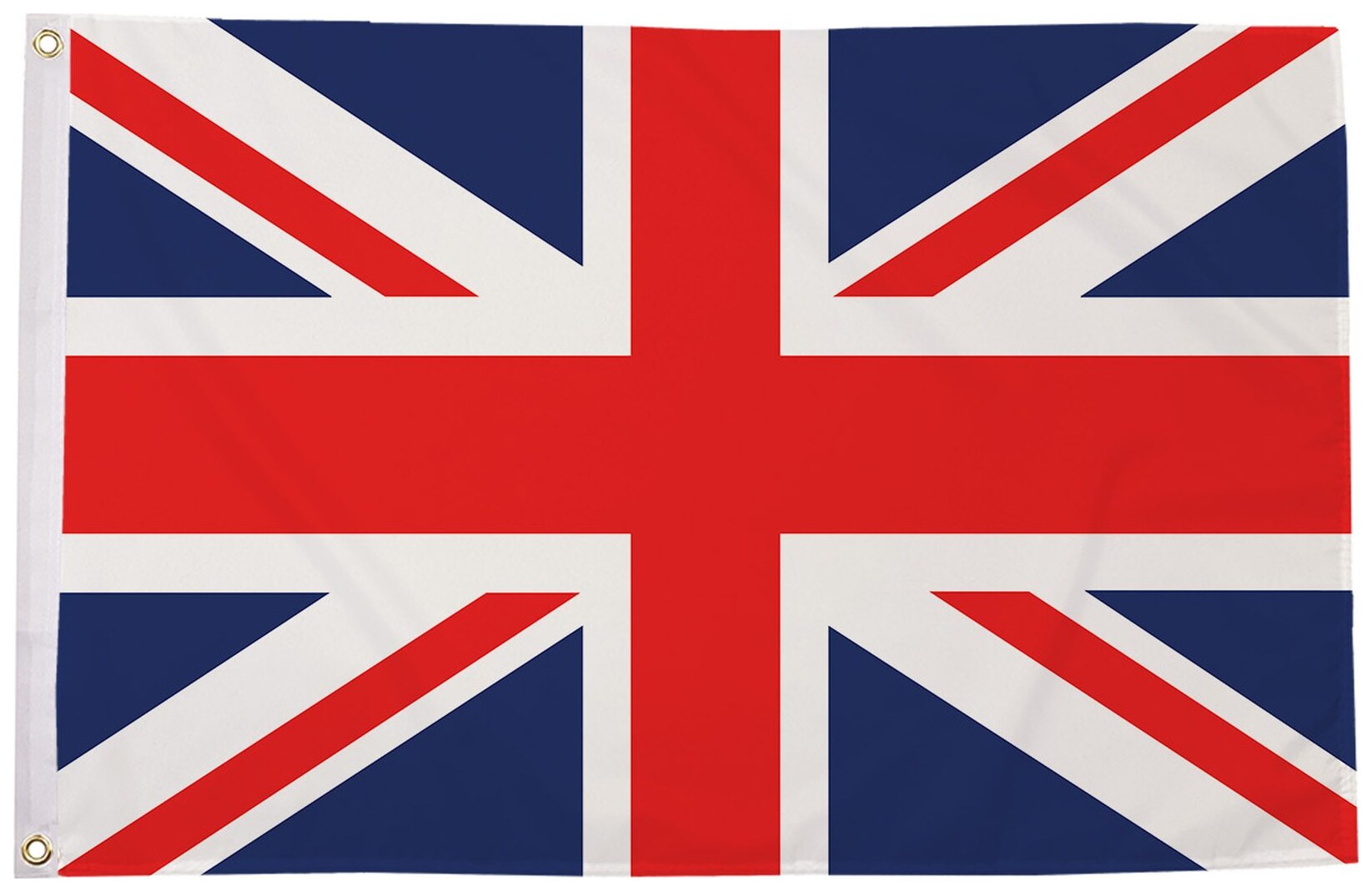
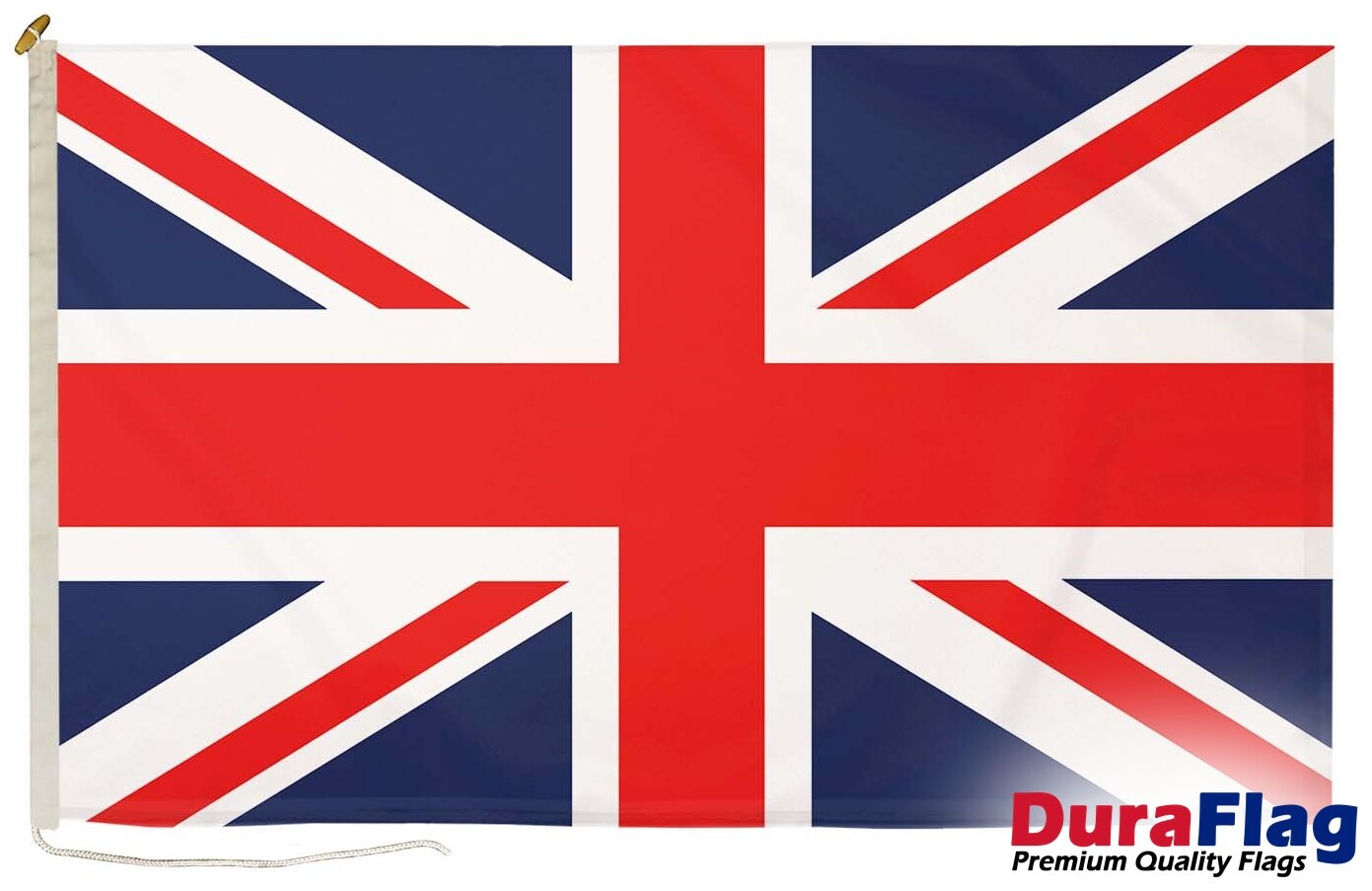
To tell if a Union Jack is upside down, look at the top corner nearest the pole. The broad white diagonal stripe should sit above the red diagonal stripe. If the narrow white stripe is on top and the broad white is underneath the red, the flag is upside down.
Quick answer: top corner, pole side: broad white on top of the red. If you see the thin white on top, turn the flag over.
Why it is easy to get wrong
At a glance, the Union Jack looks symmetrical, so most people assume it cannot be upside down. In fact, the red diagonal stripes are not centred on the white ones. Each red diagonal sits off to one side, with a broad band of white on one side and a narrow band on the other. Turn the flag over and the broad and narrow bands swap places.
You are in good company if you have never noticed. In a 2017 YouGov survey, only 45% of Britons could spot an upside-down Union Flag.
The five-second check, step by step
- Find the hoist. This is the edge of the flag nearest the pole, where the eyelets, rope or sleeve are.
- Look at the top corner on that side. Ignore the rest of the flag for now.
- Find the red diagonal in that corner. It runs from the corner towards the centre of the flag.
- Check which white band is above it. Above the red, you should see the broad white band. Below it, the narrow white band.
- If it is the other way round, turn the flag over. Swap the top and bottom of the hoist and check again.
A simple way to remember it: in the top corner by the pole, wide white on top.
Why the design is not symmetrical
The first Union Flag, created in 1606 under James VI of Scotland and I of England, combined the red cross of St George for England with the white saltire (diagonal cross) of St Andrew for Scotland. The current design dates from 1 January 1801, when the red saltire of St Patrick was added to represent the union with Ireland.
Adding the red saltire raised a design problem: neither Scotland's white saltire nor Ireland's red saltire should appear to sit on top of the other. The solution was to counterchange St Patrick's saltire, offsetting the red diagonals so that the white of St Andrew takes precedence in some quarters and the red of St Patrick in others. That offset is what creates the broad and narrow white bands, and why the flag has a right way up.
Wales does not appear separately on the flag because it was already united with England when the first Union Flag was made.
Why it matters
Flying a flag upside down is traditionally a signal of distress. Most people who see an upside-down Union Jack will assume it is a simple mistake, but for a national flag it is worth getting right, particularly on a public building, at a business or at an event. For wider guidance on flying the flag properly, see our guide to UK flag etiquette.
Flags hung on a wall
When a flag is fixed flat to a wall with no pole, the same rule applies. Decide which side would be nearest the pole (usually the side with the eyelets or header band) and treat that as the hoist. In the top corner on that side, the broad white should be above the red. If the flag has a header band, keeping the header on the left as you look at it, with the broad white on top in the top-left corner, is the usual arrangement.
Hanging a Union Jack vertically
Hanging a flag vertically, for example from a window or a balcony, can be confusing because the flag has been turned. Keep it simple: keep the broad white uppermost on the hoist side. In other words, the top corner on the side where the pole would be should still show the broad white above the red. If you are unsure, check the flag carefully before you fix it in place, as it is much easier to turn it over at that stage.
Union Jack bunting
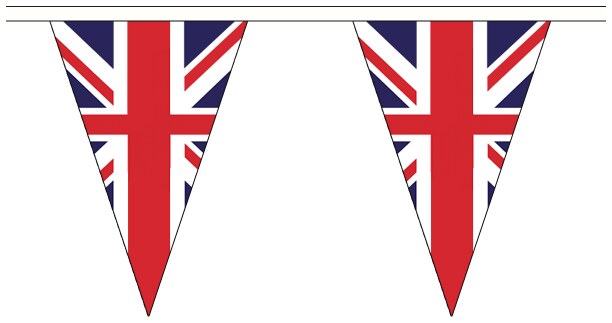
Bunting is where upside-down Union Jacks appear most often, because there are many small flags in a row and they are easy to put up without looking closely. Check before you hang it:
- Lay out a short section of the bunting with the tape along the top.
- Treat the tape edge as the top of each flag and the side the flag would naturally fly from as the hoist.
- Check the top corner on the hoist side shows the broad white above the red.
- Glance along the rest of the length to make sure every flag matches.
Our Union Jack rectangular bunting has woven polyester 9x6in flags on strong polyester tape, sold in 3 m lengths with 10 flags and 9 m lengths with 30 flags.
Table flags and hand flags
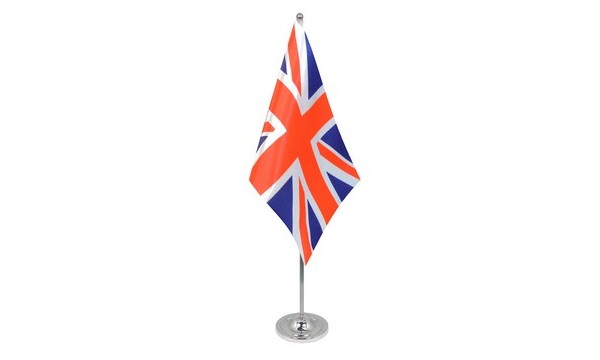
Table flags and hand-waving flags are fixed to a small pole, so the pole side is easy to find. Before you place them on a table or hand them out, take a second to check the top corner nearest the pole shows the broad white above the red. If a flag has been fitted to its pole the other way round, it will be upside down every time it is used. Our Union Jack small table flag is a 6x4in polyester flag on a black plastic pole, ideal for desks, receptions and functions.
The same tip applies to printed bunting and hand flags at street parties and events: check a few before hanging or handing them out, as it is much quicker than correcting them afterwards.
Frequently asked questions
How can you tell if a Union Jack is upside down?
Look at the top corner nearest the pole. The broad white diagonal should be above the red diagonal. If the narrow white is on top, the flag is upside down.
What does an upside-down Union Jack mean?
Traditionally, flying a flag upside down is a signal of distress. In everyday use it is usually just a mistake.
Why is the Union Jack not symmetrical?
When St Patrick's red saltire was added on 1 January 1801, it was counterchanged with St Andrew's white saltire, offsetting the red diagonals. This creates broad and narrow white bands, so the flag has a right way up.
Is it Union Jack or Union Flag?
Both names are correct, according to the Flag Institute. Our guide Union Jack or Union Flag explains more.
How do I hang a Union Jack vertically?
Keep the broad white uppermost on the hoist side, the side where the pole would be. Check it before fixing the flag in place.
Looking for a new flag to fly the right way up? Browse our full range of Union Jack flags, or see our British hand flags for events and celebrations.