England
 Scotland
 Wales
 USA
 France
 Germany
 Spain
 Italy
 Australia
 European Union
 Confederate
 Rainbow
 Other Pride
 Red Ensign
 RAF Ensign
 Yorkshire
 Cornwall
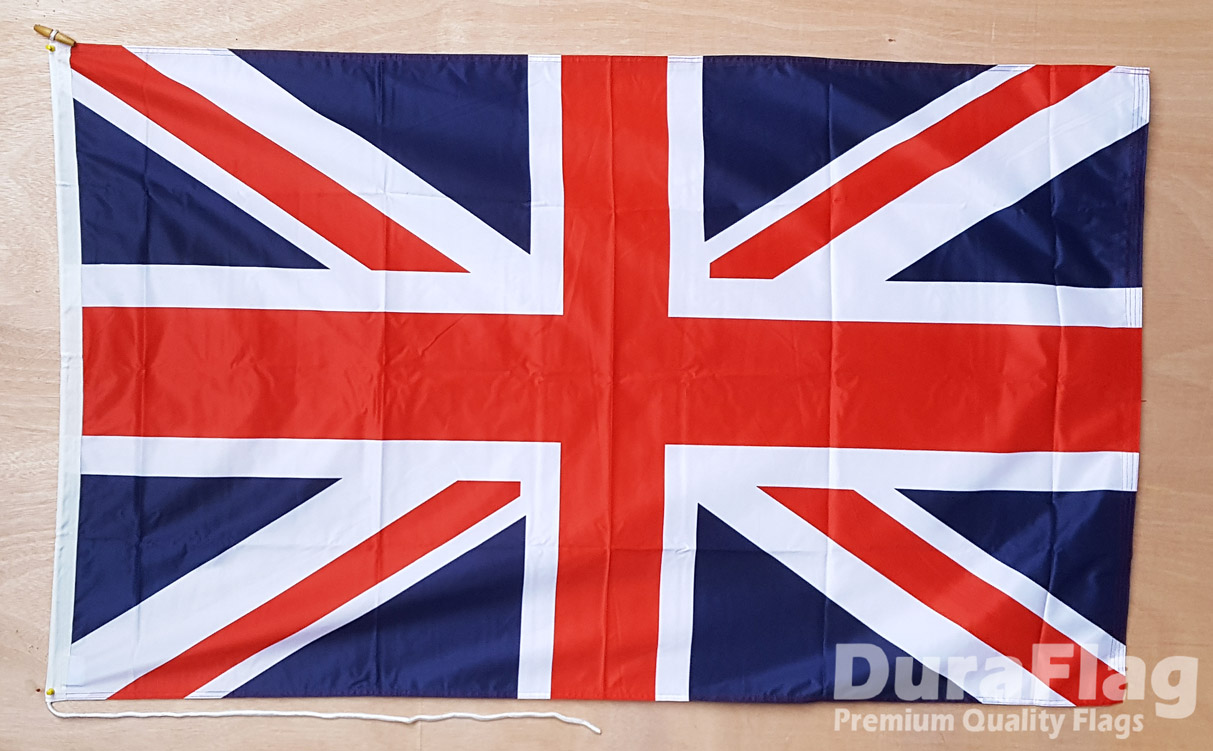
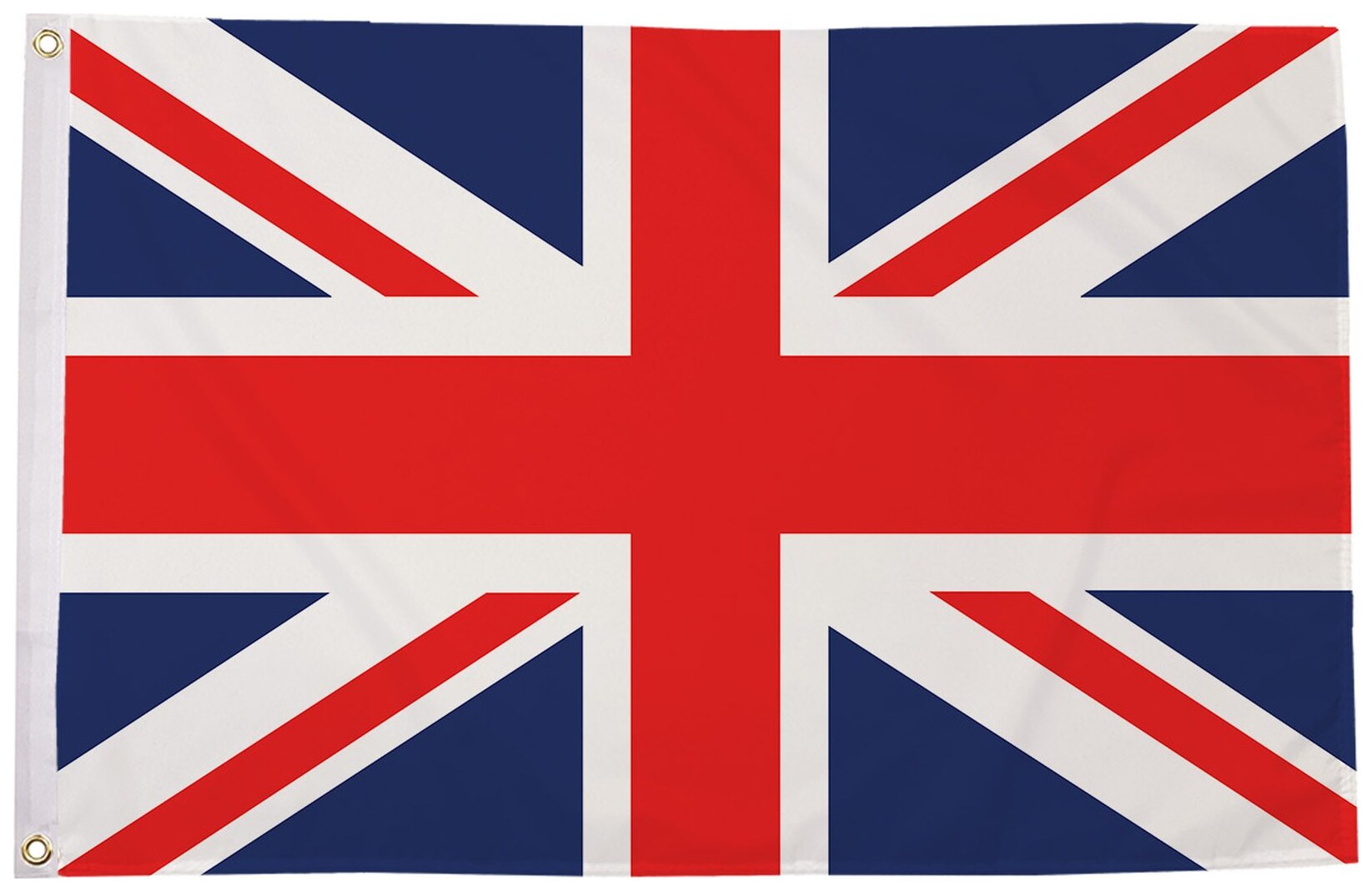
 Union Jack
 Ireland

To wash a flag, check the care label first, then hand wash or use a gentle machine cycle at a cool to warm temperature (up to 40°C) with a mild detergent. Do not use bleach and do not tumble dry. Let the flag dry completely before you fold it away, as a flag stored damp can develop mildew.
Quick answer: care label first, cool wash up to 40°C, mild detergent, no bleach, no tumble dryer, dry fully, then store clean and dry, loosely folded or rolled, out of sunlight.
Why washing and care matter
Dirt, traffic film and grime held in the fabric make colours look dull and add to wear. Regular, gentle cleaning keeps a flag looking smart and gives you a chance to spot fraying or small tears before they spread. Combined with sensible flying habits, it is one of the simplest ways to get more life from a flag. For more on what wears flags out, see our guide to how long a flag lasts outdoors.
How to wash a flag, step by step
- Read the care label. Always follow the instructions on the flag's own label. They take priority over any general advice, including this guide.
- Shake off loose dirt. Give the flag a good shake outdoors to remove dust, leaves and loose grit before it goes near water.
- Choose a cool to warm wash. Hand wash in a bowl or sink, or use a gentle machine cycle, at no more than 40°C.
- Use a mild detergent. A small amount of gentle washing liquid is enough. Avoid strong biological products and stain removers on printed areas.
- No bleach. Bleach can strip the colours from the print and weaken the fabric.
- Rinse thoroughly. Make sure all the detergent is rinsed out, as residue attracts dirt.
- Do not tumble dry. The heat and tumbling action can damage the fabric and stitching.
- Dry fully. Dry the flag completely before storing it or putting it back on the pole.
If your flag has metal eyelets, a toggle or clips, it can help to place it in a laundry bag or pillowcase for a machine wash, so the fittings do not knock against the drum. Our guide to flag fittings explains the different types.
Drying a flag
Hang the flag on a washing line or airer, opened out flat so that air can reach all of it. Avoid leaving it bunched up, which slows drying and can leave creases. Drying in the shade or indoors is kinder to the colours than hours in strong direct sun. Check the header and the fly end in particular, as the extra layers of fabric and stitching there take longer to dry.
If the flag is creased once dry, check the care label before using an iron. Where ironing is allowed, use a low setting suitable for polyester.
Storing flags
A flag that is put away properly will be ready to fly the next time you need it.
- Clean first. Store flags clean, so dirt is not left sitting in the fabric for months.
- Dry completely. Even slight dampness can lead to mildew and marks.
- Fold loosely or roll. Tight, sharp folds can leave lasting creases. Folding loosely, or rolling the flag, is gentler.
- Keep away from sunlight. A drawer, box or cupboard away from direct light stops fading during storage.
- Keep sets together. If you rotate two flags on one pole, store the spare with a note of when it was last flown.
Outdoor flags
Outdoor flags pick up the most dirt and take the most punishment. Take them down in strong winds (UK flag makers commonly say above about 31 mph, Beaufort force 6), and wash them when they start to look grubby rather than waiting until they are badly soiled. If you fly every day, owning two flags and rotating them gives each one time to be washed, dried and checked. Our DuraFlag range, made from 150gsm knitted polyester with four rows of stitching on the fly end, is designed for indoor or outdoor use and is a good choice where a flag flies often.
Indoor flags
Flags displayed indoors, on a wall, in a hall or on an indoor pole, need much less attention. A gentle shake or a light vacuum with a soft brush attachment removes dust. Wash only when needed, following the care label. Keep indoor flags out of strong direct sunlight from windows, which can fade them over time just as it does outdoors.
Table flags
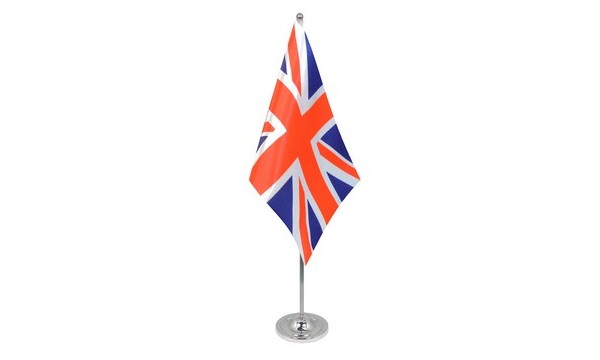
Table flags are small, so they are easy to look after. Our satin table flags are 9x6in (22.5 x 15 cm), sleeved and designed to slide onto a chrome pole-and-base set. Slide the flag off the pole before cleaning it. Follow the care label; for something this small and fine, a gentle hand wash in cool water is the safest approach. Lay the flag flat or hang it to dry, and store it flat so the sleeve keeps its shape. Wipe the chrome pole and base with a soft dry cloth.
Our small 6x4in polyester table flags on black plastic poles can simply be dusted, or gently hand washed if they get marked. You can find the full selection in our satin table flags collection, including the Union Jack satin table flag.
Bunting care
Bunting is usually more troublesome to store than to wash, because long lengths tangle easily.
- Cleaning: shake off dust, then if needed hand wash gently in cool water with mild detergent, following any care label. Do not tumble dry.
- Drying: hang the bunting out at full length, for example along a washing line, so every flag dries properly.
- Storing: wind it neatly around a piece of stiff card or a tube, rather than bundling it into a bag. This keeps the tape untangled and the flags flat for next time.
- Taking it down: take bunting down if strong winds are forecast, as long lengths catch a lot of wind.
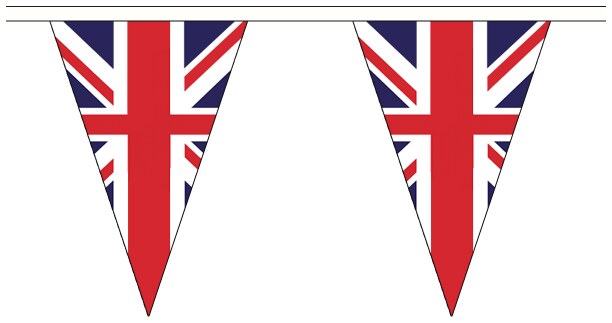
Our rectangle bunting is woven polyester on strong polyester tape, and our triangle bunting has heat-cut flags sewn onto polyester tape, suitable for indoor or outdoor use. Browse our full bunting range for lengths and designs.
Simple repairs
Fraying at the fly end
Fraying starts at the fly end, the edge furthest from the pole. At the first sign, trim off the frayed edge neatly and sew a new hem. The flag ends up slightly shorter, but this stops the damage spreading and can add a good deal of life.
Small holes and tears
A small tear near a seam can often be stitched closed. Repair it before flying the flag again, as wind will quickly turn a small hole into a large one.
Damaged fittings
If an eyelet has pulled through or a rope is worn, the flag may come free from the pole. If a repair is not practical, it is usually time to replace the flag.
When to retire a flag
Once a flag is badly faded, torn through or no longer looks respectable, retire it. Cut it into strips so it no longer resembles the flag, then dispose of it. Do not burn polyester flags, as burning polyester gives off harmful fumes.
Frequently asked questions
Can I put a flag in the washing machine?
Usually, yes, on a gentle cycle at up to 40°C with mild detergent, but always check the care label first. A laundry bag helps protect the fittings.
Can I tumble dry a flag?
No. Tumble drying can damage the fabric and stitching. Hang the flag out flat and let it dry fully.
How should I store a flag?
Clean, completely dry, folded loosely or rolled, and kept away from sunlight.
Can I use bleach on a white flag?
No. Bleach can damage the printed colours and weaken the fabric. Use a mild detergent instead.
How do I stop bunting tangling in storage?
Wind it around a piece of stiff card or a tube as you take it down, rather than bundling it loosely.
Looking for a flag that stands up to regular outdoor flying? Take a look at our DuraFlag range, or browse our bunting for your next event.