England
 Scotland
 Wales
 USA
 France
 Germany
 Spain
 Italy
 Australia
 European Union
 Confederate
 Rainbow
 Other Pride
 Red Ensign
 RAF Ensign
 Yorkshire
 Cornwall
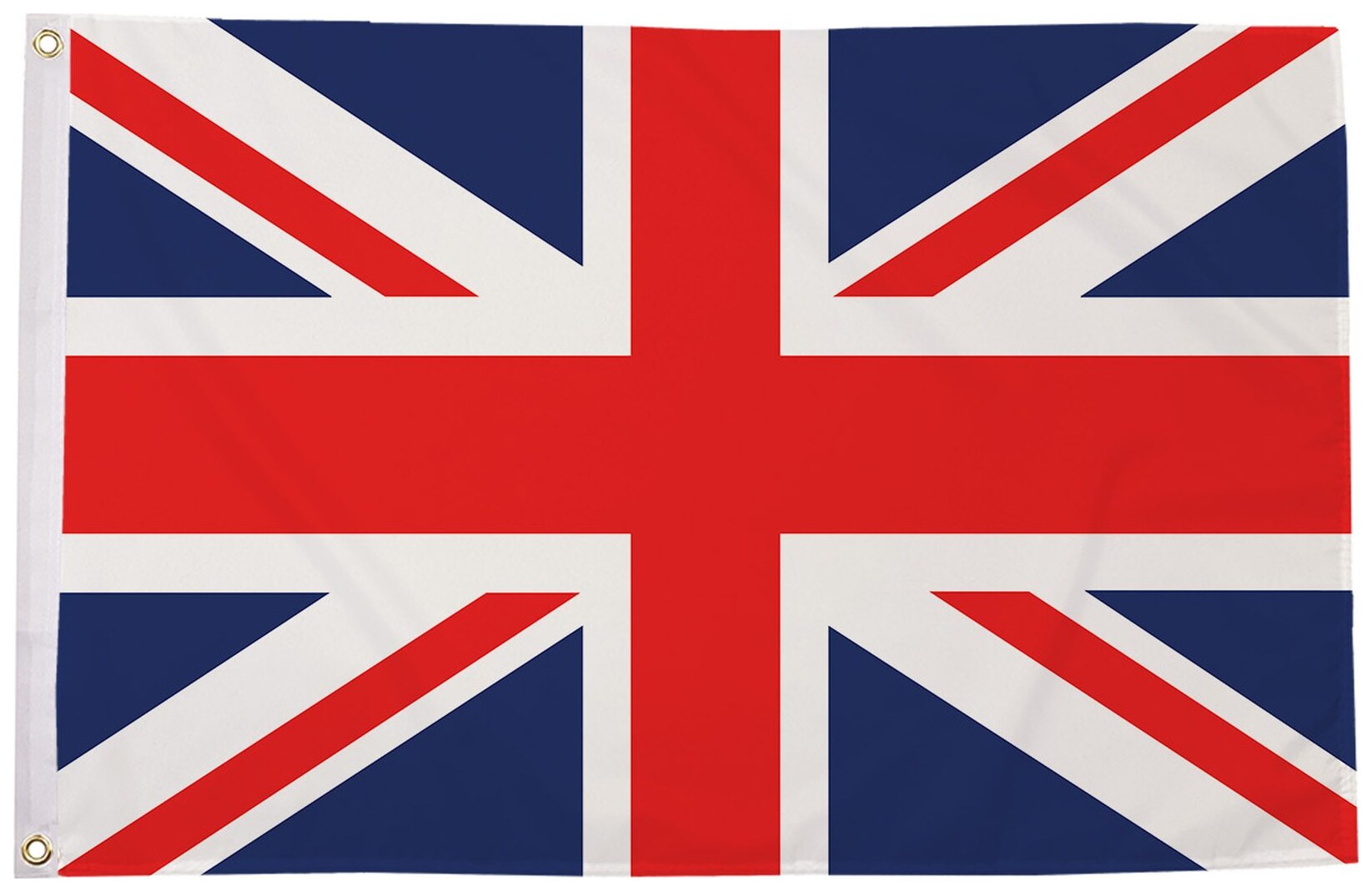
 Union Jack
 Ireland
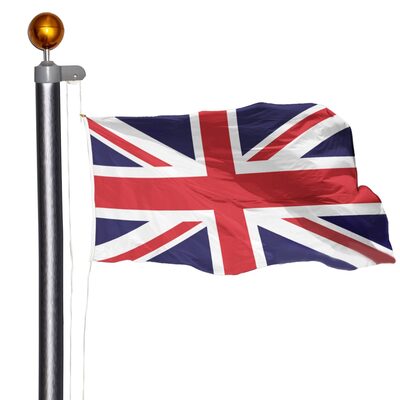

The usual UK rule of thumb is that a flag on a ground-level pole should be roughly a quarter to a third of the pole's height in length, which works out at about 1 yard of flag for every 3 metres of pole. So a 6 m pole suits a 2 yard flag or a 5ft x 3ft, and a 12 m pole suits a 4 yard flag. Wall-mounted and short garden poles take smaller flags, such as a 3x2 or 5x3.
Quick answer: allow about 1 yard of flag per 3 m of pole. Size down for windy or coastal sites, older poles, or when flying two flags. A 6–8ft wall pole suits a 3x2 or 5x3 flag.
Why flag size matters
A flag that is too small for its pole looks lost, especially from a distance. A flag that is too large puts extra strain on the pole, the fittings and the fabric, and in a strong wind it can wrap around the pole or wear out quickly. Getting the proportion right makes the flag look balanced and helps it last longer.
The length that matters here is the fly, the measurement from the pole side of the flag to the free end. When people quote a flag as "5x3", the first figure is the length and the second is the height. If you are unsure how the different sizes compare, our guide to flag sizes explained covers feet, centimetres and yard sizes in detail.
Pole height to flag size chart
This chart is for a free-standing pole at ground level. It is a guide rather than a strict rule, and the yard sizes shown are approximate.
| Pole height (above ground) | Suggested flag size | Approximate flag dimensions |
|---|---|---|
| 4–5 m | 1.5 yard | About 137 x 69 cm |
| 5–6 m | 2 yard, or a 5ft x 3ft | About 183 x 91 cm (2 yard) or 150 x 90 cm (5x3) |
| 7–8 m | 2.5 to 3 yard | Up to about 274 x 137 cm |
| 9–10 m | 3 yard | About 274 x 137 cm |
| 11–12 m | 4 yard | About 366 x 183 cm |
Yard sizes are made in a 2:1 proportion, the traditional ensign and flagpole shape, so they look longer and slimmer than a 5x3, which is 5:3. Both look right on a tall pole; it is mainly a matter of taste and what is available in the design you want.
Our flag sizes and the poles they suit
If you are choosing from the standard sizes we stock, this table gives a practical starting point.
| Flag size | Dimensions | Typical use | Pole it suits |
|---|---|---|---|
| 3ft x 2ft | 90 x 60 cm | House fronts, small gardens, indoor display | 6ft wall pole, short garden pole |
| 5ft x 3ft | 150 x 90 cm | The most popular size for gardens, events, clubs and fans | 8ft wall pole, telescopic pole, 5–6 m ground pole |
| 8ft x 5ft | 240 x 150 cm | Large display, bigger buildings, open sites | Taller ground pole, where the pole is rated for it |
| Yard sizes (0.5 to 3 yard) | 1 yard = 90 x 45 cm | Traditional flagpole flying, in the 2:1 ensign shape | Ground poles matched by height (see chart above); smaller yard sizes for short poles |
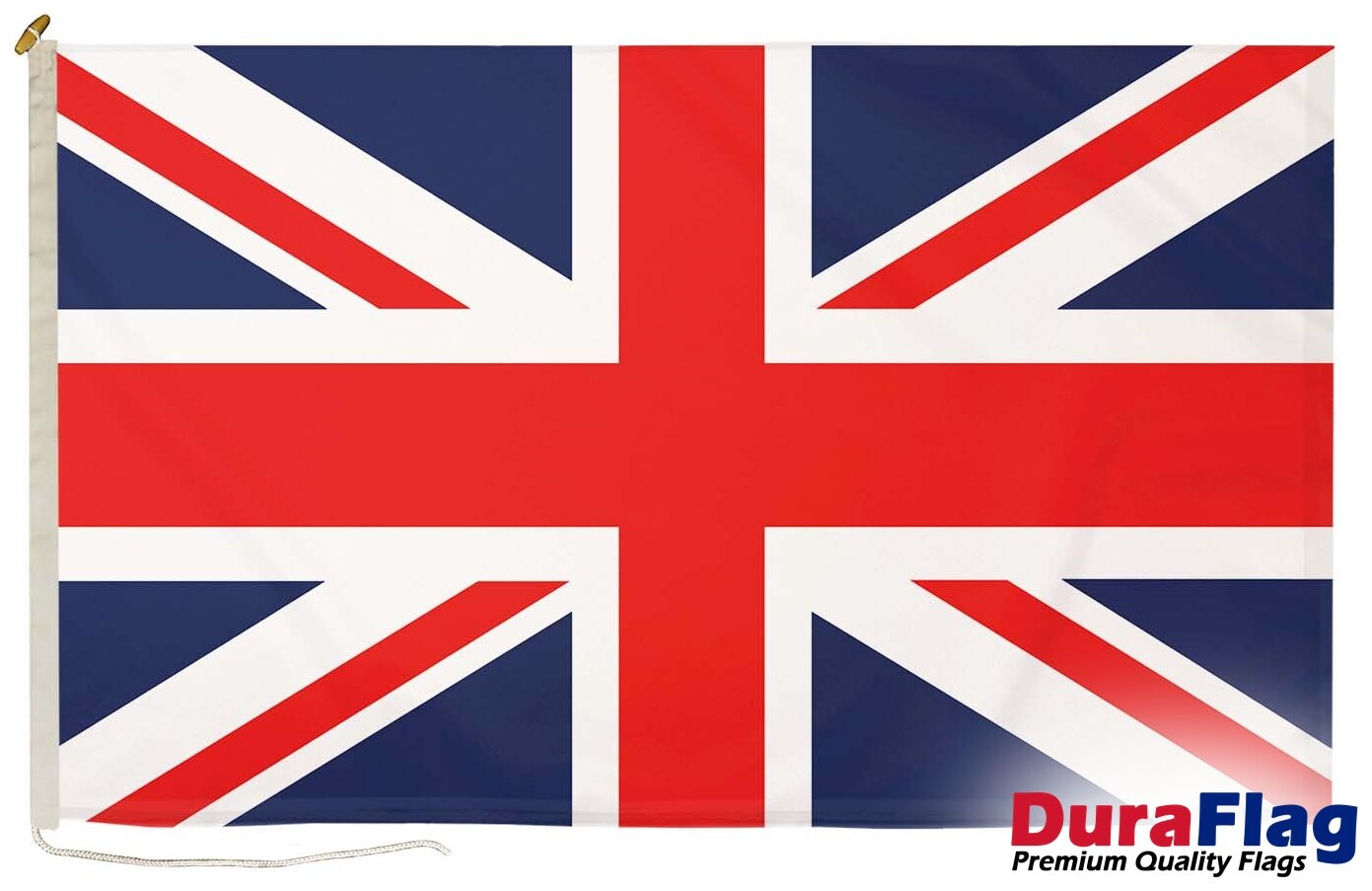
Yard sizes are offered in our DuraFlag range, for example the Union Jack DuraFlag, which comes in 0.5, 0.75, 1, 1.5, 2 and 3 yard as well as 5x3 and 8x5.
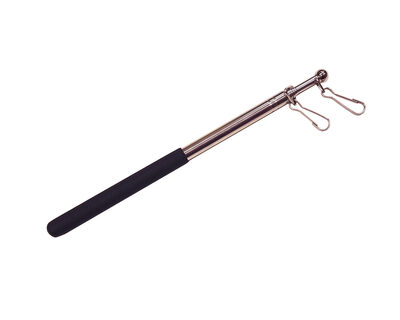
Telescopic poles
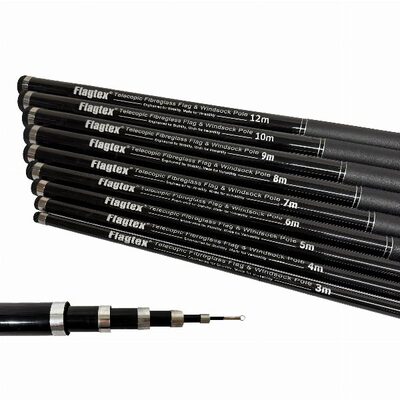
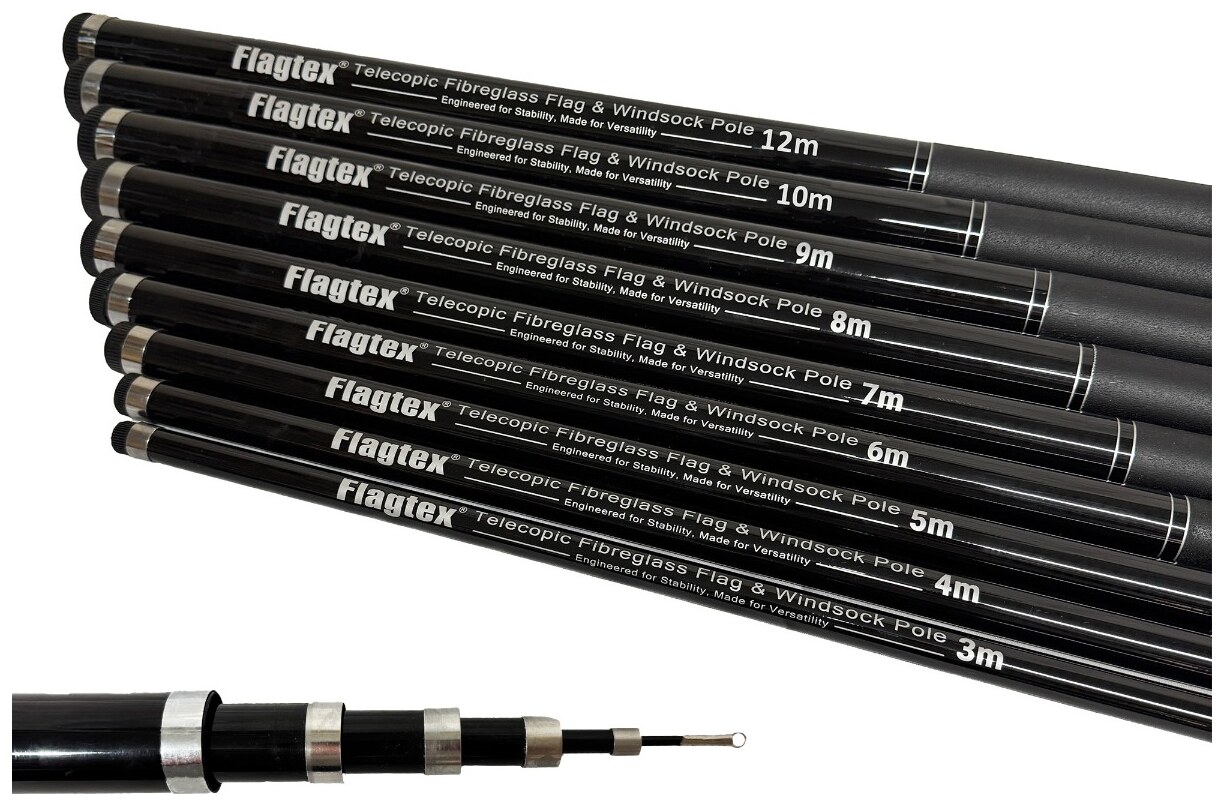
Our telescopic flag poles go up in minutes with no digging and no concrete, and you can choose a height from 3 m to 12 m. They are sold to fly our 5x3 flags. On the shorter heights a 5x3 looks well proportioned. On very tall poles a 5x3 will look small from a distance, so if the pole allows, a larger yard size gives a better balance. Check what the pole is designed to carry before going up in size.
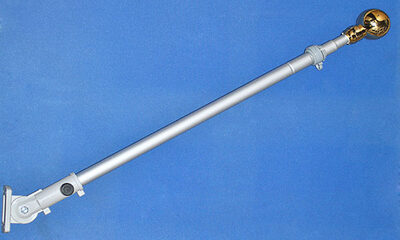
Wall-mounted poles
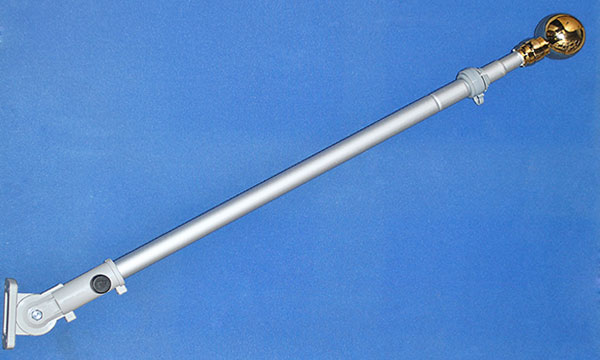
Wall-mounted poles project from the building at an angle, so the flag hangs closer to the wall and to anything below it, such as windows, doors and passers-by. They are also shorter than ground poles. As a rule:
- A 6ft wall pole suits a 3x2 flag.
- An 8ft wall pole suits a 3x2 or a 5x3 flag.
- Leave enough clearance that the flag cannot catch on gutters, signs or a window when it moves in the wind.
See our wall-mounted flag poles if you are fixing a pole to a house or business frontage.
Windy and coastal sites
Wind is the biggest single factor in how long a flag lasts. A larger flag catches more wind, which means more load on the pole and more wear at the fly end, where fraying usually starts. If your site is exposed, on a hill or near the coast, consider going down one size from the chart. The same applies to older poles, where you may not want to add extra strain.
Whatever the size, it is sensible to take flags down in strong winds; UK makers commonly suggest doing so above about 31 mph (Beaufort force 6). For flags that will fly outdoors regularly, a heavier fabric is worth considering. Our DuraFlags are made from 150gsm knitted polyester, around 50% heavier than the industry standard 115gsm, with four rows of stitching on the fly end. No flag is a permanent outdoor solution, but the right size and fabric help.
Flying two flags
When two flags fly side by side on separate poles, they should ideally be the same size (the same width) and on poles of the same height, so neither looks more important than the other by accident.
Flying two flags on one pole is only appropriate if both are British, with the senior flag on top and a gap of about 30 cm between them. Never fly a foreign national flag below another on the same pole. Two flags on one pole add more load, so choose smaller sizes than you would for a single flag.
Choosing the pole first
If you have not yet bought a pole, it can help to decide on the flag you want to fly and work backwards. A 5x3 is our standard flag size, and our telescopic poles are matched to it. Our guide on how to choose a flagpole compares telescopic, wall-mounted and sectional poles.
Frequently asked questions
What size flag goes on a 6 m flagpole?
A 2 yard flag (about 183 x 91 cm) or a 5ft x 3ft flag suits a 5–6 m pole. On an exposed site, a 1.5 yard flag is a sensible alternative.
What size flag for a 20ft flagpole?
A 20ft pole is roughly 6 m, so the same advice applies: a 2 yard flag or a 5x3.
What size flag should I put on a house wall pole?
A 3x2 suits a 6ft wall pole, and a 3x2 or 5x3 suits an 8ft wall pole. Allow clearance from windows, gutters and signs.
Can I fly a bigger flag than the chart suggests?
You can, as long as the pole is designed to carry it and the site is sheltered, but the flag and pole will be under more strain and the flag is likely to wear faster. On windy or coastal sites, go smaller rather than larger.
Is a 5x3 flag too small for a 12 m pole?
It will fly, but it will look small from a distance. Where the pole allows, a larger yard size, such as 3 or 4 yard, looks better balanced.
Ready to choose? Browse our DuraFlag range for outdoor flags in 5x3, 8x5 and yard sizes, or pair your flag with one of our telescopic flag poles.