England
 Scotland
 Wales
 USA
 France
 Germany
 Spain
 Italy
 Australia
 European Union
 Confederate
 Rainbow
 Other Pride
 Red Ensign
 RAF Ensign
 Yorkshire
 Cornwall
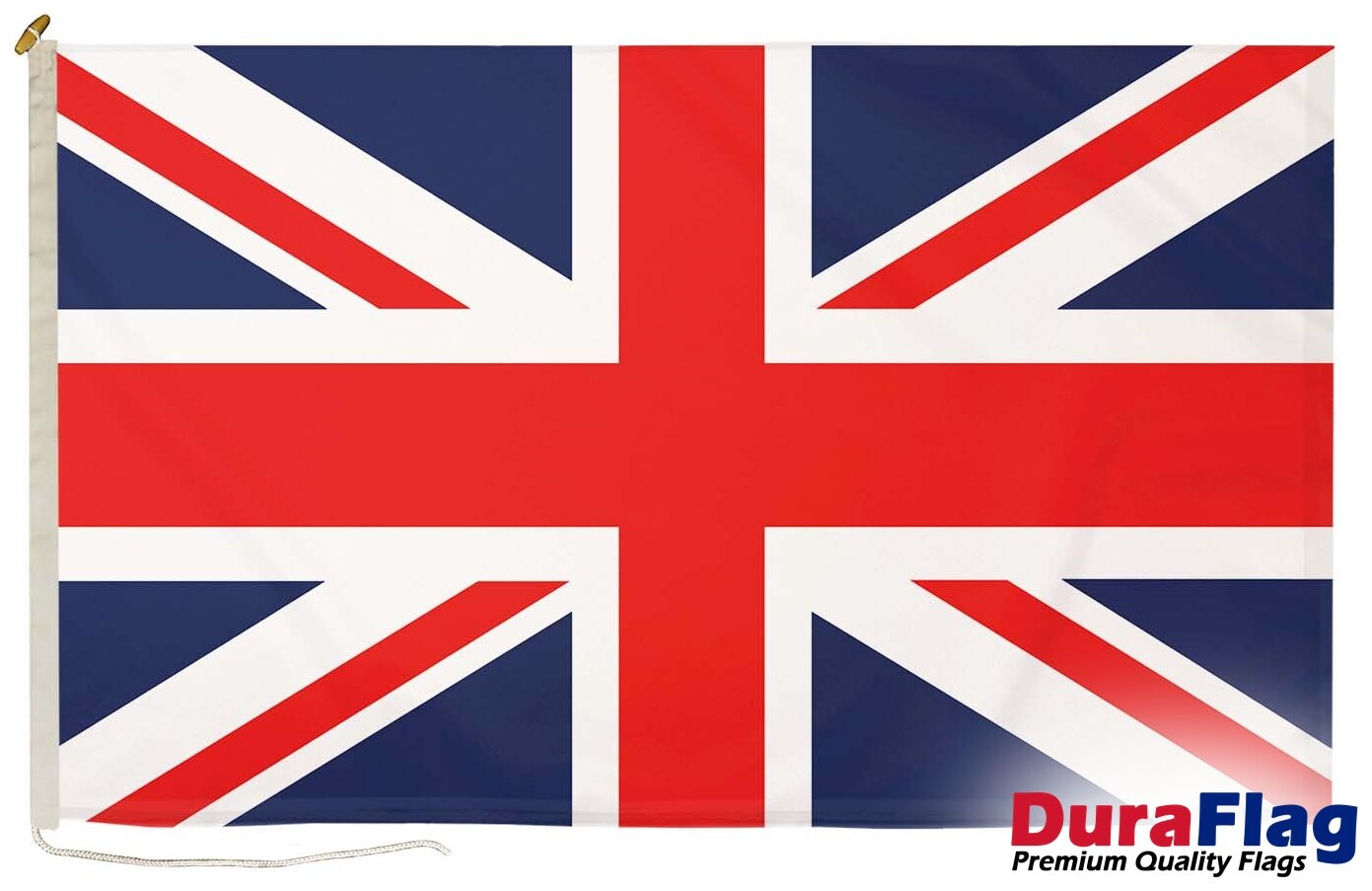
 Union Jack
 Ireland


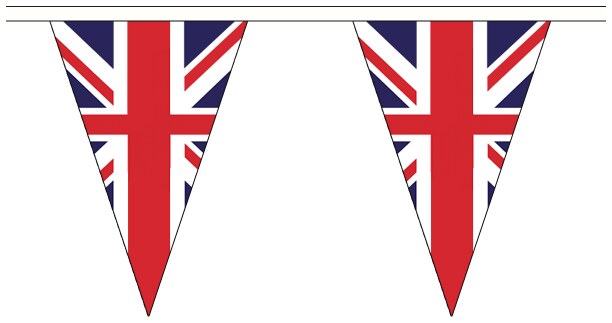
To hang bunting, plan your anchor points first, measure the runs, then fix one end securely, walk the bunting out without twisting it and tie off the other end with a gentle sag rather than pulling it tight. Use fixings suited to the surface, work from a stable ladder with a second person, and keep well clear of street lights, road signs and power or telephone lines.
Quick answer: choose strong anchor points, use the right fixing for each surface, leave a little sag so the wind has some give, and never tie bunting to street furniture or overhead cables. For a street party across a public road, check with your council first.
1. Plan your anchor points
Good bunting starts with good anchor points. Before you unpack anything, walk the space and decide exactly where each run will start and finish.
- Indoors: beams, picture rails, curtain poles, door frames and existing hooks.
- Outdoors: sturdy parts of a building such as fascia boards or window frames, solid fence and gate posts, and mature trees with strong branches.
- Height: keep the lowest point of the drape comfortably above head height in walkways, and higher still where vehicles pass.
Measure each run and add some extra for sag and tying off. Our bunting buying guide explains how to work out the lengths you need.
2. Choose the right fixings
The tape on our bunting is strong polyester, so you can use whichever fixing suits the surface:
- Cup hooks screwed into wooden beams, fascias or window frames are neat and reusable. Many people leave them in place for the next occasion.
- Cable ties are quick and secure on railings, fence panels, gazebo frames and marquee poles. Snip them off afterwards, taking care not to cut the tape.
- Removable adhesive hooks work well indoors on painted walls and glass where you don't want to drill. Check the weight rating and follow the maker's instructions.
- Cord tie-offs are useful outdoors when the anchor is a little further away than the bunting reaches. Tie a length of cord to the tape end and then to the anchor.
Avoid drawing pins and nails through the tape itself, as they can tear it under tension.
3. Hang it step by step
- Untangle first. Lay the bunting out on the floor or lawn and check the flags all face the same way.
- Fix the first end securely to your first anchor point.
- Walk it out to the next anchor, letting the tape run through your hands so it doesn't twist.
- Set the sag before tying off. Pull the tape until the drape looks even, then ease it back a little.
- Tie off with a firm knot, and tuck or trim any spare tape so it doesn't flap.
- Step back and check from where your guests will see it, then adjust if needed.
Zig-zagging across a ceiling
For halls, marquees and function rooms, a zig-zag across the ceiling fills the space well. Fix hooks at regular intervals along both long walls, offset so each crossing runs diagonally to the next hook on the opposite side. Start in one corner and work along the room, passing the bunting over each hook as you go rather than cutting it into lengths. Where one length ends, tie the next on at a hook so the join is hidden.
Keep the drape similar on each crossing for a tidy look, and check the lowest point clears the tallest guests and any ceiling lights or fittings.
Outdoor runs between buildings and trees
Outdoors, bunting is often hung from a house to a tree, between two buildings or along a fence line. Use only solid anchors: a gutter, downpipe or thin branch may not take the load once the wind catches the flags. On trees, tie around a strong branch or the trunk using a soft cord loop, rather than wrapping the bunting tape itself around the bark.
For themed occasions, our event bunting includes designs for celebrations, fetes and parties. On long outdoor runs, giant bunting with its larger flags reads better from a distance.
Tension, sag and wind
It is tempting to pull bunting tight for a crisp line, but a little sag is better. A taut line has no give, so a gust puts the whole load on the fixings and the tape. Leaving some drape lets the bunting move with the wind and reduces strain on everything.
- Don't over-tension outdoor runs.
- Outdoor runs need strong anchors at both ends, as the load rises sharply in a breeze.
- Take bunting down in strong winds or stormy weather. It protects the bunting as well as anything underneath it.
Safety first
- Use a stable ladder on firm, level ground, and have a second person to foot the ladder and pass the bunting up.
- Don't overreach. Move the ladder rather than leaning out.
- Never attach bunting to street lights, road signs, or power or telephone lines. Keep well clear of overhead cables at all times.
- Keep runs clear of doorways, fire exits and walkways, and away from heaters and naked flames indoors.
Street parties across a public road
Street parties are one of the best uses for bunting, but hanging it across a public road is different from hanging it in your garden. Check with your council first. A road closure or permission may be needed for the event, and the council can tell you what applies on your street and whether there are any conditions on decorations. Arrangements vary from place to place, so ask early.
When you have the go-ahead, fix runs between houses or private property on either side with the owners' agreement, keep the bunting high enough to clear vehicles, and use strong anchors. Our bunting packs are a convenient way to dress a whole street, and Union Jack triangle bunting is a popular choice for national celebrations.
Taking it down and storing it
Bunting tangles easily if it is bundled into a bag. Instead, wind it around a piece of stiff card, keeping the flags flat as you go, and tuck the end under the last turn. Label the card with the design and length so it is easy to find next time.
If the bunting is damp, let it dry fully before storing. Packing it away wet can lead to mildew and marks. If it needs a clean, our guide on how to wash and care for a flag applies to polyester bunting too. Store it somewhere cool and dry.
Frequently asked questions
What is the best way to hang bunting without damaging walls?
Indoors, removable adhesive hooks are a good option on painted walls and glass. Check the weight rating and follow the maker's instructions.
Should bunting be tight or loose?
Leave a gentle sag. Bunting pulled tight puts more strain on the fixings and tape, especially outdoors in the wind.
Can I tie bunting to a lamp post?
No. Never attach bunting to street lights, road signs, or power or telephone lines.
Do I need permission to hang bunting across my road?
Check with your council before hanging bunting across a public road. A road closure or permission may be needed for a street party.
How do I stop bunting tangling in storage?
Wind it around a piece of card, keeping the flags flat, and make sure it is completely dry first.
Ready to decorate? Browse our full bunting range in rectangle, triangle and giant styles, suitable for indoor and outdoor use.