European Union
 Confederate
 Rainbow
 Other Pride
 Red Ensign
 RAF Ensign
 Yorkshire
 Cornwall
 Union Jack
 England
 Scotland
 Wales
 USA
 Ireland
 France
 Germany
 Italy
 Australia

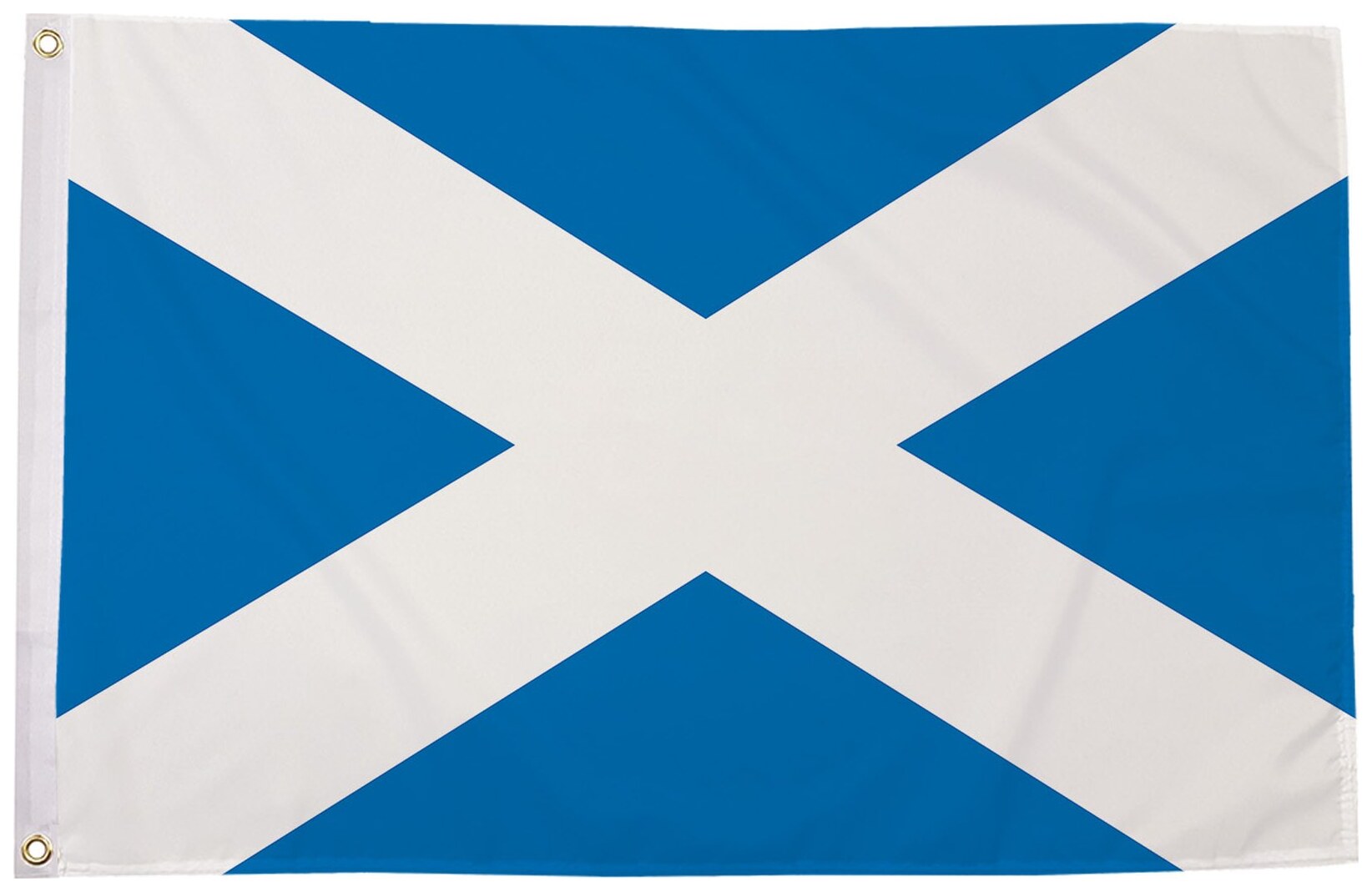
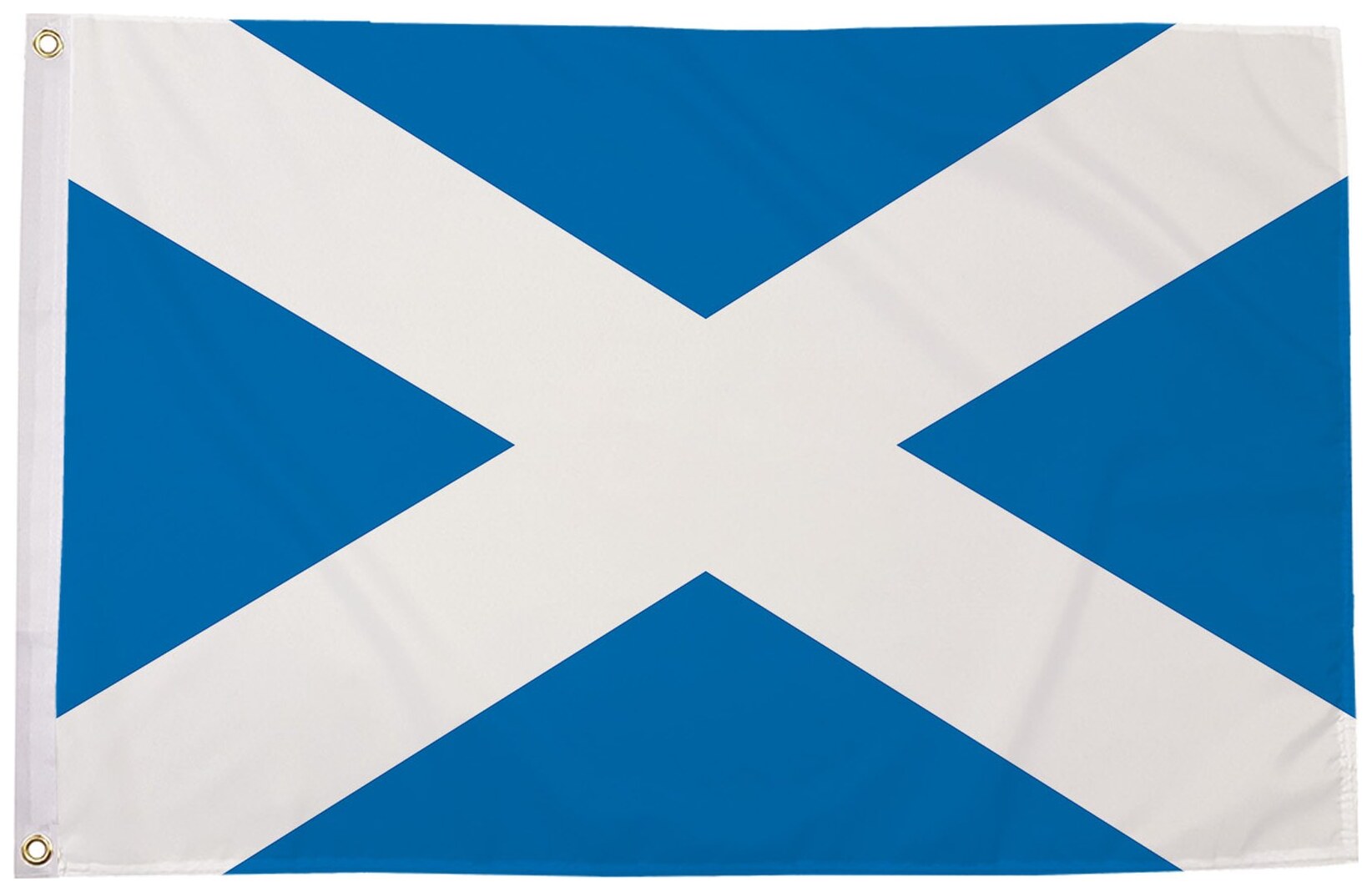
The Saltire, a white diagonal cross on blue, is Scotland's national flag and anyone may fly it, anywhere, at any time. The Lion Rampant flag, a red lion on yellow, is not a national flag: it is the Royal Banner of Scotland, belonging to the monarch, and the Court of the Lord Lyon's position is that it should not be flown from a flagpole or building without authority. Waving one at a match or using it as decoration has long been tolerated, so the practical rule is simple: Saltire on the flagpole, Lion Rampant in the hand.
The Saltire vs the Lion Rampant flag at a glance
| The Saltire (St Andrew's Cross) | The Lion Rampant | |
|---|---|---|
| Official name | Flag of Scotland; St Andrew's Cross | Royal Banner of the Royal Arms of Scotland |
| Design | White saltire (diagonal cross) on a blue field | Red lion rampant on gold, inside a red double border decorated with fleurs-de-lis (the "double tressure") |
| Whose flag? | The nation's: every Scot, and anyone else | The monarch's, as King or Queen of Scots |
| Flying from a pole or building | Anyone, any time | Only the monarch and those authorised to represent the Crown |
| Waving or decorating | Yes | Tolerated under a 1934 Royal Warrant, as interpreted by the Lord Lyon |
The Saltire: Scotland's national flag
The Saltire takes its shape from the X-shaped cross on which St Andrew, Scotland's patron saint, is traditionally said to have been martyred. Legend links its adoption to a battle near Athelstaneford in East Lothian, where a white saltire is said to have appeared in the sky before a Pictish victory, often dated to 832. Historians treat the story as legend, but the Saltire was in use as a Scottish emblem by the later Middle Ages, and it is often described as one of the oldest national flags in Europe. In 1606 it was combined with the English cross of St George to form the first Union Flag. You can read more about the saint and his day in our guide to St Andrew's Day.
There are no restrictions on who may fly the Saltire. Households, businesses, schools, councils and sports clubs all use it, and the Scottish Government flies it on its buildings. It is the correct Scottish flag for any flagpole, at home or abroad.
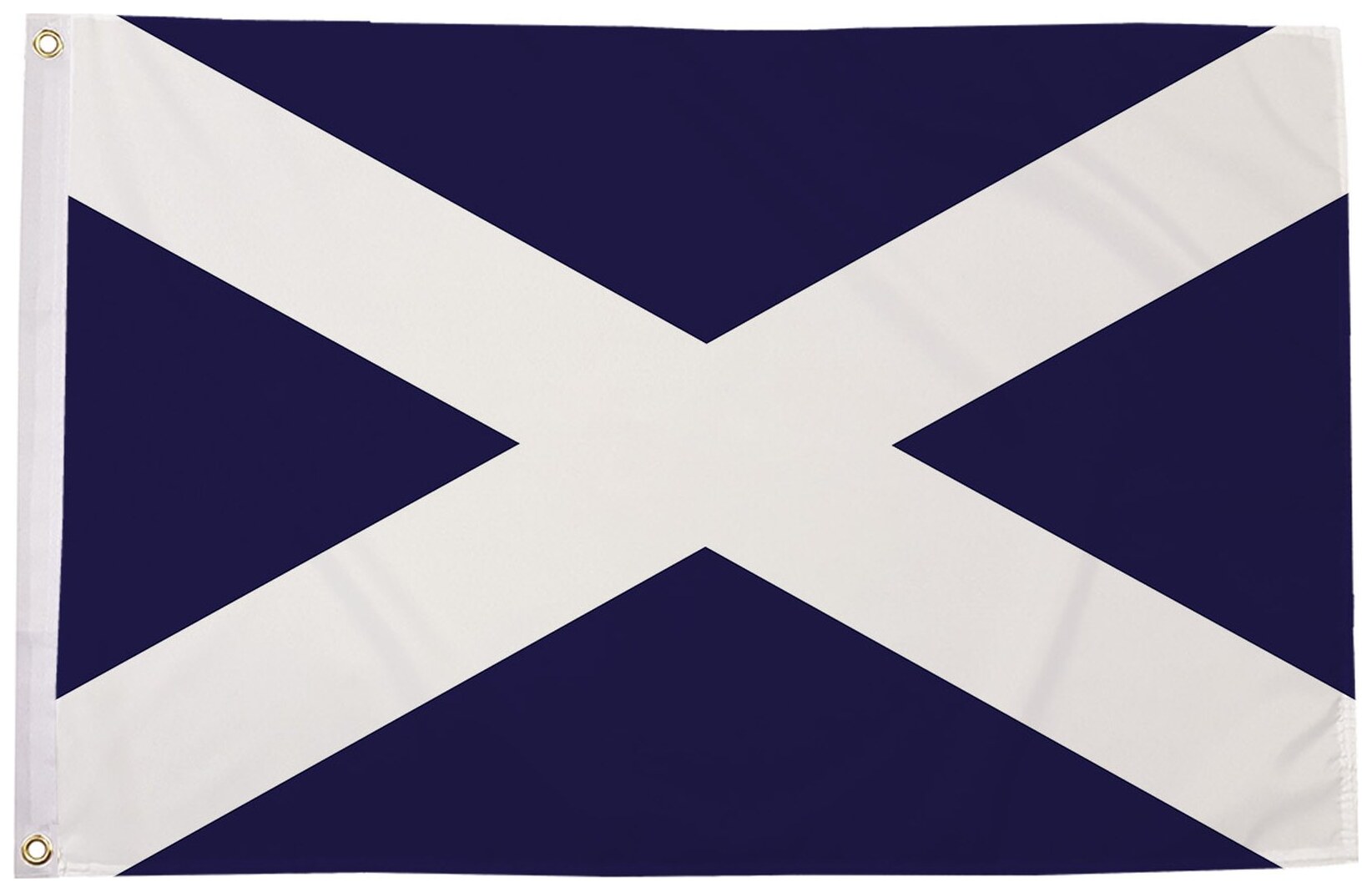
Light blue or navy?
No shade of blue was ever fixed in law, and older Saltires were often a dark navy, similar to the Union Flag. In 1998 the Flag Institute recommended Pantone 300, a brighter mid-blue, and a Scottish Parliament committee later reached the same conclusion after taking advice that included the office of the Lord Lyon. The recommendation is advisory only, but most official and public bodies now use a blue close to Pantone 300. Both shades are correct for private use, which is why we stock our Scotland flags in light blue and navy: match the flags you already fly, your club colours, or simply your taste.
Proportions vary too. The Lord Lyon has suggested 5:4, but most Saltires are made in the standard 5:3 shape (for example 5ft x 3ft) so they match other flags flown alongside them.
The Lion Rampant: the King's flag in Scotland
The lion rampant on gold has been the royal arms of the Kings of Scots since at least the thirteenth century. As a flag it is the personal banner of the monarch in their role as sovereign of Scotland, much as the Royal Standard is across the United Kingdom. According to the Royal Family's website, it is flown at the Palace of Holyroodhouse and Balmoral Castle when the monarch is not in residence; when the monarch is there, the Royal Standard is flown instead. Its use is also delegated to a small number of officials who represent the Crown, including Lord-Lieutenants in their areas, the Lord High Commissioner to the General Assembly of the Church of Scotland, the Lord Lyon King of Arms and the Keeper of the Great Seal of Scotland, an office held by the First Minister.
What does the law say?
Scottish heraldry is governed by its own court, the Court of the Lord Lyon, and the restrictions on the Lion Rampant go back to Scottish legislation, notably an Act of the Parliament of Scotland of 1672 and the Lyon King of Arms Act 1867. Lyon Court's published position is that the banner may not be flown by anyone other than the sovereign and those authorised to represent them, and that unauthorised use is an offence. In practice, enforcement against private individuals is very rare, but councils and organisations have reportedly been challenged in the past for flying it from buildings.
The 1934 Royal Warrant
Ahead of King George V's Silver Jubilee, a Royal Warrant of 1934 allowed the Lion Rampant to be used by the public as a sign of loyalty and celebration. The Lord Lyon has interpreted this as covering what is sometimes called "decorative ebullition": waving the flag at football matches, rugby internationals and celebrations, or using it as decoration. It does not extend to flying the flag from a flagpole or building. That is why you will see thousands of Lion Rampant flags at Hampden or Murrayfield, but should not see one flying above a house or a shop.
So which Scottish flag can you fly?
| Situation | Saltire | Lion Rampant |
|---|---|---|
| Garden, house or business flagpole | Yes | No: fly the Saltire instead |
| Waving at a football or rugby match | Yes | Yes, under the 1934 warrant |
| Hand flags at a parade or event | Yes | Generally accepted |
| Indoor decoration, bunting, table flags at a supper | Yes | Generally accepted as decoration |
| Council or public building | Yes | No, unless authorised |
| Logos, signs and branding | Generally fine | Avoid: royal arms are protected |
So a Scotland Lion hand flag at the match or a Lion Rampant table flag at a Burns supper is in keeping with long-standing practice, but the flag on your pole should be the Saltire. This is a summary of the commonly understood position rather than legal advice. If you represent an organisation and want certainty, contact the Court of the Lord Lyon.
Other Scottish flags and designs
Beyond the two main flags, our Scotland range includes decorative designs such as "Scotland The Brave" and "Bonnie Scotland", which are popular for sport and parties, plus Scottish regimental flags and county flags. For a flagpole that stays up through a Scottish winter, a Saltire DuraFlag with its reinforced header and fly end will last much longer than a lightweight printed flag. Our guide to flag etiquette covers how to fly the Saltire alongside the Union Flag and other national flags.
Frequently asked questions
Is it illegal to fly the Lion Rampant?
Flying it from a flagpole or building without authority is, according to the Court of the Lord Lyon, an offence under old Scottish legislation, although prosecutions of private individuals are very rare. Waving it at matches and using it as decoration have been tolerated since the 1934 Royal Warrant.
Can anyone fly the Saltire?
Yes. The Saltire is Scotland's national flag and anyone may fly it, in Scotland or anywhere else, without permission. For a new flagpole, see our guide to flagpole planning permission.
Why is the Lion Rampant used at football matches?
Supporters have waved it for generations as a symbol of Scotland, and the 1934 Royal Warrant, as interpreted by the Lord Lyon, permits this kind of celebratory waving.
What colour blue is the Saltire?
There is no legal shade. Pantone 300, a bright mid-blue, is the shade recommended by the Flag Institute and a Scottish Parliament committee, and is the most common today. Navy Saltires are also widely flown.
Is the Lion Rampant the same as the Royal Standard?
No. The Lion Rampant is one quarter of the Royal Standard. In Scotland a version of the Royal Standard is used in which the Scottish lion appears in two quarters rather than one.
Choosing a Scottish flag? Browse our Scotland flags in light and navy blue, add Scotland bunting for events, or see Saltire hand flags for matches and parades.