England
 Scotland
 Wales
 USA
 France
 Germany
 Spain
 Italy
 Australia
 European Union
 Confederate
 Rainbow
 Other Pride
 Red Ensign
 RAF Ensign
 Yorkshire
 Cornwall
 Union Jack
 Ireland

County flags represent the traditional and historic counties of the United Kingdom, and many of them are registered with the Flag Institute, which keeps the UK Flag Registry. In England, county flags, including historic county flags, can be flown without planning consent, subject to standard conditions. They are popular for county days, local events, pubs, sports clubs and as gifts for people who have moved away from home.
Quick answer: county flags celebrate local identity and can be flown in England without applying for consent. Historic County Flags Day is on 23 July, and many counties also have their own day, such as Yorkshire Day on 1 August. We stock flags, bunting and hand flags for counties across Britain.
What are county flags?
A county flag is a flag that represents a county as a place and its people, rather than a council or other organisation. Many are based on traditional symbols that have been associated with a county for a long time, such as a rose, a cross or a heraldic animal. Others are newer designs created by local communities to give a county a flag of its own.
Many county flags are registered with the Flag Institute, which keeps the UK Flag Registry. Not every county flag in use is registered, and some counties have more than one flag in circulation, so if you want the recognised design it is worth checking the registry or the county's own sources.
Historic and modern counties
Britain's county map has changed many times, and many people identify more with a traditional or historic county than with the current administrative area. Many county flags follow the historic counties, which is why you will find flags for places such as Westmorland and Middlesex.
Can I fly a county flag without planning permission?
In England, county, city, town and village flags, including historic county flags, are among the flags that can be flown without consent under the advertisement regulations. Standard conditions still apply: keep the flag clean and safe, have the landowner's permission and do not obscure road signs.
The flagpole itself may need planning permission separately from the flag, especially on a listed building or in a protected area. Scotland, Wales and Northern Ireland have their own rules, so check with your council if you live there, and ask your local planning authority if you are unsure. Our guide to flagpole planning permission in the UK covers the details.
Historic County Flags Day and county days
Historic County Flags Day takes place each year on 23 July. It is a day to fly your county flag, whether at home, at work or at a community building.
Many counties also celebrate their own county day. The best known is Yorkshire Day on 1 August. Other counties have their own days, and the dates vary, so check the county's own sources before planning an event. A county day is a natural moment to put up a flag, decorate a pub or village hall with bunting, or hand out flags at a local event.
Well-known county flags
The table below describes five of the most recognisable county flags, followed by a selection of others we stock. You can see every county in our county and regional flags category.
| County | Description |
|---|---|
| Yorkshire | A white rose on a blue field. |
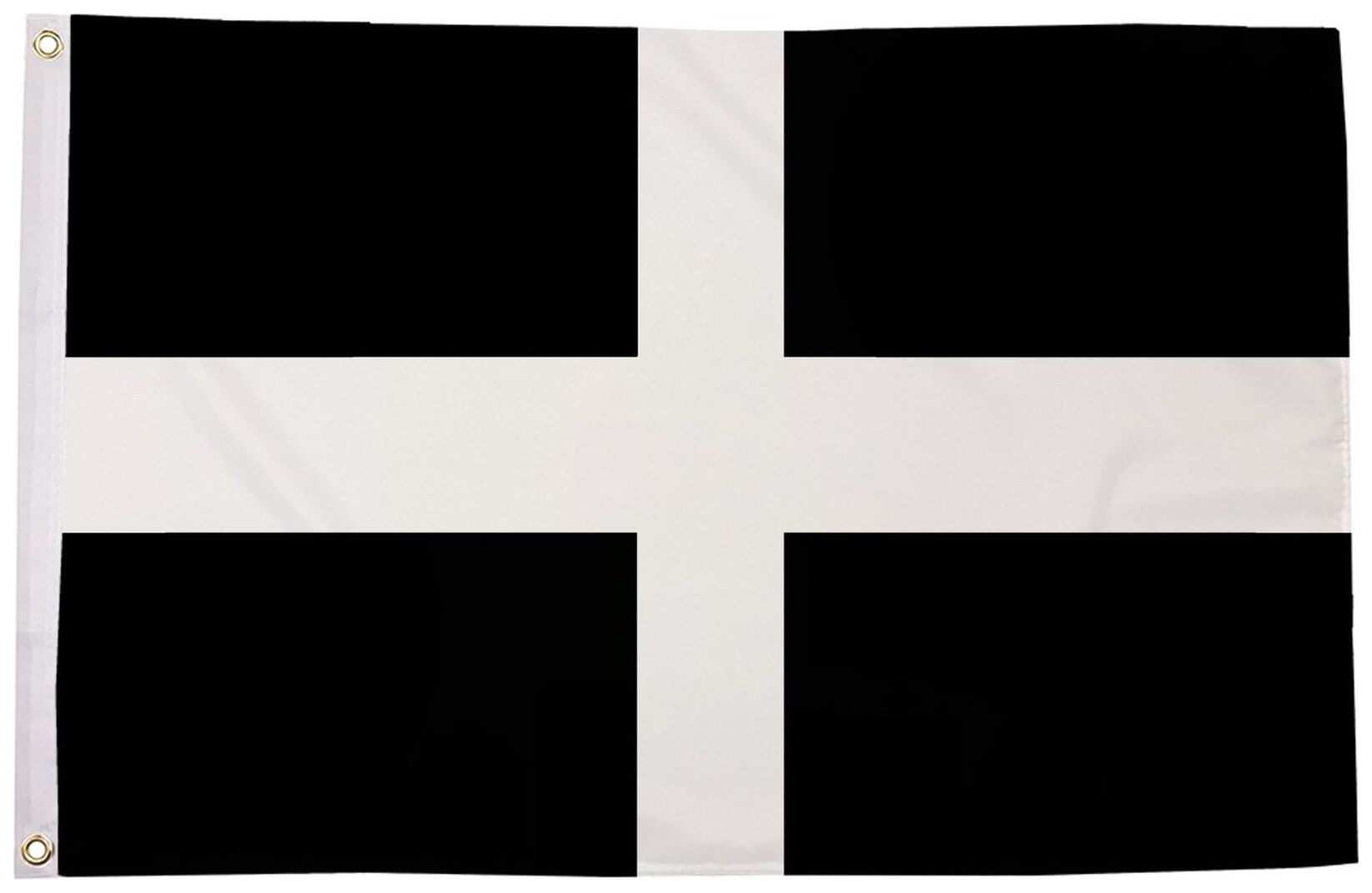
| Cornwall | St Piran's flag: a white cross on a black field. |
| Kent | A white horse, known as the Invicta, on a red field. |
| Sussex | Six gold martlets on a blue field. |
| Lancashire | A red rose on a gold or yellow field. |
Other county flags we stock
Alongside the five above, our range includes flags for many other counties and areas, including:
- Devon
- Northumberland
- Cumberland
- Westmorland
- Rutland
- Derbyshire
- Essex
- Middlesex
- Lincolnshire
- The Black Country
This is only a selection. Browse the full list of British county flags to find your own.
Ways to use county flags
County days and local events
County flags are a simple way to mark a county day, a village fete, a carnival or a local anniversary. Flags on poles mark the venue, while county bunting decorates streets, halls and marquees. For crowds and children, our county hand flags are easy to hand out and wave.
Pubs, clubs and businesses
Pubs, restaurants and local businesses often fly or hang a county flag to show local pride. It works well inside on a wall, behind a bar or outside on a flagpole. A county flag next to the national flag tells visitors where they are and that the business is rooted in the area.
Sport
County cricket, rugby and other sports have a long tradition of county identity. Supporters take county flags to matches, and clubs use them at grounds and club houses. Hand flags and bunting are useful for big match days and celebrations.
Gifts for people who have moved away
A county flag makes a thoughtful gift for someone who has moved to another part of the country or abroad. It is a reminder of home that can be hung in a spare room, a study or a garden, and it gives them something to fly on their county day.
Flying a county flag with other flags
If you fly a county flag alongside national flags, the national flags take precedence. In the UK order of precedence, county flags come after the Union Flag, the national flags of the home nations, the ensigns, the flags of other nations and international organisations such as the UN and the Commonwealth. On a row of poles, the senior flag goes on the left as an observer faces the building. Flags flown together should ideally be the same size, on poles of the same height. Our guide to the flag order of precedence explains the full order.
Frequently asked questions
Do I need permission to fly a county flag?
In England, county flags, including historic county flags, can be flown without consent, subject to standard conditions. The flagpole may need permission separately, and the rules differ in Scotland, Wales and Northern Ireland.
When is Historic County Flags Day?
Historic County Flags Day is on 23 July each year.
When is Yorkshire Day?
Yorkshire Day is on 1 August. Many other counties have their own days, and the dates vary, so check the county's own sources.
Who registers county flags?
Many county flags are registered with the Flag Institute, which keeps the UK Flag Registry.
What is the flag of Cornwall?
Cornwall's flag is St Piran's flag, a white cross on a black field.
Find your county in our full range of UK county flags, with matching bunting and hand flags for county days and local events.