European Union
 Confederate
 Rainbow
 Other Pride
 Red Ensign
 RAF Ensign
 Yorkshire
 Cornwall
 Union Jack
 England
 Scotland
 Wales
 USA
 Ireland
 France
 Germany
 Italy
 Australia




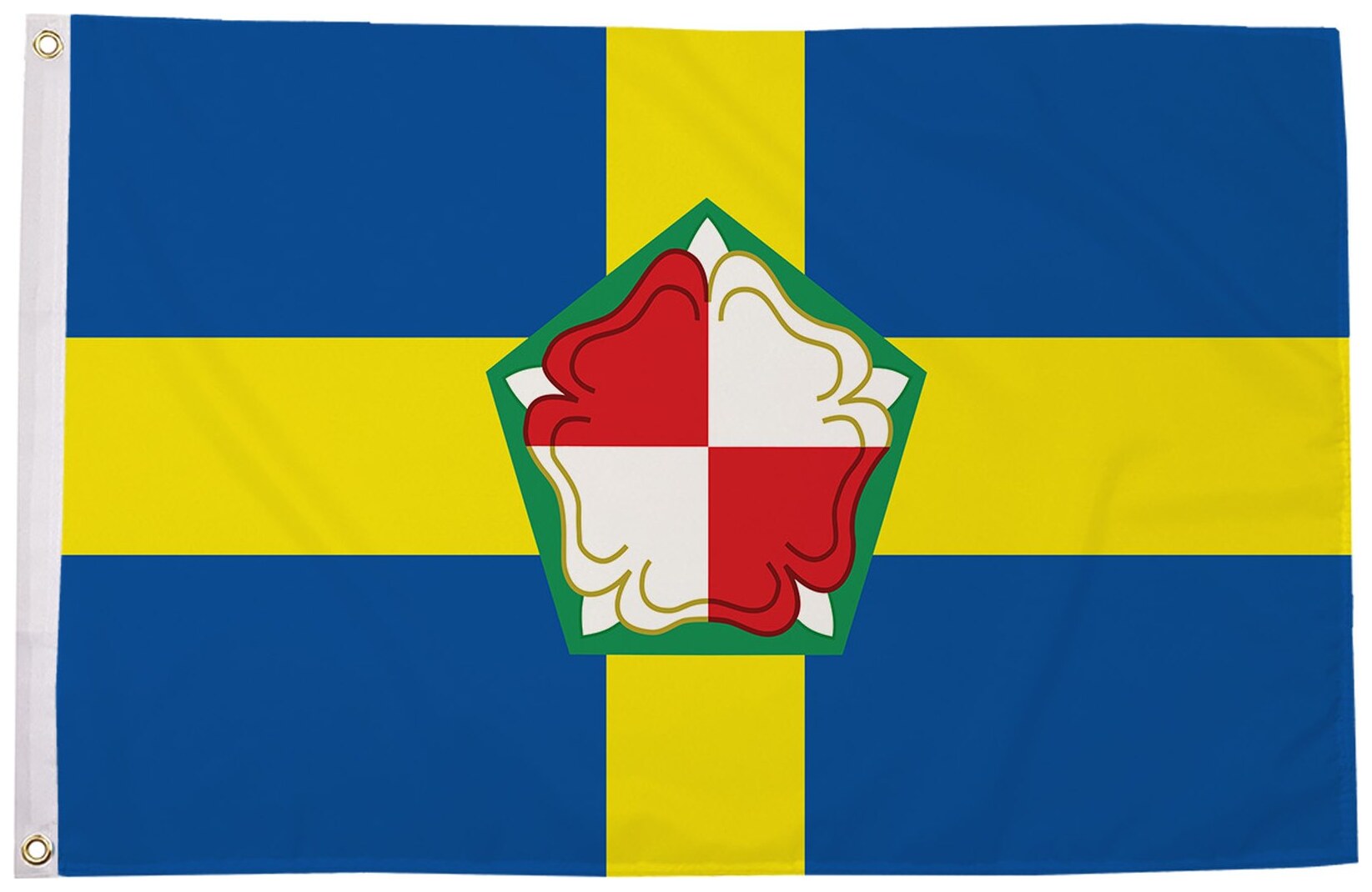
Pembrokeshire Day is usually given as 1 June and is listed by the Association of British Counties and the Flag Institute's flag calendar. No one seems to know for sure why that date was chosen, and it is marked quietly compared with St David's Day. It is still a good excuse to fly the Pembrokeshire flag, a gold cross on blue with a Tudor rose at its centre, in Wales's far south-west.
A county day with a modest profile
Most county days have an obvious anniversary behind them. Pembrokeshire's does not. Flag and county societies have listed 1 June for years, but they admit the original reason is unclear, and there is little sign of organised council events. In practice, Pembrokeshire people celebrate their county most visibly on 1 March, St David's Day. That makes sense, because David was born near the place that now carries his name, St Davids, on the county's western tip.
So treat 1 June as a light-touch occasion: a day to put the county flag on the pole as summer visitors start to arrive, not a day of parades. If your town council, school or business wants to make more of it, there is plenty of room to do so.
The Pembrokeshire flag and its Tudor rose
When local government reorganisation abolished Pembrokeshire as a county in 1974, a group of local councillors (Peter Stock, Dewi Pritchard, Jim Brock and Marjorie Jacobs) designed a flag to keep the county's identity alive. It was dedicated at Pembroke Castle on 28 July 1988, and the Flag Institute later recognised it on the basis of popular use. Pembrokeshire was restored as a county in 1996, and the flag carried on.
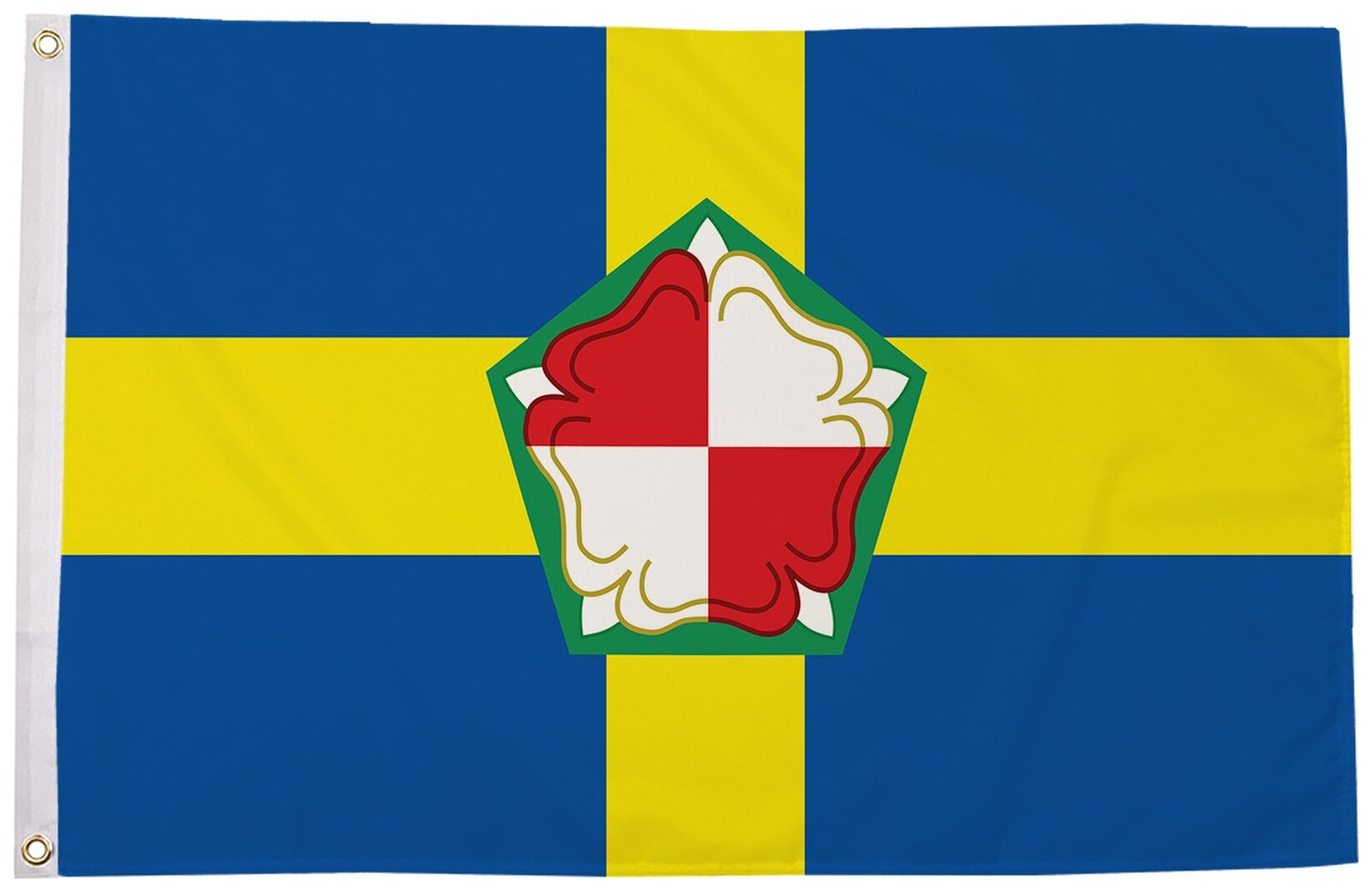
Every part of the design means something:
| Element | Meaning |
|---|---|
| Gold cross | Taken from the flag of St David, whose birthplace and cathedral city are in the county |
| Blue field | The sea that surrounds Pembrokeshire on three sides |
| Gold (yellow) | Summer sunshine |
| Red and white Tudor rose | Henry VII, born at Pembroke Castle in 1457, who founded the Tudor dynasty |
| Green pentagon | The fields and cliff-tops of the county |
St David's own flag has a gold cross on black. Pembrokeshire swapped the black for sea blue, so the two flags are easy to tell apart. Our St David's Day guide covers the saint's flag in more detail.
"Little England beyond Wales"
Pembrokeshire has a history unlike the rest of Wales. After the Normans settled the south of the county in the late eleventh and twelfth centuries, an informal boundary called the Landsker Line developed. To the south, around Tenby, Pembroke and Haverfordwest, English place names and English speech took hold, and the area became known as "Little England beyond Wales". To the north, around Fishguard and the Preseli Hills, Welsh remained the everyday language. The Tudor rose on a Welsh saint's cross fits a county with both histories.
Pembrokeshire has another unusual claim. In February 1797 a French force landed near Fishguard, in what is often called the last invasion of mainland Britain. It surrendered within days.
Flying the flag on the coast
Much of the county lies within the Pembrokeshire Coast National Park, and anything flown near the coast path takes a battering from Atlantic wind and salt. Some practical pointers:
- A 5ft x 3ft Pembrokeshire flag suits a house or holiday-let pole.
- For campsites, harbourside cafés and guest houses that keep the flag up all season, the Pembrokeshire DuraFlag has the reinforced fly end exposed sites need. Our guide to how long a flag lasts explains why.
- Pembrokeshire bunting and table flags work for agricultural shows, regattas and welcome desks.
Pembrokeshire shares 1 June with Dorset. See our county days calendar for the other Welsh dates, Monmouthshire and Caernarfonshire.
Frequently asked questions
Is Pembrokeshire Day widely celebrated?
Not yet. 1 June appears in county and flag calendars, but organised events are rare. St David's Day on 1 March is the bigger celebration in the county.
Why is there a Tudor rose on the Pembrokeshire flag?
Henry VII, the first Tudor king, was born at Pembroke Castle in 1457. The rose honours that connection.
How is the Pembrokeshire flag different from St David's flag?
Both have a gold cross. St David's flag has a black field. Pembrokeshire's has a blue field and a Tudor rose on a green pentagon in the centre.
When was the Pembrokeshire flag adopted?
It was designed by local councillors after 1974 and formally dedicated at Pembroke Castle on 28 July 1988.
See our Pembrokeshire flags, the wider British county flags collection, and our guide to UK county flags for the other Welsh county designs.