European Union
 Confederate
 Rainbow
 Other Pride
 Red Ensign
 RAF Ensign
 Yorkshire
 Cornwall
 Union Jack
 England
 Scotland
 Wales
 USA
 Ireland
 France
 Germany
 Italy
 Australia

Bulgaria Liberation Day falls on 3 March and is the country's national day. It marks the signing of the Treaty of San Stefano in 1878, which ended the Russo-Turkish War and re-established a Bulgarian state after nearly five centuries of Ottoman rule. Bulgarians mark it with the white, green and red tricolour, often just days after tying on their red-and-white martenitsi for 1 March.
What Bulgaria Liberation Day commemorates
The Treaty of San Stefano was signed on 3 March 1878 (by the modern calendar) in a village near Constantinople. Although its borders were revised later that year at the Congress of Berlin, the treaty is remembered as the moment Bulgaria returned to the map as a self-governing state. The day honours the soldiers and volunteers who fell in the war, including the Bulgarian volunteer units who fought in the defence of the Shipka Pass in 1877.
3 March became the national holiday in the early 1990s. Two other autumn dates complete the picture of how modern Bulgaria came together:
| Date | Holiday | Year commemorated |
|---|---|---|
| 3 March | Liberation Day (national day) | 1878 |
| 6 September | Unification Day | 1885 |
| 22 September | Independence Day | 1908 |
Next Liberation Day: Wednesday 3 March 2027.
Shipka, flowers and flags: how the day is marked
The focal point is the Shipka Pass in the Balkan Mountains, where the Freedom Monument stands on the peak. The President usually speaks there, and crowds climb to lay flowers and wreaths. In Sofia, the national flag is raised with military honours in front of the National Assembly, and towns across the country hold wreath-layings at their own liberation memorials. Many people simply hang the tricolour from a balcony and spend the day with family.
The martenitsa connection
Liberation Day arrives in the middle of one of Bulgaria's best-loved customs. On 1 March, Baba Marta Day, people give each other martenitsi, small tokens of twisted red and white thread, worn on the wrist or pinned to clothing for health and good luck. They are traditionally taken off when you see the first stork or a tree in blossom, then tied to a branch. So in early March, Bulgarian homes are full of red, white and green at once.
Bulgarians in the UK
The UK is home to a large Bulgarian community. Around 3 March, the Embassy of Bulgaria in London generally holds an official event, and Bulgarian Orthodox parishes, Sunday schools and cultural associations often organise services, folk dancing or a martenitsa workshop for children. Programmes change from year to year, so check with your local group.
The Bulgarian flag: white, green and red
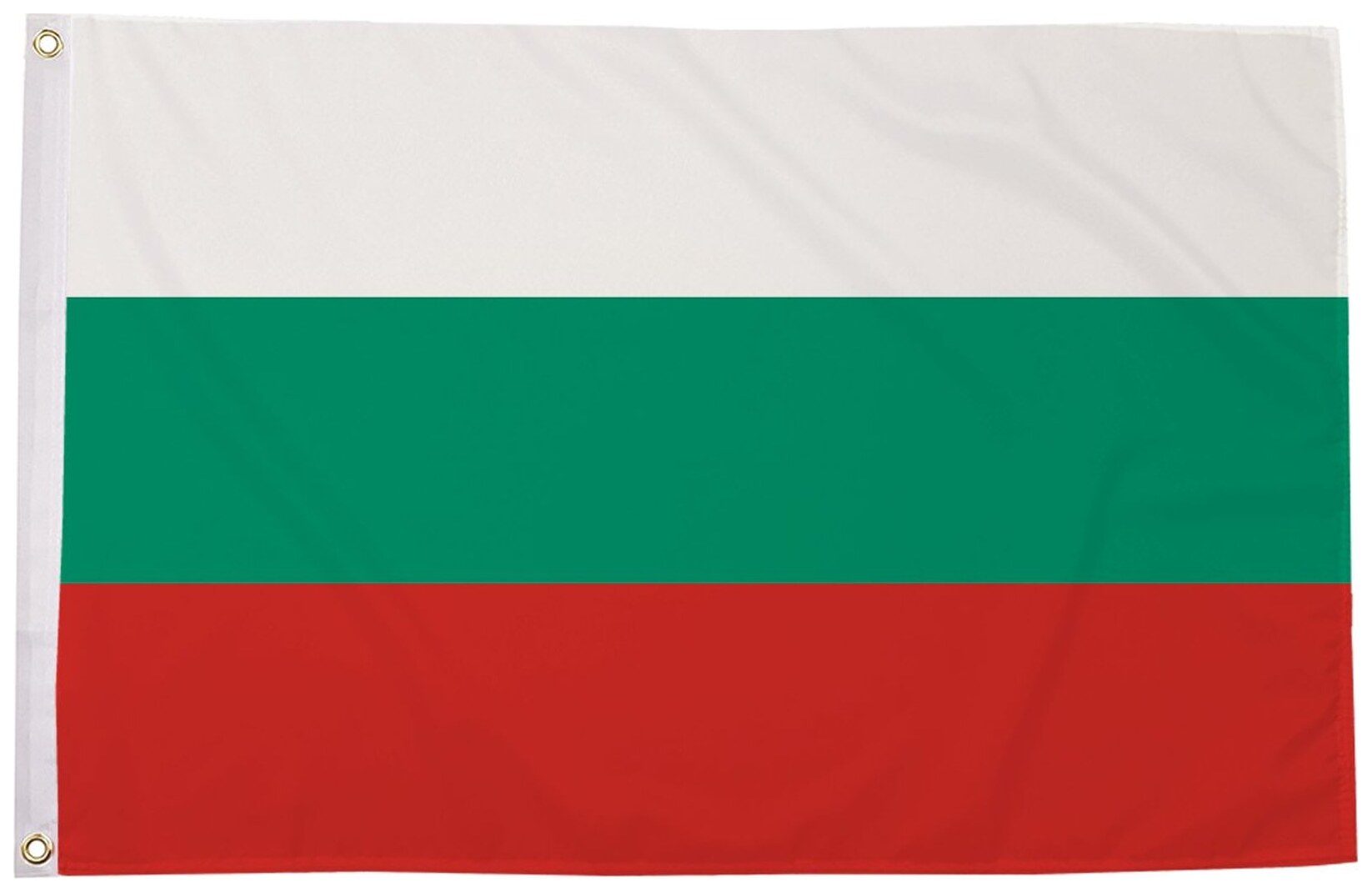
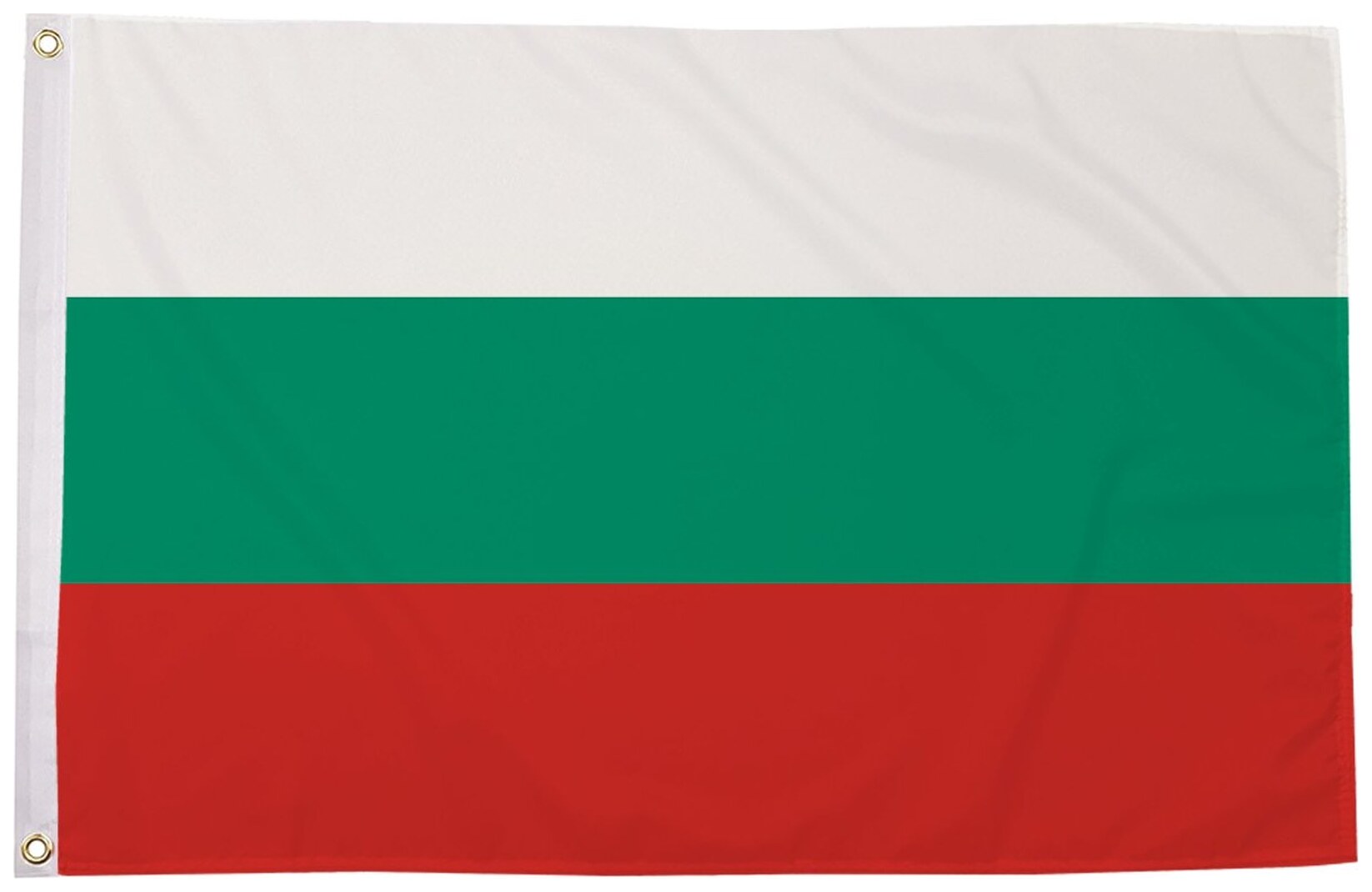
The flag has three equal horizontal stripes: white at the top, green in the middle and red at the bottom, in a 3:5 ratio, the same shape as a standard 5ft x 3ft flag. White is commonly said to stand for peace, green for the land and its fertility, and red for the courage of those who fought for freedom. Today there's one plain tricolour for state and private use alike; the coat of arms that appeared on the flag during the communist period was dropped in 1990.
Flying it the right way matters, because Bulgaria's colours are easy to mix up:
- White goes at the top. Flipped, it reads red-green-white, which is not a national flag.
- Hung vertically against a wall, the white stripe should be on the left as you face it.
- Don't confuse it with Hungary (red-white-green) or Italy (vertical green-white-red).
Flying it next to the Union Flag
Use separate flagpoles of the same height with flags of the same size; two national flags should never share one pole. On UK soil the Union Flag usually takes the position of honour, on the left as seen by someone facing the flags. Our flag order of precedence guide covers larger groups.
Decorating for 3 March
- On the pole: a 5ft x 3ft Bulgaria flag for the day itself, or a Bulgaria DuraFlag if it will fly through the changeable early-spring weather.
- For a hall or café: Bulgaria bunting; a 9m length suits most community rooms.
- On the table: Bulgaria table flags beside a bowl of martenitsi make a simple centrepiece.
- For children: 9in x 6in hand flags for a school assembly or folk-dance performance.
Hosting a wider European evening? Our international day ideas may help.
Frequently asked questions
Why is 3 March Bulgaria's national day?
It marks the Treaty of San Stefano, signed on 3 March 1878, which restored a Bulgarian state after Ottoman rule.
What is the difference between Liberation Day and Independence Day in Bulgaria?
Liberation Day (3 March) marks 1878; Independence Day (22 September) marks the 1908 declaration of full independence. Both are public holidays.
Is the martenitsa part of Liberation Day?
Not directly. Martenitsi are given on 1 March, Baba Marta Day, but people are usually still wearing them on 3 March.
Which way up is the Bulgarian flag?
White at the top, green in the middle, red at the bottom.
See all our Bulgarian flags or explore flags of the world, and find more dates in our European national days guide.