European Union
 Confederate
 Rainbow
 Other Pride
 Red Ensign
 RAF Ensign
 Yorkshire
 Cornwall
 Union Jack
 England
 Scotland
 Wales
 USA
 Ireland
 France
 Germany
 Italy
 Australia

European national days run right through the calendar, from Slovakia on 1 January to Finland on 6 December, and almost every country in Europe has one fixed date when its flag flies from public buildings, homes and embassies. The table below lists the national day of every European country, what each one marks, and a link to our fuller guide where we have one.
It is written for anyone who needs to plan ahead: hotels and venues with international guests, schools running an international week, businesses with European staff or customers, and the many European communities across the UK who mark their own day here.
How we chose which countries to include
"Europe" has no single official boundary, so we used a simple rule. The table covers every sovereign state with its capital in Europe, including the microstates (Andorra, Liechtenstein, Monaco, San Marino and Vatican City) and Kosovo, whose independence is recognised by many but not all countries. We have also included Cyprus, an EU member, and Armenia, Azerbaijan, Georgia and Turkey, which sit on the edge of the continent and are members of the Council of Europe. Kazakhstan, which has only a small part of its territory west of the Ural River, is left out.
Some countries have more than one important date, and a few have no official national day at all. In those cases we give the date most widely treated as the national day and mention the others in the same row.
European national days calendar
These are fixed dates that fall on the same day every year, except where noted. Where a date lands on a weekend, a country may move the public holiday to a weekday, but the flags usually still fly on the day itself.
| Date | Country | What it marks | Our guide |
|---|---|---|---|
| 1 January | Slovakia | Day of the Establishment of the Slovak Republic (1993) | – |
| 11 February | Vatican City | Foundation of the Vatican City State under the Lateran Treaty (1929). The anniversary of the reigning Pope's election is also a holiday | – |
| 15 February | Serbia | Statehood Day: the First Serbian Uprising (1804) and the Sretenje Constitution (1835) | – |
| 16 February | Lithuania | Restoration of the State Day (1918); 11 March marks the restoration of independence in 1990 | Lithuanian Independence Day |
| 17 February | Kosovo | Independence Day (2008) | – |
| 24 February | Estonia | Independence Day (1918) | – |
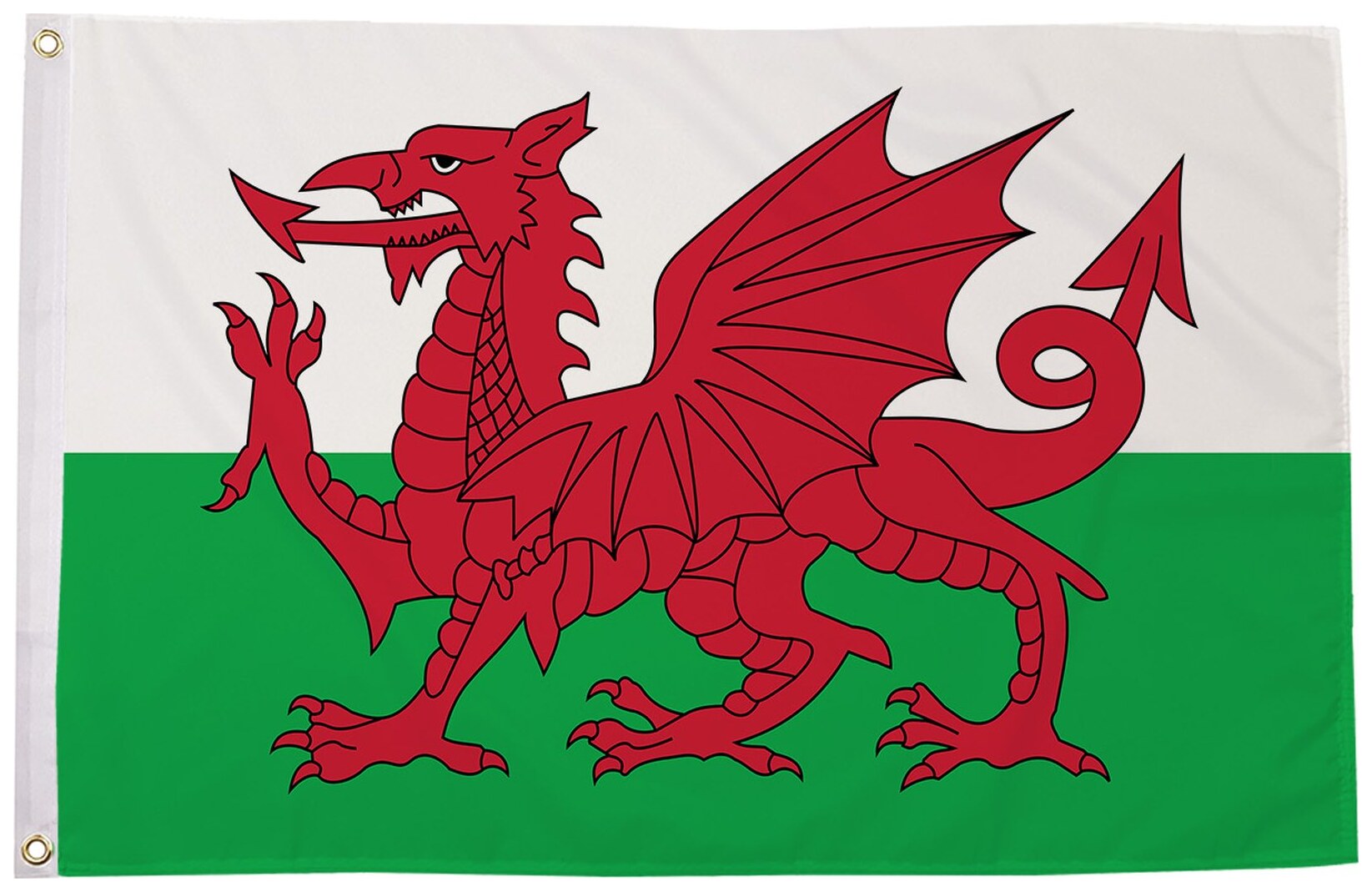
| 1 March | Wales (UK) | St David's Day, the patron saint of Wales | St David's Day |
| 1 March | Bosnia and Herzegovina | Independence Day (1992 referendum); 25 November is Statehood Day. Observance differs between the country's two entities | – |
| 3 March | Bulgaria | Liberation Day: the Treaty of San Stefano (1878) | Bulgaria's Liberation Day |
| 17 March | Ireland | St Patrick's Day | St Patrick's Day |
| 17 March | Northern Ireland (UK) | St Patrick's Day | St Patrick's Day |
| 25 March | Greece | Independence Day: the start of the War of Independence (1821) and the Feast of the Annunciation | Greek Independence Day |
| 23 April | England (UK) | St George's Day | St George's Day |
| 27 April | Netherlands | King's Day, the King's birthday (26 April when the 27th is a Sunday). There is no official national day | King's Day |
| 17 May | Norway | Constitution Day (1814) | Norway's Constitution Day |
| 26 May | Georgia | Independence Day (1918) | – |
| 28 May | Azerbaijan | Independence Day: the Azerbaijan Democratic Republic (1918) | – |
| 30 May | Croatia | Statehood Day: the first multi-party parliament (1990) | – |
| 2 June | Italy | Republic Day: the 1946 referendum | Italian Republic Day |
| 5 June | Denmark | Constitution Day (1849). Denmark has no official national day | Denmark's Constitution Day |
| 6 June | Sweden | National Day: Gustav Vasa's election as king (1523) and the 1809 constitution | Sweden's National Day |
| 10 June | Portugal | Portugal Day, honouring the poet Camões and Portuguese communities abroad | Portugal Day |
| 12 June | Russia | Russia Day: the Declaration of State Sovereignty (1990) | – |
| 17 June | Iceland | National Day: founding of the republic (1944) | – |
| 23 June | Luxembourg | National Day, the Grand Duke's official birthday | – |
| 25 June | Slovenia | Statehood Day (1991) | – |
| 3 July | Belarus | Independence Day: liberation of Minsk (1944) | – |
| 13 July | Montenegro | Statehood Day (1878 and 1941); 21 May is Independence Day (2006) | – |
| 14 July | France | Bastille Day, the Fête nationale (1789 and 1790) | Bastille Day |
| 21 July | Belgium | National Day: Leopold I's oath as first King of the Belgians (1831) | Belgian National Day |
| 1 August | Switzerland | Swiss National Day: the Federal Charter (1291) | Swiss National Day |
| 15 August | Liechtenstein | National Day (also the Feast of the Assumption) | – |
| 20 August | Hungary | St Stephen's Day, foundation of the state; Hungary also marks 15 March (1848) and 23 October (1956) | Hungary's national days |
| 24 August | Ukraine | Independence Day (1991); 23 August is National Flag Day | Ukraine's Independence Day |
| 27 August | Moldova | Independence Day (1991) | – |
| 3 September | San Marino | Feast of St Marinus and founding of the republic (traditionally 301) | – |
| 8 September | Andorra | Our Lady of Meritxell, the national patron | – |
| 8 September | North Macedonia | Independence Day (1991 referendum) | – |
| 21 September | Malta | Independence Day (1964), one of Malta's five national days | – |
| 21 September | Armenia | Independence Day (1991 referendum); 28 May is First Republic Day | – |
| 1 October | Cyprus | Independence Day (1960) | – |
| 3 October | Germany | German Unity Day: reunification (1990) | German Unity Day |
| 12 October | Spain | Fiesta Nacional de España | Spain's National Day |
| 26 October | Austria | National Day: the law on permanent neutrality (1955) | – |
| 28 October | Czech Republic | Independent Czechoslovak State Day (1918) | – |
| 29 October | Turkey | Republic Day (1923) | – |
| 11 November | Poland | Independence Day (1918) | Polish Independence Day |
| 18 November | Latvia | Proclamation of the Republic (1918) | Latvia's Independence Day |
| 19 November | Monaco | National Day, also called the Sovereign Prince's Day | – |
| 28 November | Albania | Independence and Flag Day (1912) | – |
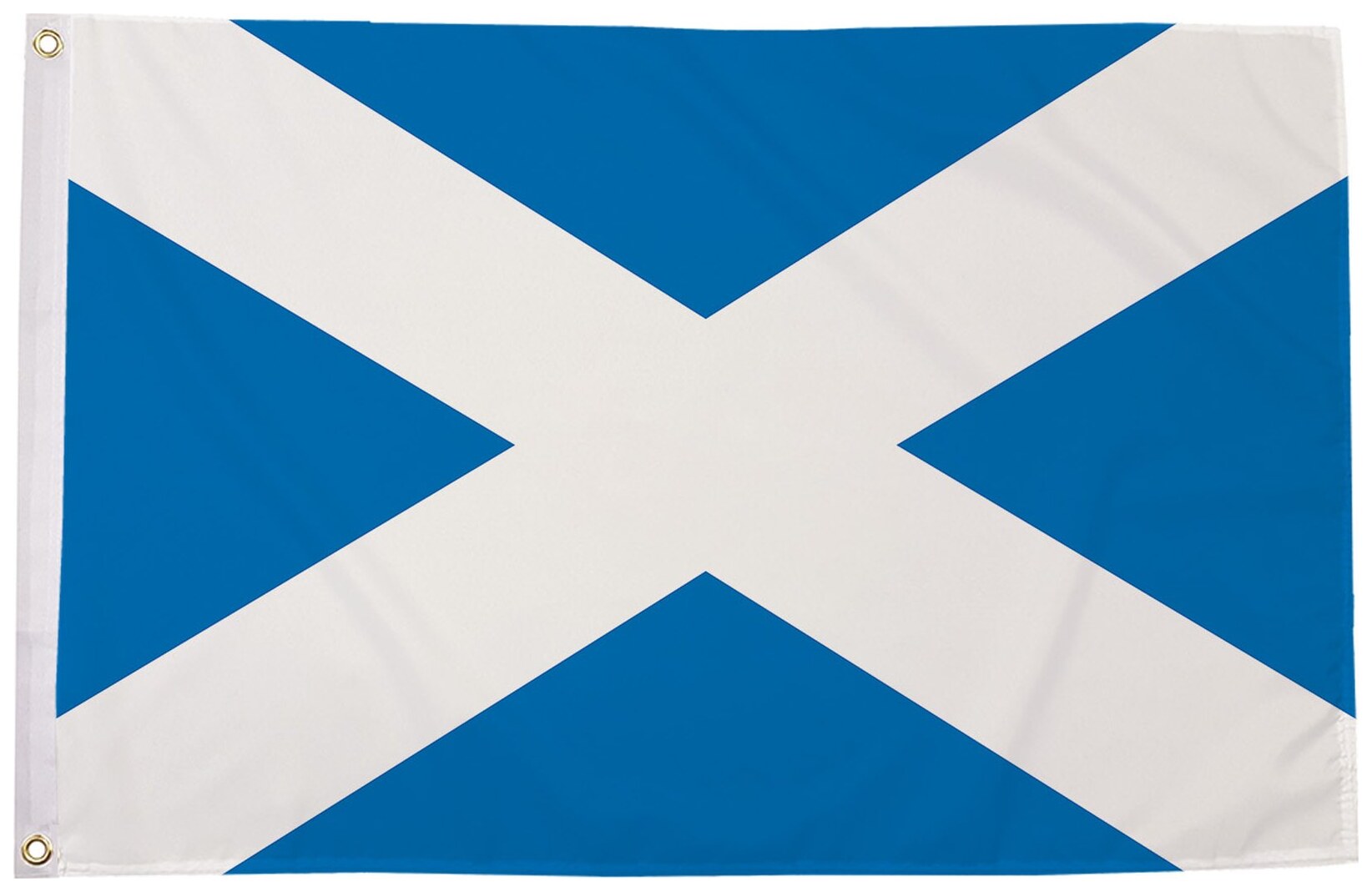
| 30 November | Scotland (UK) | St Andrew's Day | St Andrew's Day |
| 1 December | Romania | Great Union Day (1918) | Romania's National Day |
| 6 December | Finland | Independence Day (1917) | Finland's Independence Day |
The United Kingdom has no single national day, so it appears as four rows, one for each patron saint's day. For the wider UK flag-flying calendar, including royal birthdays and Commonwealth Day, see our guide to UK flag flying days.
Europe Day: two dates, one flag
Alongside the national days there are two Europe Days. The European Union marks 9 May, the anniversary of the Schuman Declaration of 1950, which led to the European Coal and Steel Community. The Council of Europe, a separate and larger organisation, marks 5 May, the date it was founded in 1949.
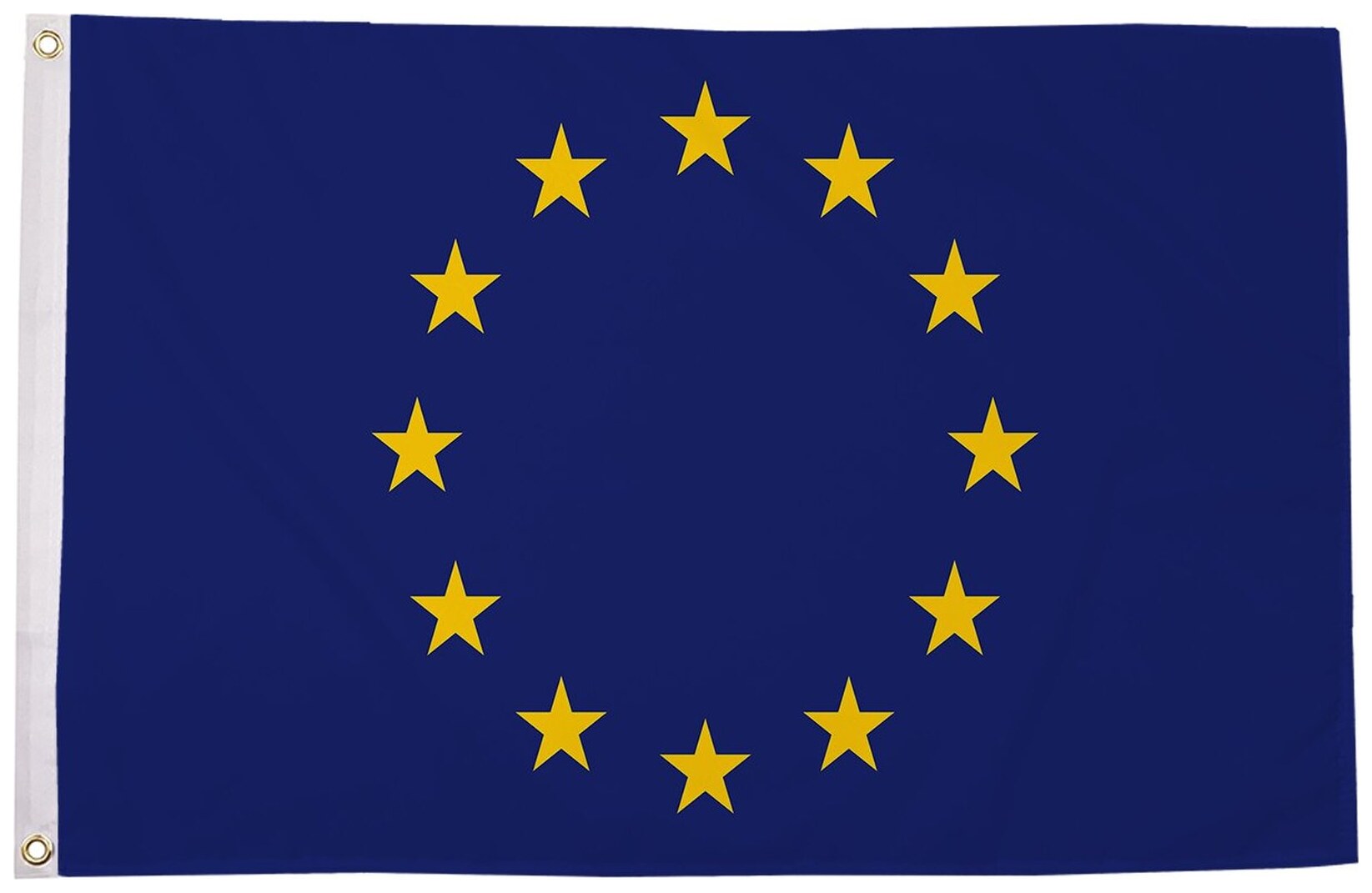
Both use the same flag: twelve gold stars in a circle on a blue field. The Council of Europe adopted it in 1955, and the European institutions took it up in the 1980s. The number of stars is fixed and does not change with membership; twelve is a symbol of completeness and unity. That makes the European flag the right choice for either date, and our Europe Day range brings the flags, table flags and bunting together.
Using the calendar: hotels, businesses and schools
A national day is one of the simplest, most welcome ways to acknowledge guests, staff or pupils from another country. A few practical pointers:
- Hotels and venues. When a delegation or a large party from one country is staying on its national day, flying that nation's flag on your pole or setting a world country table flag at reception is a thoughtful touch. For conferences with several nations present, a matching set of satin table flags keeps everything uniform.
- Several flags at once. If you fly a guest nation's flag alongside the Union Flag, the order and position matter. Our guide to flag order of precedence explains where each flag should go and why each should be the same size on poles of the same height.
- Businesses with European staff or customers. Polish, Romanian, Lithuanian and Portuguese communities, among others, are large in many UK towns. A flag in a shop window or a table flag on the counter on the right day is noticed and appreciated.
- Schools. The calendar works well for a "flag of the week" or an international day. Our post on flags for schools' international days has ideas for classroom displays and hand flag parades.
Every flag in a display should be the current official national flag. Check that the design is right before the day: several countries, including Spain and Poland, have a state version with a coat of arms as well as a plain civil version, and both are correct in most settings.
Which flags and decorations suit a European national day
The right product depends on where it will be seen and for how long:
- Outdoor pole flag. A 5ft x 3ft flag suits most domestic and business flagpoles. For a day or a week of display a standard printed flag is fine; if the flag will go up every year, a heavier DuraFlag lasts noticeably longer. Our flagpole size guide matches flag size to pole height.
- Indoors and on desks. Table flags and 9in x 6in hand flags on wooden poles are ideal for reception desks, restaurant tables and classrooms.
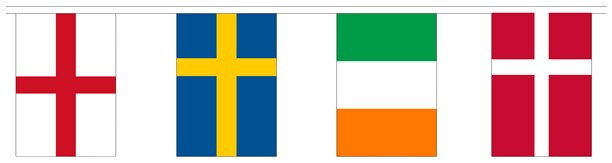
- Bunting for a multi-nation event. For a European evening, a twinning event or a Eurovision party, our 24-nation European triangle bunting covers many of the continent's flags on a single length. For a single country, rectangular country bunting comes in 3m and 9m lengths.
- Packs. Table flag packs are the easiest way to cover a conference or a school's international day with several nations at once.
If you are hosting a Eurovision night as well, our Eurovision party guide covers bunting lengths and how to theme a room around the competing countries.
Frequently asked questions
Does every European country have a national day?
Almost. Denmark and the Netherlands have no official national day, so Constitution Day (5 June) and King's Day (27 April) are widely treated as theirs. The United Kingdom has no single national day; each home nation celebrates its patron saint's day instead.
Why do some countries have more than one national day?
Many countries mark several turning points in their history. Hungary has three national holidays (15 March, 20 August and 23 October), Lithuania marks both 16 February and 11 March, and Malta has five national days. Our table gives the date most often used as the national day and mentions the others.
What is the difference between the two Europe Days?
The European Union's Europe Day is 9 May, the anniversary of the 1950 Schuman Declaration. The Council of Europe's is 5 May, its founding date in 1949. Both use the same blue flag with twelve gold stars.
Can I fly another country's flag in the UK on its national day?
Yes. Flying a friendly nation's flag on its national day is common practice for embassies, hotels, businesses and private homes. Treat it with the same respect as the Union Flag, fly it at the same height and size if they are side by side, and take it down if it becomes damaged. Planning rules for flagpoles are covered separately in our guide to flagpole planning permission.
Do national day dates change from year to year?
Nearly all are fixed dates. The main exception is King's Day in the Netherlands, which moves to 26 April when 27 April is a Sunday. Public holidays that fall at a weekend may also move to a weekday in some countries, but flags are usually flown on the day itself.
Whichever date is next on your calendar, you will find every nation in our European country flags range, with matching world country bunting and table flags for indoor displays.