European Union
 Confederate
 Rainbow
 Other Pride
 Red Ensign
 RAF Ensign
 Yorkshire
 Cornwall
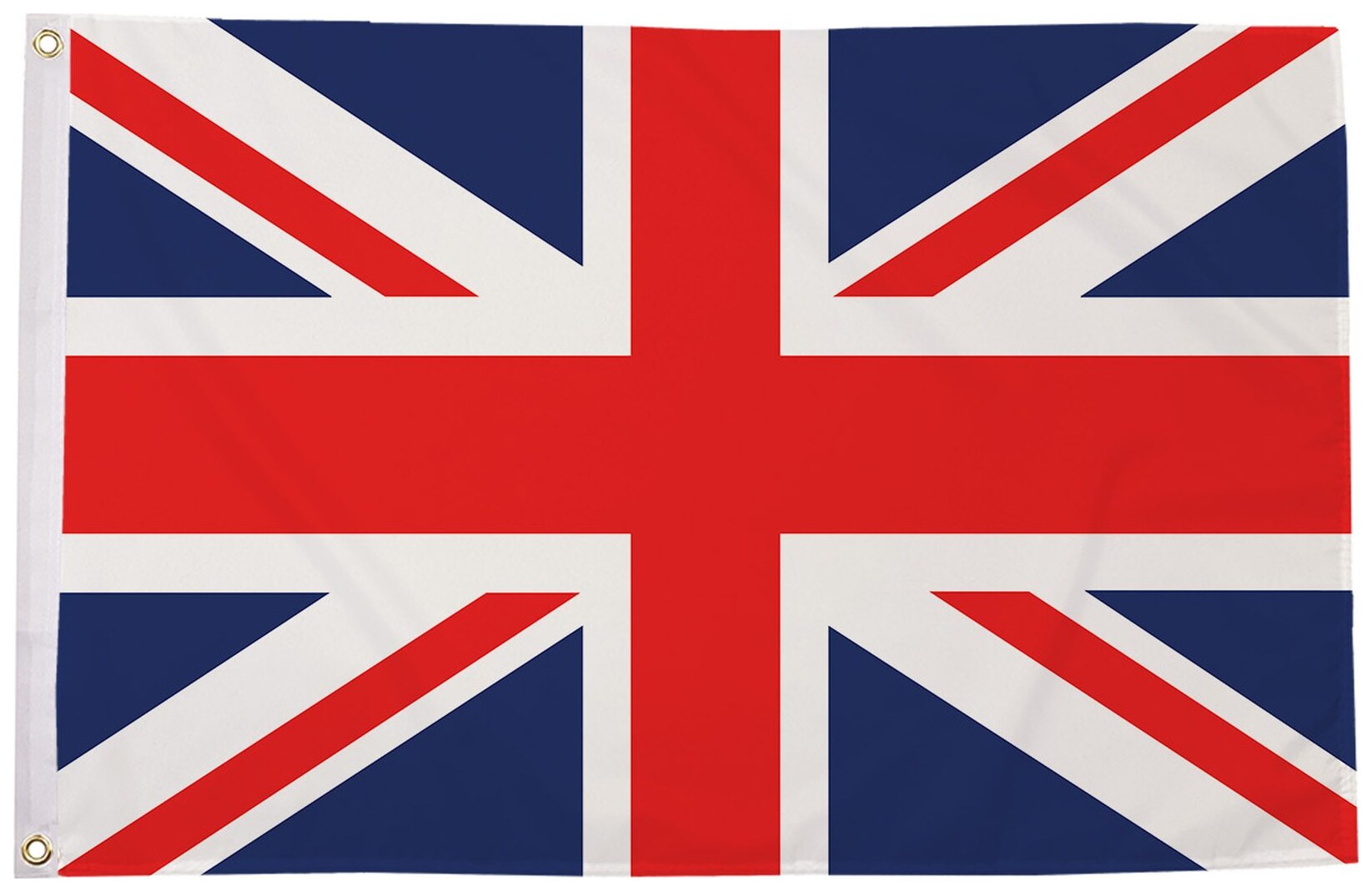
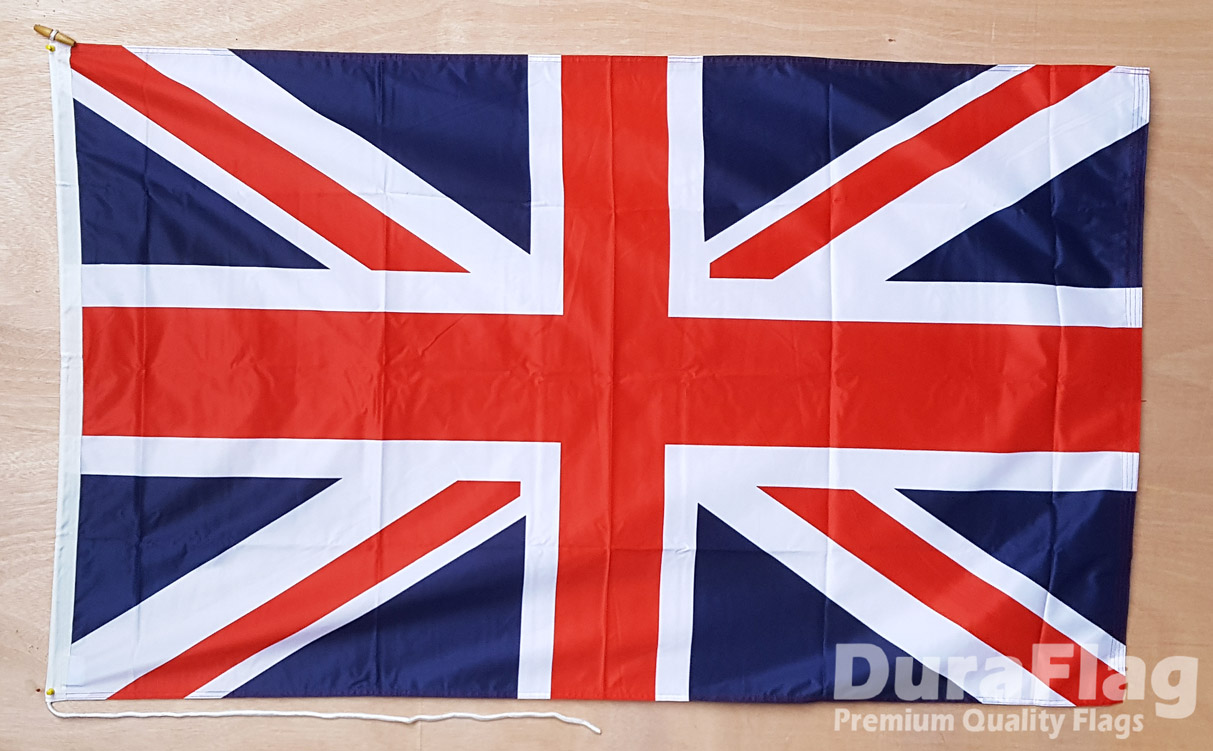
 Union Jack
 England
 Scotland
 Wales
 USA
 Ireland
 France
 Germany
 Italy
 Australia


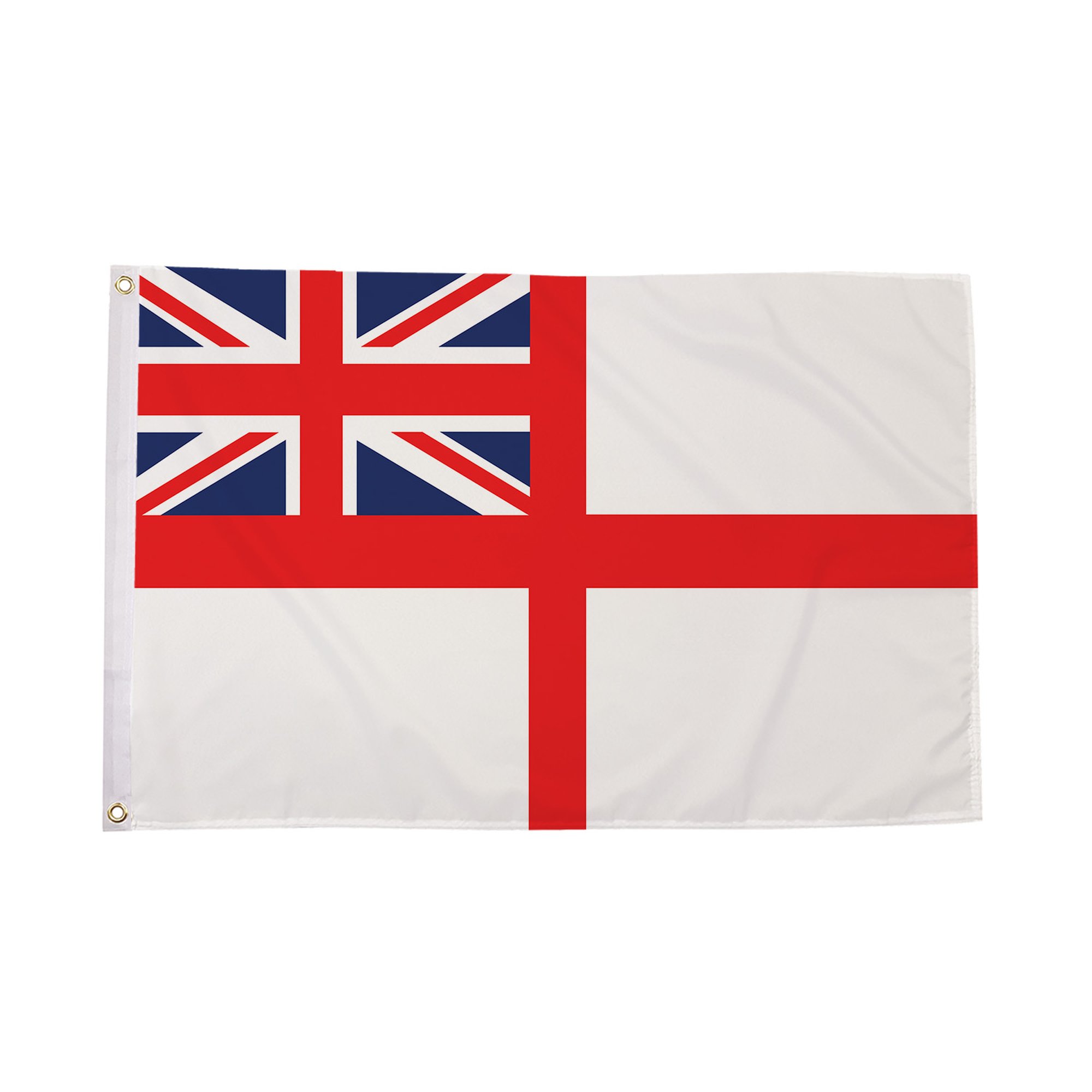
The White Ensign is the ensign of the Royal Navy: a red St George's Cross on white with the Union Flag in the upper corner by the mast. It began as one of three squadron colours and has been the Royal Navy's only ensign since 1864. It also flies ashore, at naval bases, churches and memorials, and a handful of places abroad.
Quick answer: the White Ensign is a St George's Cross with the Union Flag in the canton. The cross was added in 1702, the Union in 1707 and the St Patrick's saltire in 1801. Since 1864 it has been flown only by Royal Navy ships and shore establishments, plus a few bodies with special permission, such as the Royal Yacht Squadron.
From squadron colour to naval ensign
In 1627 the fleet was divided into three squadrons under the Red, Blue and White Ensigns. In 1653 the order of seniority became red, white and blue, and this arrangement lasted until 9 July 1864, when it was ended by Order in Council. [1]
The large red cross was added to the plain white English ensign in 1702 to avoid confusion with the plain white French ensign of the time, at first only for ships serving outside home waters. In 1707, after the union with Scotland, the Union Flag replaced the St George's Cross in the canton; the plain and cross versions existed side by side until the plain one was discontinued in 1744. On 1 January 1801 the St Patrick's saltire was added to the Union Flag, giving the ensign its present form. [1]
The Battle of Trafalgar in 1805 was fought under the White Ensign because Nelson was Vice-Admiral of the White and ordered all his ships to wear white colours. In 1864, when the squadron system ended, the White Ensign was assigned to the Royal Navy, the Blue Ensign to government service and the Red Ensign to the merchant marine. [1]
Why naval bases fly it
Under the Naval Discipline Acts of 1864 and 1866, the Act applied to "Every Person in or belonging to Her Majesty's Navy, and borne on the Books of any One of Her Majesty's Ships in Commission". [2] To be subject to naval discipline, a sailor therefore had to be borne on the books of a commissioned ship, even when serving ashore.
In 1931 the Admiralty explained that the ensign's use on land was a "customary extension" from "the harbour ship used as a fleet establishment to barracks and other buildings on shore serving the same purpose", adding that "the White Ensign is nothing else but the national colours of a ship of war in commission". [1] The Naval Discipline Act 1957 defined "Her Majesty's ships" as "commissioned ships flying the white ensign" and, separately, "Her Majesty's naval establishments". [3]
In 1952 the First Lord of the Admiralty told Parliament that HMS President served as the accounting authority for officers and ratings at the Admiralty and in miscellaneous appointments, with just over 2,000 people on its books. [4]
Ashore by permission
Several places have special permission to fly the White Ensign. [1]
- St Martin-in-the-Fields, Trafalgar Square, as the designated Admiralty church; the flag is provided at public expense.
- The Cenotaph, Whitehall, where the White Ensign flies with the Union Flag and the Blue, Red and (since 1943) RAF Ensigns, in the senior position at the Unknown Warrior's right shoulder.
- Trinity House vessels, under an Admiralty letter of 21 June 1894, when dressed and when escorting the Sovereign.
- The Royal Yacht Squadron, under an Admiralty warrant of 1829; an 1842 minute restricted yacht-club use of the White Ensign to the Squadron.
For the bicentenary of Trafalgar in 2005 the First Sea Lord asked people to fly White Ensigns and the Queen gave permission for government buildings to fly it over the weekend; even Downing Street flew one. [5] In a 2020 reply to the Town Mayor of Wantage, published on Flags of the World, the Royal Navy said its regulations bind only naval personnel and, under 2012 government guidance, no authority is needed to fly the ensign on land; at sea, section 4 of the Merchant Shipping Act 1995 makes it an offence to fly it on a vessel other than one of the Sovereign's ships without a warrant. [5]
Beyond Britain
The US destroyer USS Winston S. Churchill, whose navigator is a Royal Navy officer, flies the White Ensign from her outboard halyard "in acknowledgement of the tie between our countries". [6] The White Ensign is also hoisted daily at the British Cemetery on Ocracoke Island, North Carolina, which holds four seamen from HM Trawler Bedfordshire, torpedoed in May 1942. [1] The SS Great Britain in Bristol wears the White Ensign and Union Jack because these were the colours worn at her launch in 1843. [1]
Commonwealth navies once wore the White Ensign unaltered. The Royal Australian Navy hoisted its own ensign on 1 March 1967, and the Royal New Zealand Navy's was authorised in 1968. [1] Canada discontinued the White Ensign in 1965, when the Maple Leaf Flag became both ensign and jack; a distinctive naval jack followed in 1968, and on 5 May 2013 it became the Canadian Naval Ensign. [7]
Fly the White Ensign
Midland Flags sells the White Ensign flag in a range of sizes.
Sources
- Malcolm Farrow (ed. David Prothero), "The Colours of the Fleet", The Flag Institute, 15 January 2015 (pages 7, 9, 14-15 and 18-22).
- Naval Discipline Act 1866, section 87 (and Naval Discipline Act 1864, section 83), transcribed at "Legislation on naval discipline", pdavis.nl.
- Naval Discipline Act 1957, section 132, legislation.gov.uk (as enacted).
- Hansard, "H.M.S. President (Crew)", HC Deb 19 November 1952, vol 507, c170W.
- Flags of the World, "United Kingdom: the White Ensign", last modified 17 April 2021.
- Royal Navy, "British officer's unique mission on US Navy warship", 18 November 2020.
- Government of Canada, "The Canadian Naval Ensign", Royal Canadian Navy, modified 28 April 2022.