European Union
 Confederate
 Rainbow
 Other Pride
 Red Ensign
 RAF Ensign
 Yorkshire
 Cornwall
 Union Jack
 England
 Scotland
 Wales
 USA
 Ireland
 France
 Germany
 Italy
 Australia

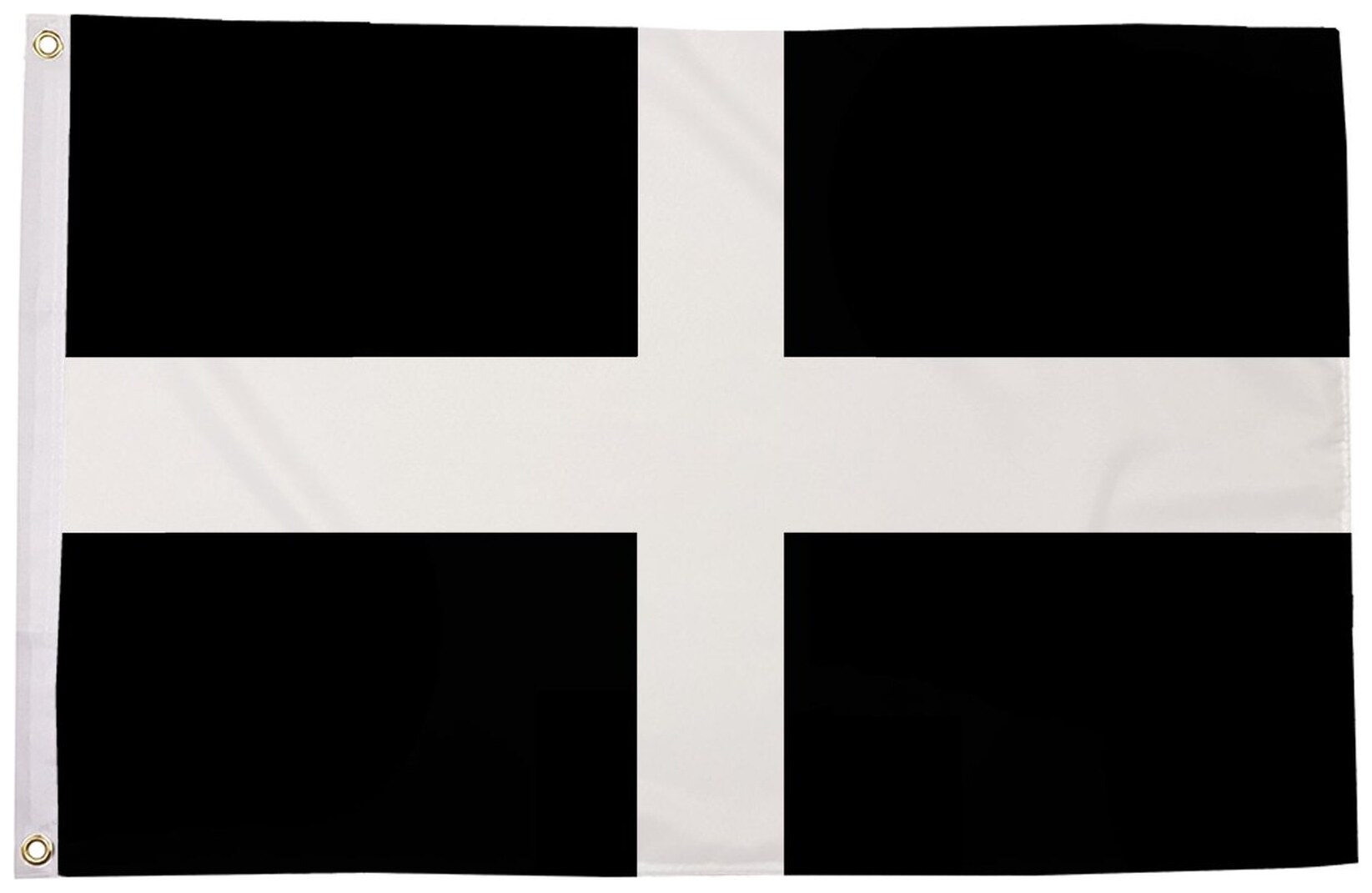
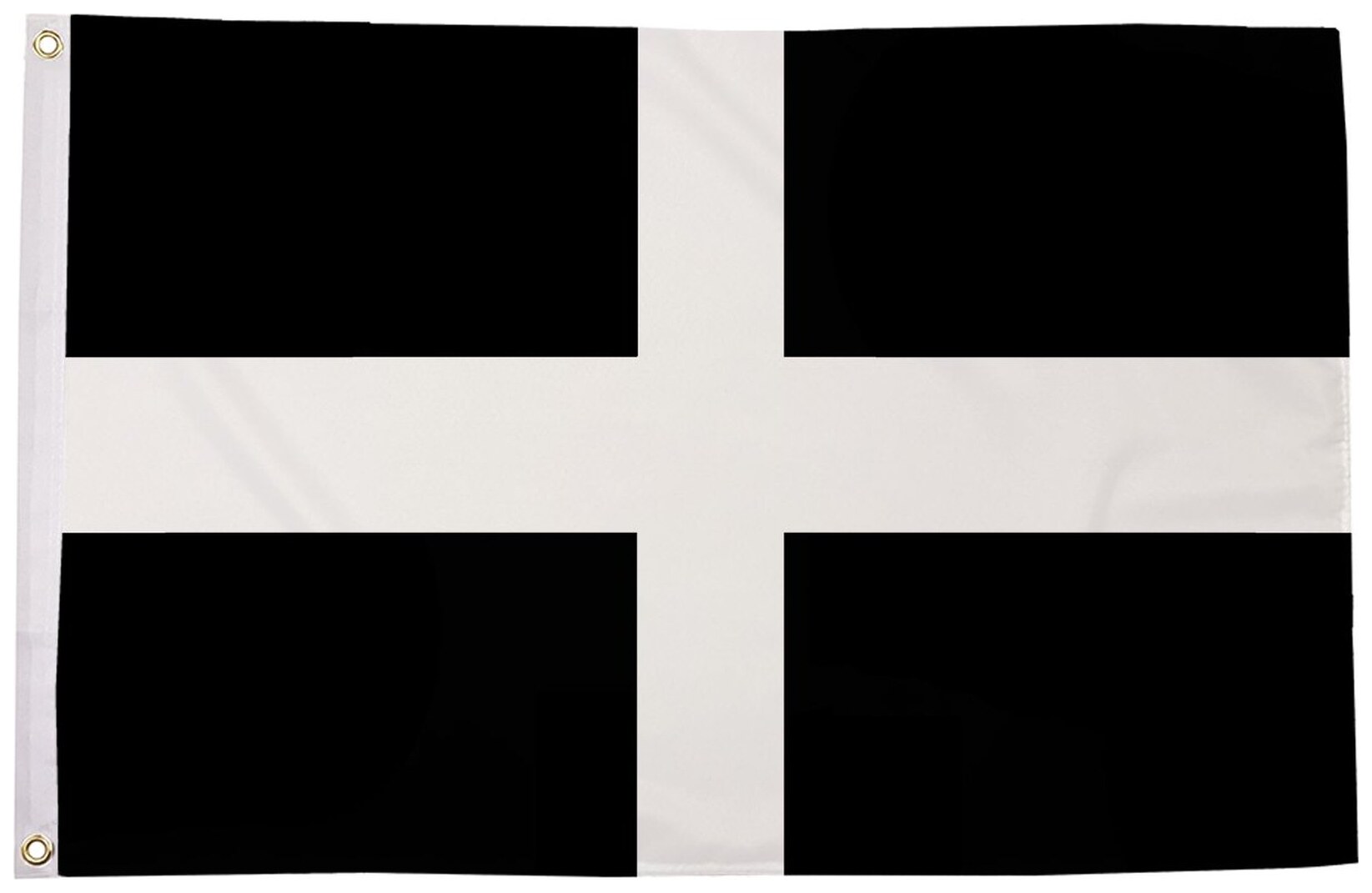
St Piran's Day is Cornwall's national day, celebrated on 5 March in honour of St Piran, the patron saint of tinners. The day's emblem is St Piran's flag, a white cross on a black field, which you will see on homes, pubs, schools and boats across Cornwall, and wherever Cornish people live. This guide explains the legend behind the flag and how to mark the day.
Who was St Piran?
Piran (Peran in Cornish) is usually described as an Irish monk of the fifth or sixth century. The most popular legend says that pagan Irish kings tied him to a millstone and threw him into a stormy sea, but the sea calmed and the millstone floated him safely across to the north Cornish coast, landing on the beach at what is now Perranporth. He built a small oratory, or chapel, in the dunes there, and his first disciples are said to have been a badger, a fox and a bear.
As with many early saints, the stories were written down long after his death and are best enjoyed as legend rather than history. What is clear is that Piran was venerated in Cornwall for centuries, and that his feast day was kept by miners as a holiday long before it became a national day.
The legend of the black and white flag
Piran is the patron saint of tinners because of another legend. One day he built a fire using a black hearthstone. The heat was so great that a white liquid ran out of the stone and formed a cross on its surface: Piran had discovered tin smelting. The white cross on black is said to represent that molten tin running from the dark rock.
The flag's documented history is more modest. The earliest known written description comes from Davies Gilbert's Parochial History of Cornwall in 1838, which calls a white cross on black the banner of St Piran and the standard of Cornwall. Since the Cornish revival of the late nineteenth and twentieth centuries it has become the accepted flag of Cornwall, and in Cornish it is called Baner Peran.
How St Piran's Day is celebrated
- Perranporth – a procession across the dunes to St Piran's Cross and the site of his oratory is usually held on the Sunday nearest 5 March, often with a re-enactment of his life performed in Cornish and English.
- Town parades – many Cornish towns hold parades on or around 5 March with music, dancing and a sea of black and white flags. Check your town council or local St Piran's Day group for dates.
- Schools – children make flags, learn Cornish words and songs, and often wear black and white.
- Food and drink – pasties, saffron buns and Cornish ales feature heavily, and pubs host music nights.
- Beyond Cornwall – Cornish societies in London and further afield hold dinners and gatherings, so the day is celebrated well outside the Tamar.
Interest has grown since 2014, when the UK Government recognised the Cornish as a national minority under the Council of Europe's Framework Convention for the Protection of National Minorities. St Piran's Day is not a bank holiday, so many events take place in the evening or at the weekend.
Flags and bunting for St Piran's Day
| Where | Suggested flag |
|---|---|
| House or garden flagpole | A 5ft x 3ft Cornwall DuraFlag if it will fly through the spring gales; a printed flag for the day itself |
| Parades and schools | Cornwall hand flags: 18in x 12in on a 60cm pole, or 9in x 6in on a 30cm pole for younger children |
| Pubs, halls and shopfronts | 9m runs of Cornwall bunting along frontages and ceilings |
| Dinners and Cornish society events | Cornwall table flags on every table |
| Boats and harbours | The Cornwall Ensign design as a decorative or club flag; at sea, a British boat should still wear its proper ensign (see our guide to the Red, White and Blue Ensigns) |
Early March on the Cornish coast is usually wet and windy. If your flag will stay up after the day, choose a DuraFlag with a reinforced header and fly end, and take it in during storms. Bringing a flag in during gales is the single best way to make it last.
Frequently asked questions
When is St Piran's Day?
Every year on 5 March. Some events, including the Perranporth procession, are held on the nearest Sunday.
How do you say Happy St Piran's Day in Cornish?
"Gool Peran Lowen".
Is the Cornwall flag the same as St Piran's flag?
Yes. The white cross on black is both St Piran's flag and the flag of Cornwall.
Can I fly the Cornwall flag outside Cornwall?
Yes. Like other county flags, it can be flown anywhere. Many Cornish people living elsewhere fly it on 5 March. You can find other county days in our county days calendar and our guide to UK county flags.
Getting ready for 5 March? Browse our full range of Cornwall flags, from printed and nylon flags to DuraFlags, windsocks and hand flags.