European Union
 Confederate
 Rainbow
 Other Pride
 Red Ensign
 RAF Ensign
 Yorkshire
 Cornwall
 Union Jack
 England
 Scotland
 Wales
 USA
 Ireland
 France
 Germany
 Italy
 Australia



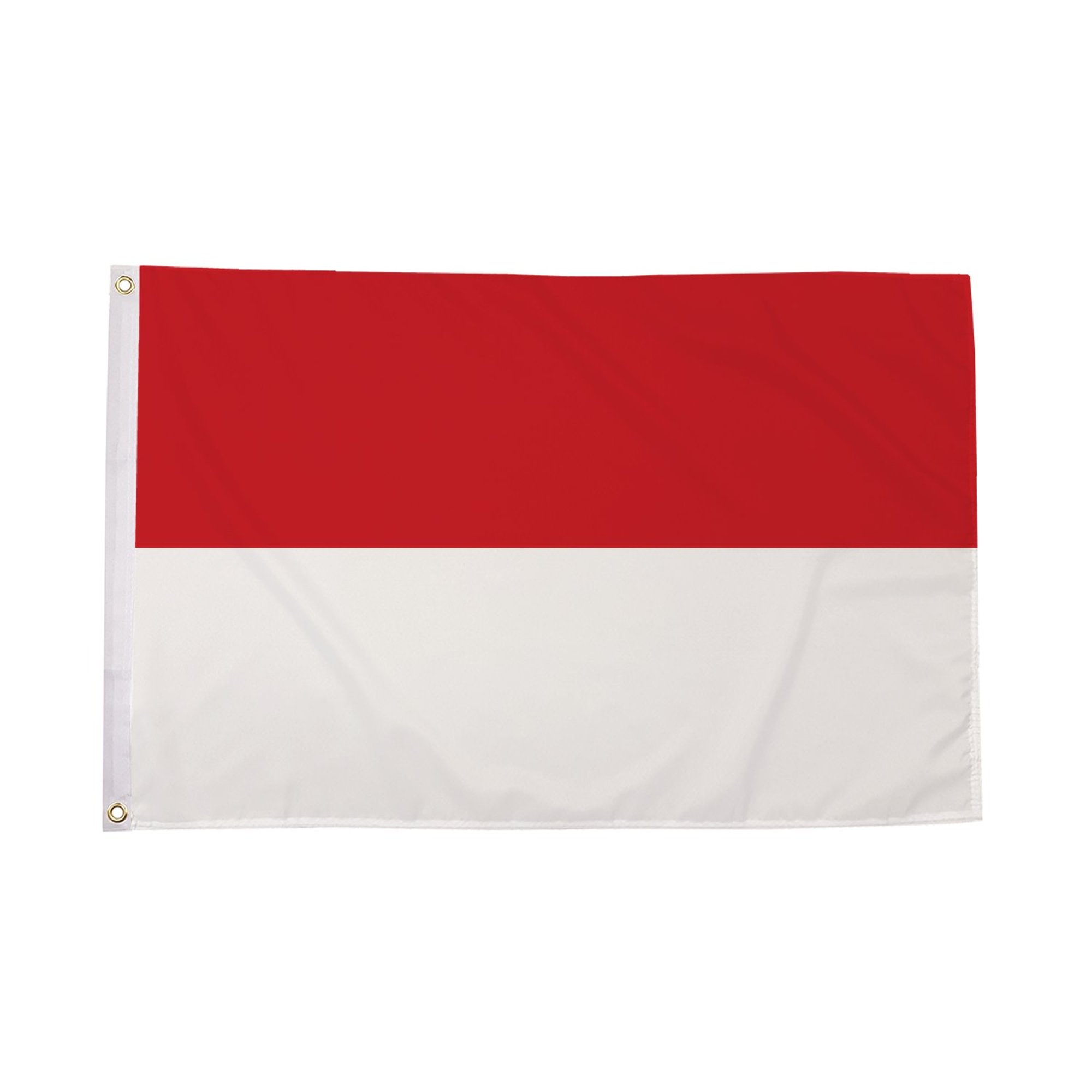
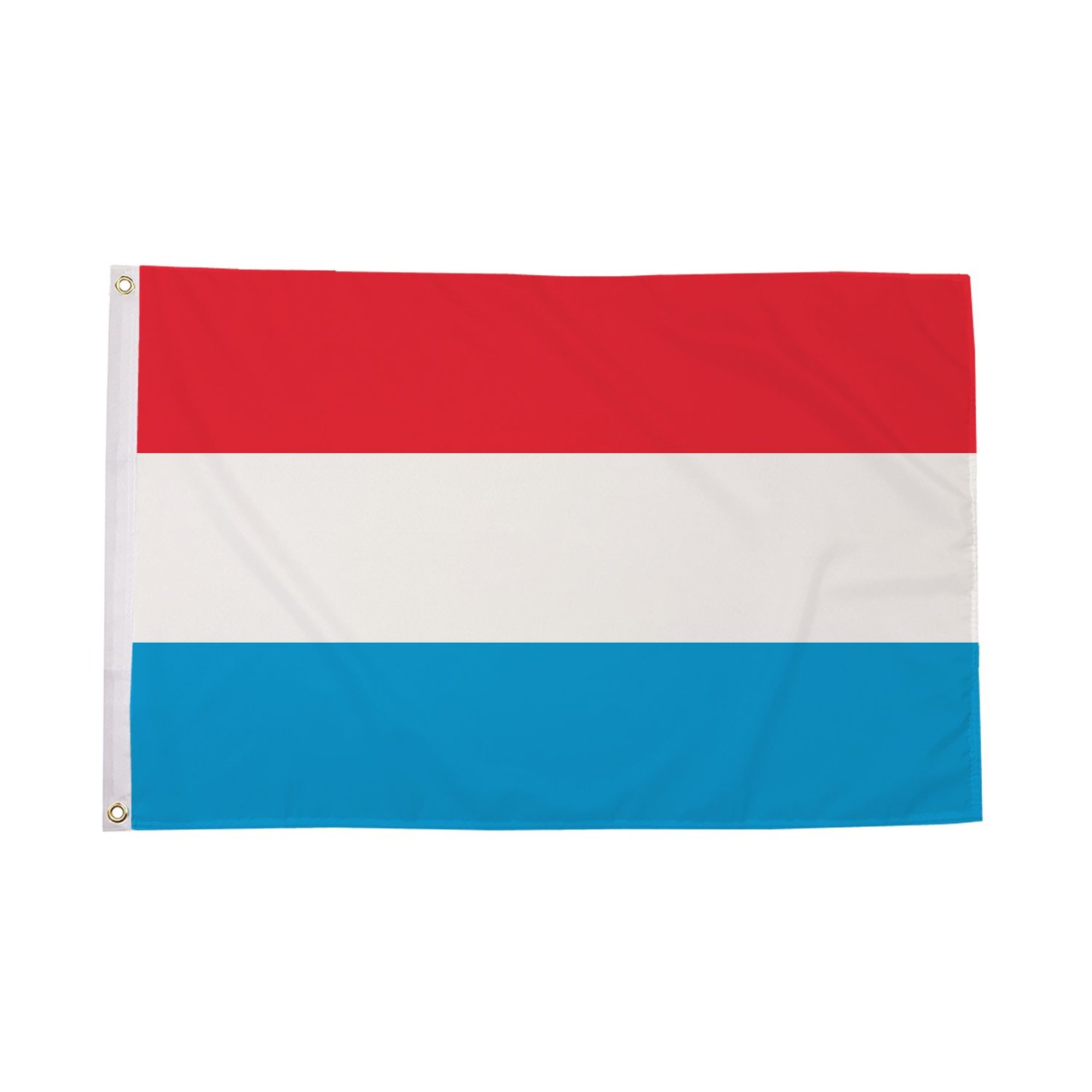
The flag of Monaco is one of the simplest national flags in Europe: two equal horizontal bands, red over white. Its colours come from the arms of the Grimaldi family, who have ruled Monaco for centuries, and its present form was fixed by Prince Charles III in 1881. Alongside it, the Principality uses a princely flag bearing the full coat of arms, an older lozenge-patterned banner, and the personal standard of the reigning Prince.
Quick answer: the flag of Monaco is red over white in two equal horizontal bands. It was set out in a Sovereign Ordinance of Prince Charles III dated 4 April 1881, and its colours recall the red and white of the Grimaldi coat of arms. The Prince's own standard is white with a crowned cypher of two red letters A.
The Sovereign Ordinance of 4 April 1881
The national flag and the princely flag were both defined in a Sovereign Ordinance of 4 April 1881 "on the princely flag and the national flag". Article 1 says the princely flag is made up of the Prince's arms in colour on a white field. Article 2 says the national flag is made up of two equal bands of red and white, set horizontally, red at the top and white at the bottom, both reaching the staff. Article 3 says both flags must follow the models annexed to the ordinance. [1]
The ordinance also set out where each flag was to be used. The princely flag was to fly over the Palace of Monaco and the Prince's other residences, on public buildings and on state vessels (Article 4). The national flag was assigned in particular to merchant and fishing vessels (Article 5). Both flags could be flown from private houses during ceremonies and public festivals (Article 6). [1]
The Constitution of 17 December 1962, as amended in 2002, repeats both descriptions in Article 7 and states that the use of the two flags is still governed by the ordinance of 4 April 1881. [2]
Why red and white?
According to the Government of Monaco, the national flag was chosen by Prince Charles III in 1881 and recalls the colours of the Grimaldi coat of arms, which in turn recall the red and white of the heraldry of the Republic of Genoa, the cradle of the princely family. The Government adds that a "poetic interpretation" sees in the flag the blood of Saint Devota, the 4th-century martyr who is the Principality's patron saint. [3]
The Grimaldi shield itself is described as "lozengy argent and gules": a pattern of silver (white) and red lozenges. [4]
Proportions and colours
The annex to the 1881 ordinance shows the national flag in proportions of 4:5. In practice, as noted by the vexillologists Whitney Smith and William Crampton, the flag is now almost always made in 2:3, although this ratio is unofficial. [4]
There is no official specification of the exact shade of red. Reference works give approximate values only: the flag manuals for the London 2012 Olympic Games give Pantone 186 red, and the flag reference Album des Pavillons (2023) gives Pantone 186c, RGB 210-16-52. [4]
The lozengy flag
A second, older design is a banner of the Grimaldi arms: a field of red and white lozenges. Flags of the World notes that this lozengy banner seems to have been used mainly in the 17th century, as shown by paintings in the Prince's Palace, and that it has continued in unofficial use since then. A photograph of the celebrations for Prince Rainier III's marriage to Grace Kelly shows eight of these banners, in at least two variants; the number of lozenges has never been fixed. [5] It has no defined official role.
The princely flag
The princely flag, sometimes called the government or state flag, is the full coat of arms on a white field, as laid down in Article 1 of the 1881 ordinance and Article 7 of the Constitution. [1] [2] The arms show the lozengy shield surrounded by the collar of the Order of Saint-Charles, set on a red mantle lined with ermine and topped by the princely crown, with two sword-bearing friars as supporters and the motto DEO JUVANTE ("with God's help"). [4]
Flags of the World records the princely flag flying at the seats of the Crown Council and the Government Council, while the red-and-white bicolour flies at the seat of the elected National Council. [4]
The Prince's personal standard
Separate from both, the reigning Prince has a personal standard. The standard of Prince Albert II is made of silk: white, with a golden fringe, bearing his cypher of two red letters A beneath a crown on one side and the arms of Monaco on the other. It was presented to him during his enthronement ceremony on 19 November 2005, and he passed it to the Chief of the Palace Guard. [4]
His father, Prince Rainier III, used a similar white flag with his own cypher. Whitney Smith illustrated it with a fringe about one-ninth of the height of the white field, and Barraclough and Crampton (1978) identified it as Prince Rainier's car flag. [4]
Fly the flag of Monaco
Midland Flags sells the Monaco flag in a range of sizes.
Sources
- Principality of Monaco, "Ordonnance Souveraine du 4 avril 1881 sur le pavillon princier et le pavillon national", Legimonaco (official legal database), Journal de Monaco.
- Constitution of the Principality of Monaco, 17 December 1962, as amended by Law No. 1.249 of 2 April 2002, Article 7. WIPO Lex text.
- Gouvernement Princier de Monaco, "Monegasque flag". Archived copy, 6 December 2025.
- Flags of the World, "Monaco", last modified 31 May 2025.
- Flags of the World, "Principality of Monaco: Historical flags", last modified 31 May 2025.