European Union
 Confederate
 Rainbow
 Other Pride
 Red Ensign
 RAF Ensign
 Yorkshire
 Cornwall
 Union Jack
 England
 Scotland
 Wales
 USA
 Ireland
 France
 Germany
 Italy
 Australia

Sri Lanka Independence Day, also called National Day, is held on 4 February and marks the day in 1948 when Ceylon, as the island was then known, gained independence from Britain. The main state ceremony takes place in Colombo, and the Lion Flag is flown across the island and by many Sri Lankans living in the UK.
Ceylon, 1948, and a change of name
Ceylon became independent on 4 February 1948 as a dominion within the Commonwealth, with the British monarch still head of state. D. S. Senanayake was its first Prime Minister. The handover was peaceful and negotiated. In 1972 the country adopted a republican constitution and the name Sri Lanka, and it remains a member of the Commonwealth.
In Sri Lanka the day centres on a ceremony in Colombo, with the President raising the flag, the national anthem, a parade by the armed forces and cultural performances. Religious observances in temples, kovils, mosques and churches are also common, along with local flag raisings at schools and public buildings.
A day marked in different ways
Sri Lanka is home to Sinhala, Tamil, Muslim, Burgher and other communities, and so is the British Sri Lankan population. Not every family marks 4 February in the same way. For many it is a proud national day. For some, particularly in the Tamil diaspora, it brings more complicated feelings because of the island's recent history. If you are planning an event for a mixed group, such as a school, a workplace or a cricket club, ask the people involved how they would like the day to be marked rather than assuming.
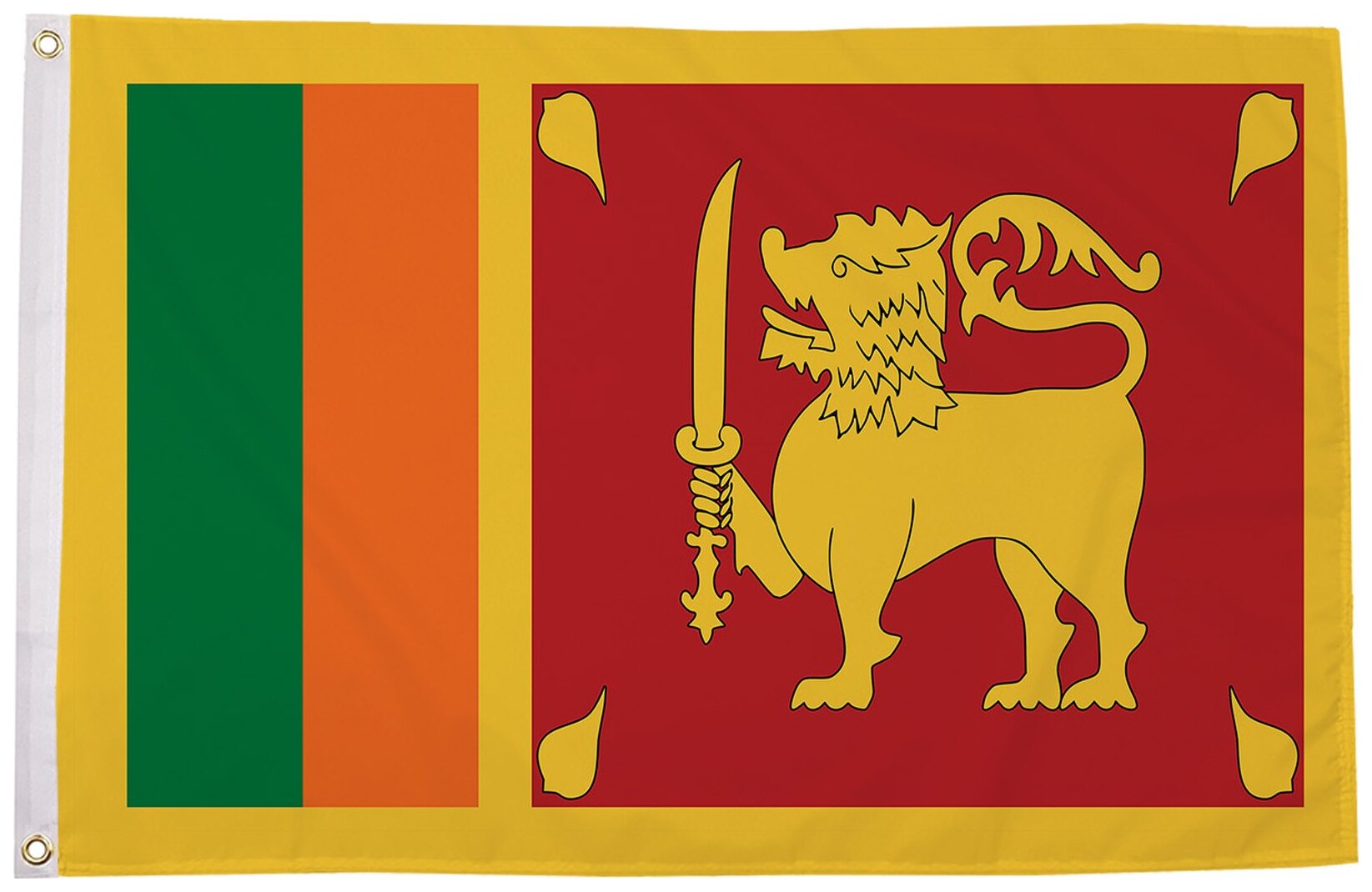
Understanding the Lion Flag
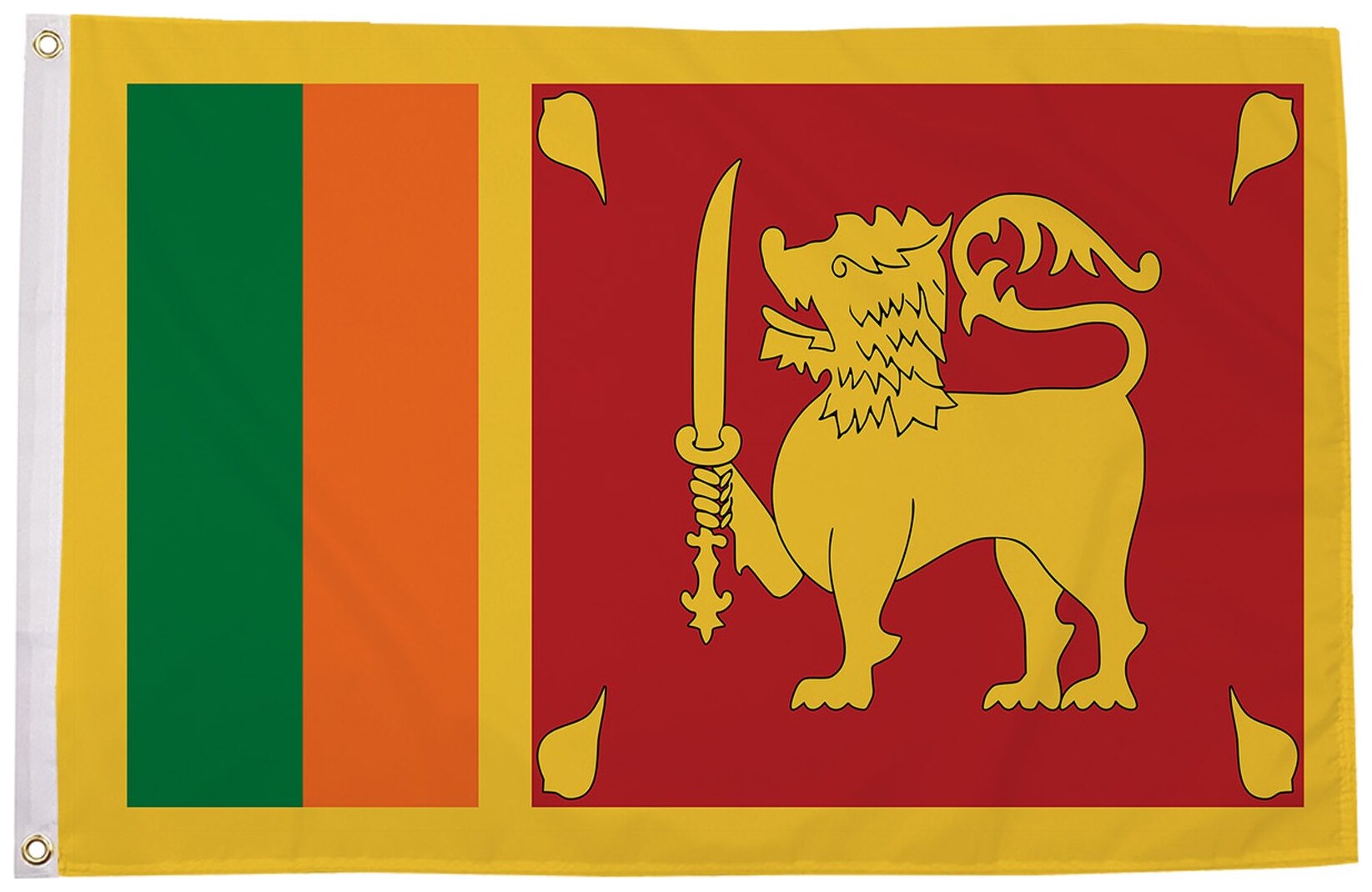
Sri Lanka's flag is one of the most detailed national flags in the world. The lion device goes back to the flag of the last Kandyan kingdom, and the modern version took shape in stages:
- The lion and sword: A gold lion holds a kastane sword in its raised right forepaw on a maroon panel. The lion is usually said to stand for the Sinhala people and for bravery, and the sword for the nation's sovereignty.
- Four bo leaves: One in each corner of the maroon panel, representing the Buddhist virtues of loving-kindness, compassion, sympathetic joy and equanimity. They replaced earlier spearhead finials in 1972.
- Two vertical stripes: Green and saffron, added in 1951. They are generally explained as representing the Muslim and Tamil communities.
- The yellow border: It frames the whole design and is often said to represent the island's other communities, or the unity of all its peoples.
The official proportions are 1:2, so the real flag is long and narrow. Standard printed flags are usually made at 5ft x 3ft, which is slightly shorter. The stripes always go next to the pole, and the lion faces towards them. If the stripes end up at the fly end, the flag is the wrong way round.
Sri Lankans in the UK
Britain has a sizeable Sri Lankan-heritage population, with established communities in Harrow, Brent, Croydon, Ealing, Newham and other parts of London, as well as in cities outside the capital. Buddhist viharas, Hindu temples, churches, mosques, cultural associations and the Sri Lanka High Commission in London may all hold events around 4 February. These range from formal flag raisings and religious services to dinners and dance performances. Check locally, as plans vary each year.
Cricket is a shared passion for many British Sri Lankans, and the same flags appear whenever Sri Lanka tours England. Our cricket flags guide covers what you can take into grounds.
Practical choices for February
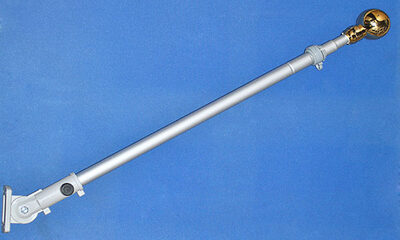
Early February is often the coldest, wettest stretch of the British winter. For a pole or wall bracket, the Sri Lanka DuraFlag handles wind better than a lightweight printed flag. Indoors, Sri Lanka bunting and Sri Lanka table flags suit community halls and receptions.
When the Lion Flag flies alongside the Union Flag, use flags of the same size on poles of the same height; our flag order of precedence guide explains the positions. For other dates through the year, see our world national days calendar.
Frequently asked questions
Why is Sri Lanka Independence Day on 4 February?
Ceylon became an independent dominion on 4 February 1948. The country took the name Sri Lanka when it became a republic in 1972.
What do the green and orange stripes on the Sri Lankan flag mean?
They were added in 1951 and are generally explained as representing the Muslim (green) and Tamil (saffron) communities.
Which way does the lion face?
The lion faces the hoist, towards the green and saffron stripes, with the sword raised in its right forepaw.
Why does the flag look slightly different from one maker to another?
The official ratio is 1:2, but many printed flags are produced at 3:5. The shade of maroon and the drawing of the lion can also vary a little between manufacturers.
Preparing for 4 February? Browse our Sri Lanka flags, or explore the full range of world flags.