European Union
 Confederate
 Rainbow
 Other Pride
 Red Ensign
 RAF Ensign
 Yorkshire
 Cornwall
 Union Jack
 England
 Scotland
 Wales
 USA
 Ireland
 France
 Germany
 Italy
 Australia

Ghana Independence Day is on 6 March and marks the day in 1957 when the Gold Coast became the independent nation of Ghana. Its first leader, Kwame Nkrumah, declared at midnight that Ghana was "free for ever". The day is celebrated with parades, kente cloth and the red, gold and green flag with its black star, in Ghana and among Ghanaian families across the UK.
Midnight in Accra, 6 March 1957
As 5 March turned into 6 March 1957, Nkrumah spoke to a large crowd at the Old Polo Ground in Accra and announced Ghana's independence. The new state brought together the British colony of the Gold Coast and the trust territory of British Togoland. It took its name from the ancient Ghana Empire, a powerful West African kingdom of the medieval period. Ghana is often described as the first country in sub-Saharan Africa to gain independence from colonial rule, and its success inspired independence movements across the continent. It became a republic on 1 July 1960, which is also remembered in Ghana.
Parades and kente: how Ghana celebrates
The national celebration centres on Independence Square in Accra, also known as Black Star Square. It is a vast parade ground overlooked by the Independence Arch and the Black Star Gate. Schoolchildren, cadets and the security services march past the President, and similar parades take place in regional capitals. Families dress in kente and other traditional cloth, often in the national colours, and the day continues with music and food. Jollof rice is the subject of a long-running and good-humoured rivalry with Nigeria.
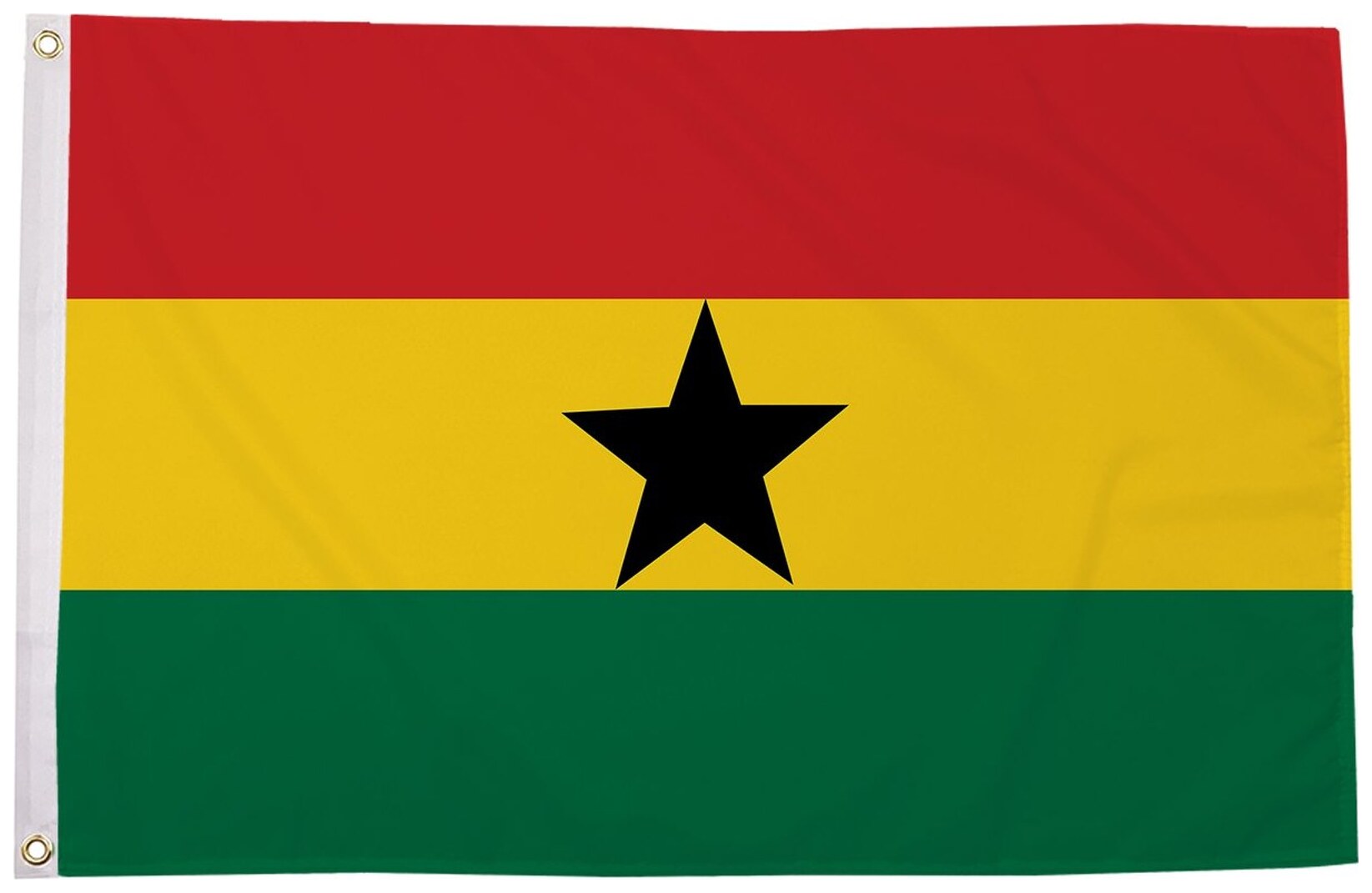
Theodosia Okoh and the black star
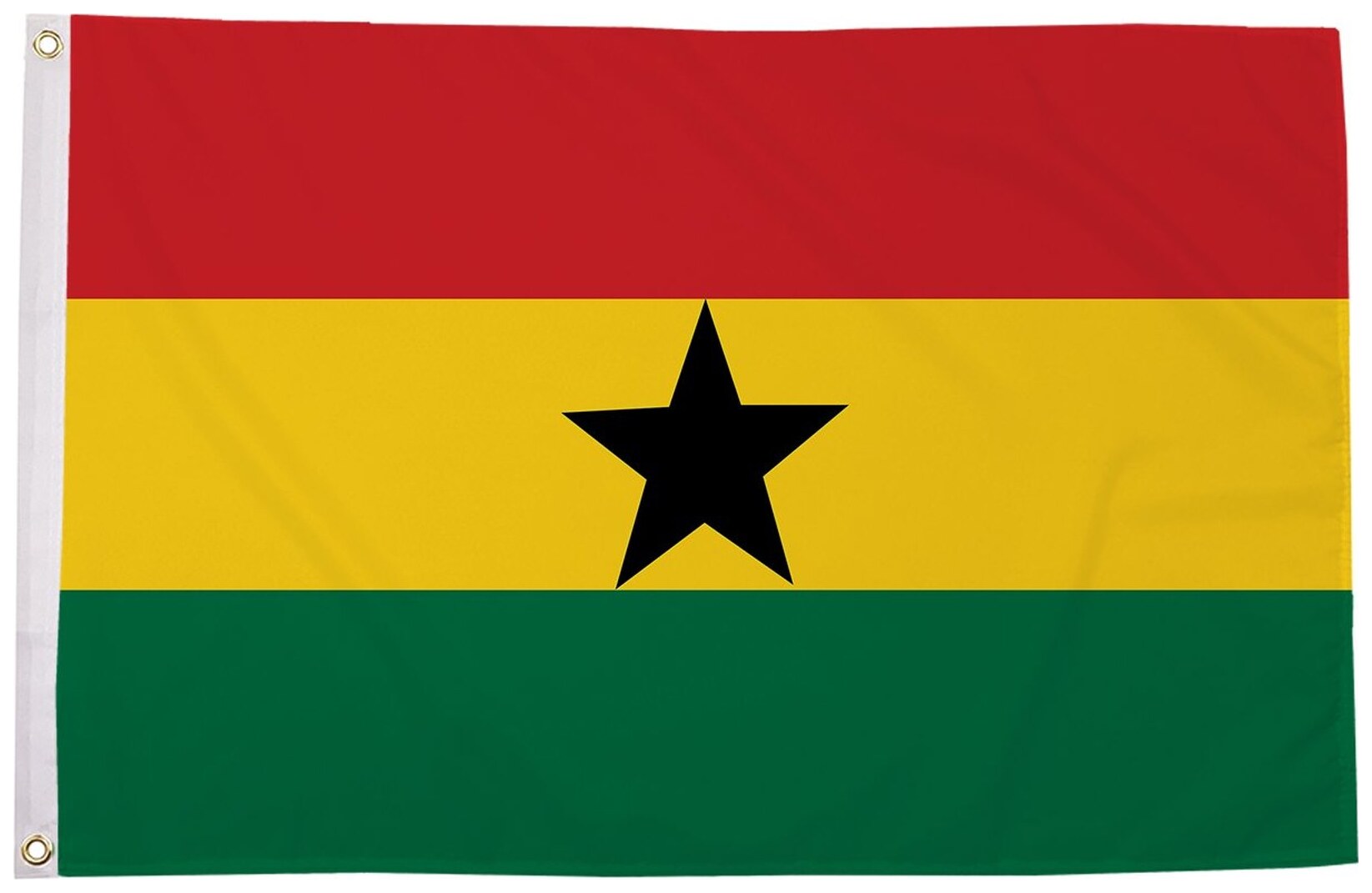
Ghana's flag was designed by Theodosia Okoh, a teacher and artist, and adopted at independence in 1957. She explained the meaning of each element:
- Red: Those who died or worked for the country's independence
- Gold: The country's mineral wealth
- Green: Its forests and natural wealth
- Black star: African emancipation and unity
Ghana was one of the first African nations to use red, gold and green, after Ethiopia, and many newly independent states later adopted these colours, which became known as the Pan-African colours. Between 1964 and 1966 the gold stripe was changed to white. The original design was restored in 1966.
The star has become a national emblem in its own right. Ghana's football team is known as the Black Stars, and the women's team as the Black Queens.
Flying it correctly: The bands are horizontal, with red at the top, and the star is centred in the gold band. The official proportions are 2:3. Printed flags are commonly 3:5, a little longer, which does not affect the design.
Ghanaians in Britain
Ghana and the UK have close ties through education, the Commonwealth, family and faith, and Britain has one of the largest Ghanaian communities outside Africa. London has the biggest concentration, with well-known communities in boroughs such as Haringey, Hackney, Southwark, Lewisham and Croydon, and there are also strong communities in Milton Keynes, Birmingham, Manchester and other cities. Many Ghanaian churches hold thanksgiving services near 6 March, and community associations organise dinners, dances and family days. Dates and venues are set locally each year, so check with your church or association.
Flags, bunting and fittings for March
March in Britain is often blustery, so choose a flag that can stand up to the weather if it is going outside.
- Outside on a pole: The Ghana DuraFlag is made with a reinforced header and fly end for longer outdoor use. A lightweight printed flag is fine for a single day.
- Church halls and parties: Ghana bunting in 3m or 9m lengths. Two 9m runs crossing from corner to corner work well in most halls.
- Tables: Ghana table flags for the top table and reception desk.
- Waving: 9in x 6in or 18in x 12in wooden hand flags for children's performances.
Flying the Ghana flag next to the Union Flag? Give them equal sizes and equal heights; our flag order of precedence guide covers the arrangement. Our world national days calendar includes Ghana and other national days, and if you are planning a Commonwealth-themed event in March, see our Commonwealth Day guide.
Frequently asked questions
Who designed the Ghana flag?
Theodosia Okoh, a Ghanaian teacher and artist. Her design was adopted at independence in 1957.
What does the black star on the Ghana flag mean?
It represents African emancipation and unity. It has become a national emblem, and the football team is named the Black Stars after it.
Which way up does the Ghana flag go?
Red at the top, gold in the middle with the black star, and green at the bottom.
Was Ghana the first African country to gain independence?
Not the first in Africa as a whole, but it is widely described as the first in sub-Saharan Africa to win independence from colonial rule, on 6 March 1957.
Getting ready for 6 March? Browse our Ghana flags in printed and DuraFlag versions, or explore our full range of world flags.