European Union
 Confederate
 Rainbow
 Other Pride
 Red Ensign
 RAF Ensign
 Yorkshire
 Cornwall
 Union Jack
 England
 Scotland
 Wales
 USA
 Ireland
 France
 Germany
 Italy
 Australia

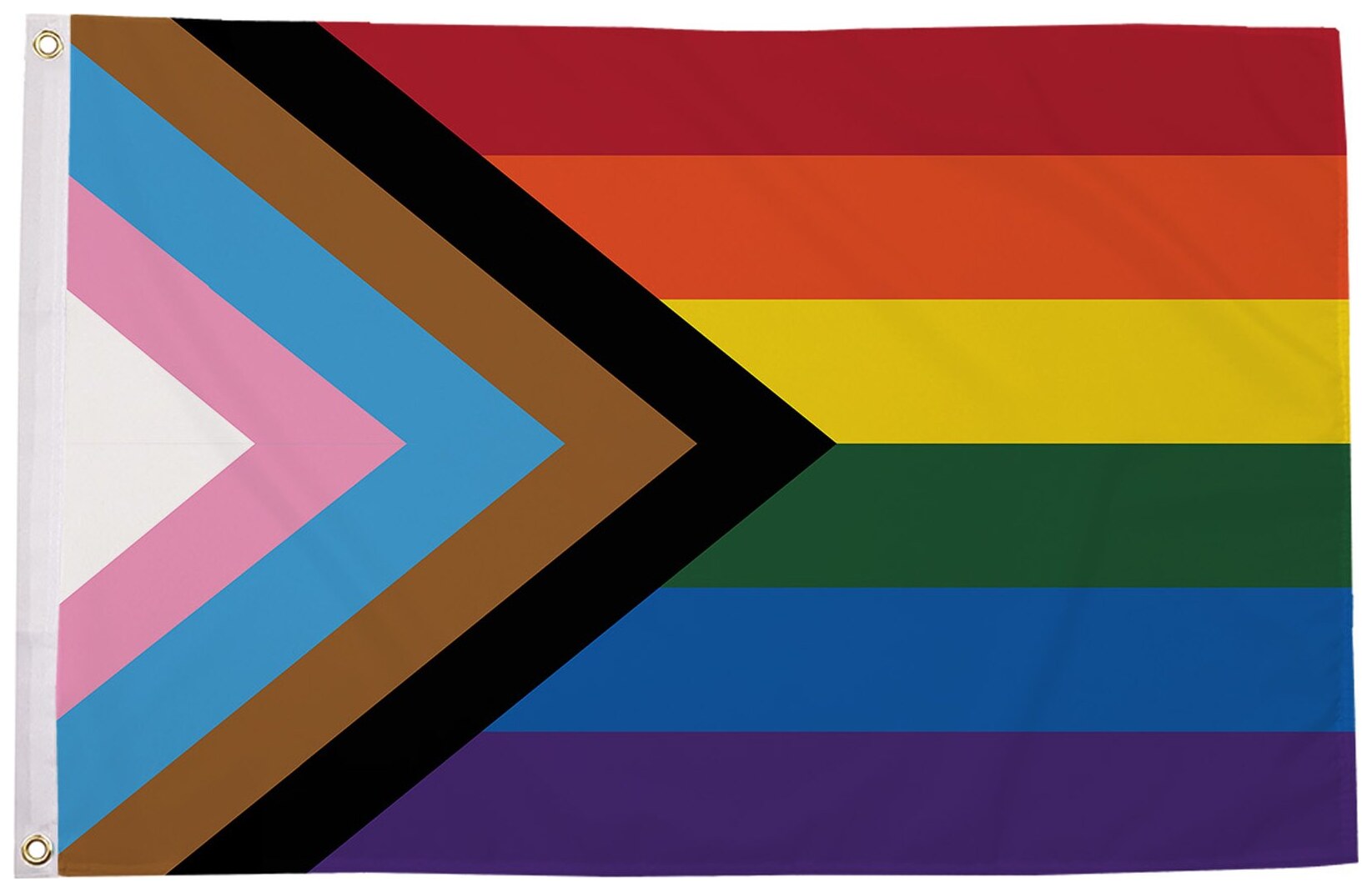
Pride flags let different parts of the LGBTQ+ community show who they are. Most have a known designer and a stated meaning for each colour. The rainbow flag (Gilbert Baker, 1978) stands for the whole community. The Progress Pride flag (Daniel Quasar, 2018) adds stripes for trans people and people of colour, and the Intersex-inclusive Progress flag (Valentino Vecchietti, 2021) adds intersex people. This guide explains what each of the main pride flags means, who made it and when, so you can choose the right flag for your event, workplace or home.
Pride flags meaning at a glance
The table covers the flags we get asked about most. Where a designer used a pseudonym, or where accounts differ, we say so. Meanings are as their creators or the communities themselves describe them.
| Flag | Designer | Year | Colours and meaning |
|---|---|---|---|
| Rainbow (Pride) flag | Gilbert Baker | 1978 | Originally eight stripes. The six-stripe version (red, orange, yellow, green, blue, violet) is the one most widely used today, and it represents the whole LGBTQ+ community. |
| Philadelphia "More Color, More Pride" | Philadelphia's Office of LGBT Affairs campaign | 2017 | Black and brown stripes added above the rainbow to include Black people and people of colour. |
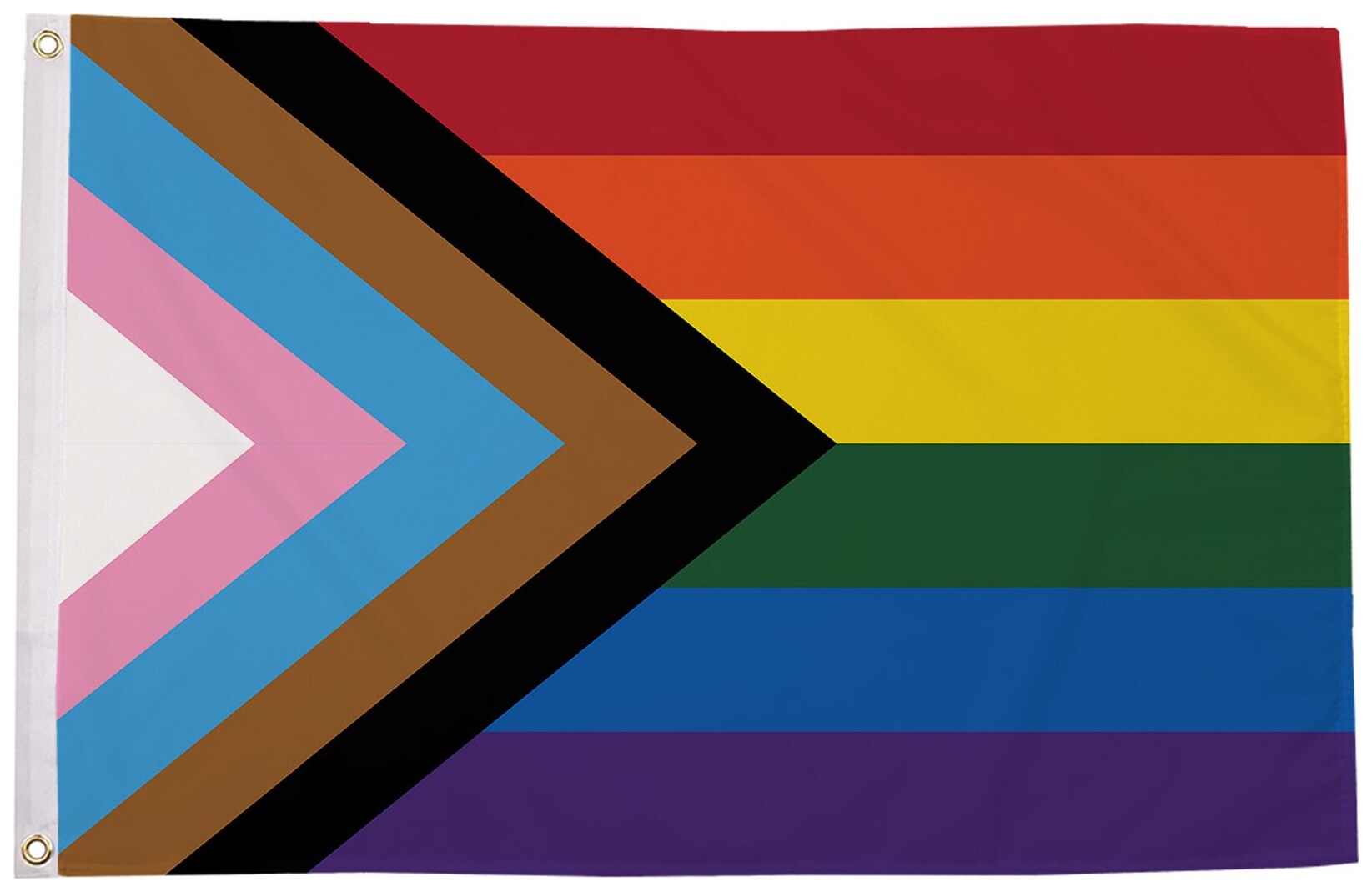
| Progress Pride flag | Daniel Quasar | 2018 | The rainbow with a chevron of black and brown (people of colour, and those lost to HIV/AIDS) plus light blue, pink and white (trans people). |
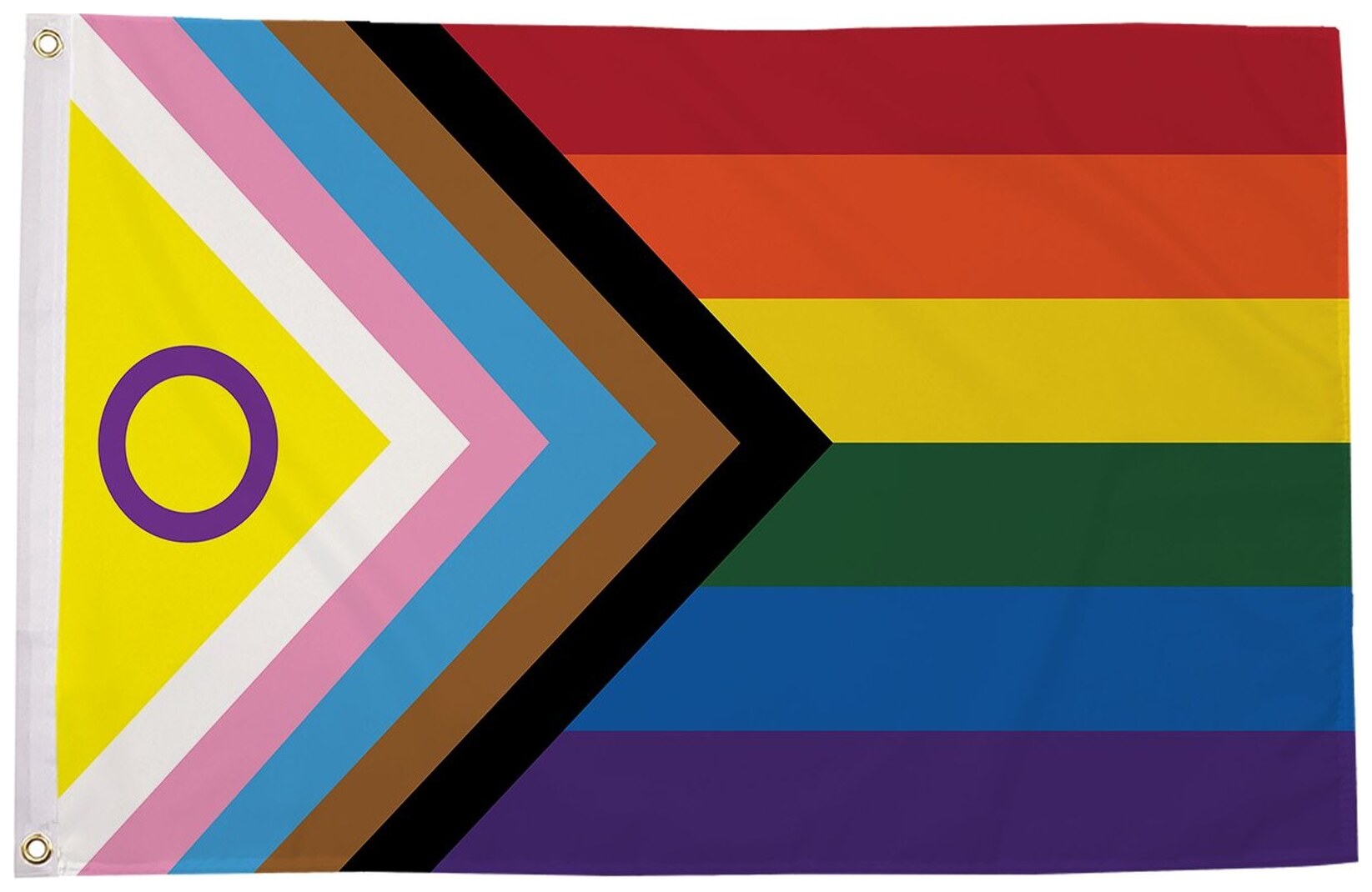
| Intersex-inclusive Progress Pride flag | Valentino Vecchietti (Intersex Equality Rights UK) | 2021 | Adds a yellow triangle with a purple circle to the chevron, taken from the intersex flag. |
| Intersex flag | Morgan Carpenter (Intersex Human Rights Australia) | 2013 | Yellow with an unbroken purple circle, standing for wholeness and the right to bodily autonomy. Yellow and purple were chosen as colours not linked to gender. |
| Transgender flag | Monica Helms | 1999 | Light blue and pink (the colours traditionally used for baby boys and girls) with white in the centre for people who are transitioning, intersex or non-binary. It reads the same whichever way up it flies. |
| Bisexual flag | Michael Page | 1998 | Pink (same-gender attraction), blue (different-gender attraction) and a narrower lavender band where the two overlap. |
| Pansexual flag | Posted online under the name "Jasper V" | 2010 | Pink, yellow and blue. Pink and blue are usually explained as attraction to women and to men, and yellow as attraction to non-binary people. |
| Asexual flag | Chosen by a community vote run by AVEN | 2010 | Black (asexuality), grey (grey-asexuality and demisexuality), white (non-asexual partners and allies) and purple (community). |
| Non-binary flag | Kye Rowan | 2014 | Yellow (gender outside the binary), white (many or all genders), purple (a mix of male and female) and black (agender). |
| Lesbian "sunset" flag | Emily Gwen (seven stripes). The five-stripe version came later from the community. | 2018 | Shades of orange, white and pink. Stripe meanings include gender non-conformity, community, and a unique relationship to womanhood. |
The rainbow flag: from eight stripes to six
Gilbert Baker designed the rainbow flag for the San Francisco Gay Freedom Day parade in June 1978. His original had eight stripes, each with a meaning: hot pink for sex, red for life, orange for healing, yellow for sunlight, green for nature, turquoise for magic and art, indigo for serenity and violet for spirit. Hot pink fabric was hard to get, so that stripe was dropped. Turquoise and indigo were later merged into a single blue, which gave the familiar six-stripe flag. We still stock the original 8-striped rainbow flag for anyone who wants Baker's first version.
The six-stripe rainbow remains the broadest symbol of LGBTQ+ pride and is the one most councils, schools and businesses fly in June. In the UK it is also combined with national symbols. The rainbow Union Jack flag is popular at UK Prides, and there is a rainbow Welsh dragon too.
Progress Pride and the Intersex-inclusive Progress flag
In 2018 the American designer Daniel Quasar built on the 2017 Philadelphia flag. He moved the black and brown stripes into an arrow-shaped chevron at the hoist and added the light blue, pink and white of the trans flag. The chevron points right to suggest forward movement, and it sits along the hoist to show that progress still needs to be made.
In 2021 Valentino Vecchietti of Intersex Equality Rights UK added the yellow-and-purple intersex symbol to the chevron. Many UK organisations now use this version when they want a single flag that names as many groups as possible. If you are buying for a workplace or public building, it is worth asking your LGBTQ+ staff network which version they would like to see flown.
Identity flags: trans, bi, pan, ace, non-binary and lesbian
Alongside the community-wide flags, many identities have their own flag. Most were designed by individuals and shared online, and they were adopted because people chose to use them, not because any organisation made them official. That is why some have more than one version. The lesbian flag is a good example: there is a seven-stripe sunset flag, a five-stripe community version and older designs such as the labrys flag. Our pride flags range includes the main identity flags and a number of less common ones, including genderfluid, agender, aromantic and demisexual.
A few practical points:
- The transgender flag is symmetrical, so it cannot be flown upside down.
- The bisexual flag's stripes are not equal. Pink and blue are each two-fifths of the depth and lavender is one-fifth.
- Small hand flags of the identity flags are popular at Pride marches. Larger 5ft x 3ft flags suit balconies, windows and stalls.
Flying pride flags in the UK
June is Pride Month, but UK Pride season runs well beyond it. Many town and city Prides are held in July, August and into September, so a flag bought for June often gets a full summer of use. For a single march or a few weekends, a lightweight printed flag is fine. For a flag that will fly all summer on a pole outside a pub, office or council building, a pride DuraFlag is the better choice: it has a reinforced header and stitched fly end to cope with wind. See DuraFlag vs polyester vs nylon for the differences.
For indoor displays, reception desks and stalls, pride table flags and pride bunting brighten a space without needing a pole. If you are planning a festival weekend, our festival flags guide covers poles and fittings for camping.
Frequently asked questions
What is the difference between the Pride flag and the Progress Pride flag?
The Pride flag is Gilbert Baker's six-stripe rainbow and represents the whole LGBTQ+ community. The Progress Pride flag (2018) adds a chevron of black, brown, light blue, pink and white to make the inclusion of people of colour and trans people explicit.
Which pride flag is the most inclusive?
Many organisations choose the Intersex-inclusive Progress Pride flag (2021), because it combines the rainbow, the Progress chevron and the intersex symbol. There is no official ruling on this, though. The best flag is the one your community feels represented by.
Is there an official pride flag?
No. No organisation owns or regulates pride flags. They became widely used because communities adopted them. Gilbert Baker deliberately did not trademark the rainbow flag.
Why did the rainbow flag lose two stripes?
Hot pink fabric was hard to source in 1978, so the pink stripe was dropped. Turquoise and indigo were later merged into one blue, which left the six-stripe flag used today.
When is Pride Month in the UK?
Pride Month is June, but UK Pride events run from late spring to September, so check your local Pride's date.
Whether you are marching, decorating a venue or raising a flag at work, our Pride event range brings together flags, hand flags, table flags and bunting in one place, and every design in the pride flags collection is available in a choice of sizes.