European Union
 Confederate
 Rainbow
 Other Pride
 Red Ensign
 RAF Ensign
 Yorkshire
 Cornwall
 Union Jack
 England
 Scotland
 Wales
 USA
 Ireland
 France
 Germany
 Italy
 Australia

Racing flags are the signals marshals use to talk to drivers. For racing flags meaning, the definitive reference is the FIA's International Sporting Code (Appendix H), which Formula 1 and most international and UK circuit racing follow. The short version: green means the track is clear, yellow means danger and no overtaking, red stops the session, blue tells a driver to let a faster car through, and the chequered flag ends the race. The table below explains every flag you're likely to see, followed by some history and ideas for using racing flags at home.
Racing flags meaning: the full table
| Flag | What it means | What the driver must do |
|---|---|---|
| Green | Track clear. Shown at the end of a yellow-flag zone, and at the start of a session or formation lap | Resume racing speed; overtaking allowed again |
| Yellow (single, waved) | Danger beside or partly on the track | Slow down, no overtaking, be ready to change direction |
| Yellow (double, waved) | Danger wholly or partly blocking the track, or marshals working on or beside it | Slow down significantly, no overtaking, be ready to stop |
| Yellow with red vertical stripes | Slippery surface ahead, such as oil, water or debris | Take care; grip may be reduced |
| Red | Session stopped, usually after a serious incident or because conditions are unsafe | Slow down immediately, no overtaking, return to the pit lane (or as the event regulations direct) and be ready to stop |
| Blue (waved) | A faster car is approaching. In a race, it usually means a car is about to lap you | Let the faster car pass at the first opportunity. Ignoring repeated blue flags can bring a penalty |
| White | A much slower vehicle is on the track ahead, such as a recovery vehicle or a car limping back | Take care when approaching the slow vehicle |
| Black (with car number) | That driver must stop | Come into the pits on the next lap; often a sign of disqualification |
| Black with orange disc (with car number) | The car has a mechanical problem that could endanger the driver or others, such as loose bodywork or a fluid leak | Pit on the next lap; may rejoin once the problem is fixed |
| Black and white, split diagonally (with car number) | Warning for unsporting behaviour | A formal warning; further offences may bring a black flag |
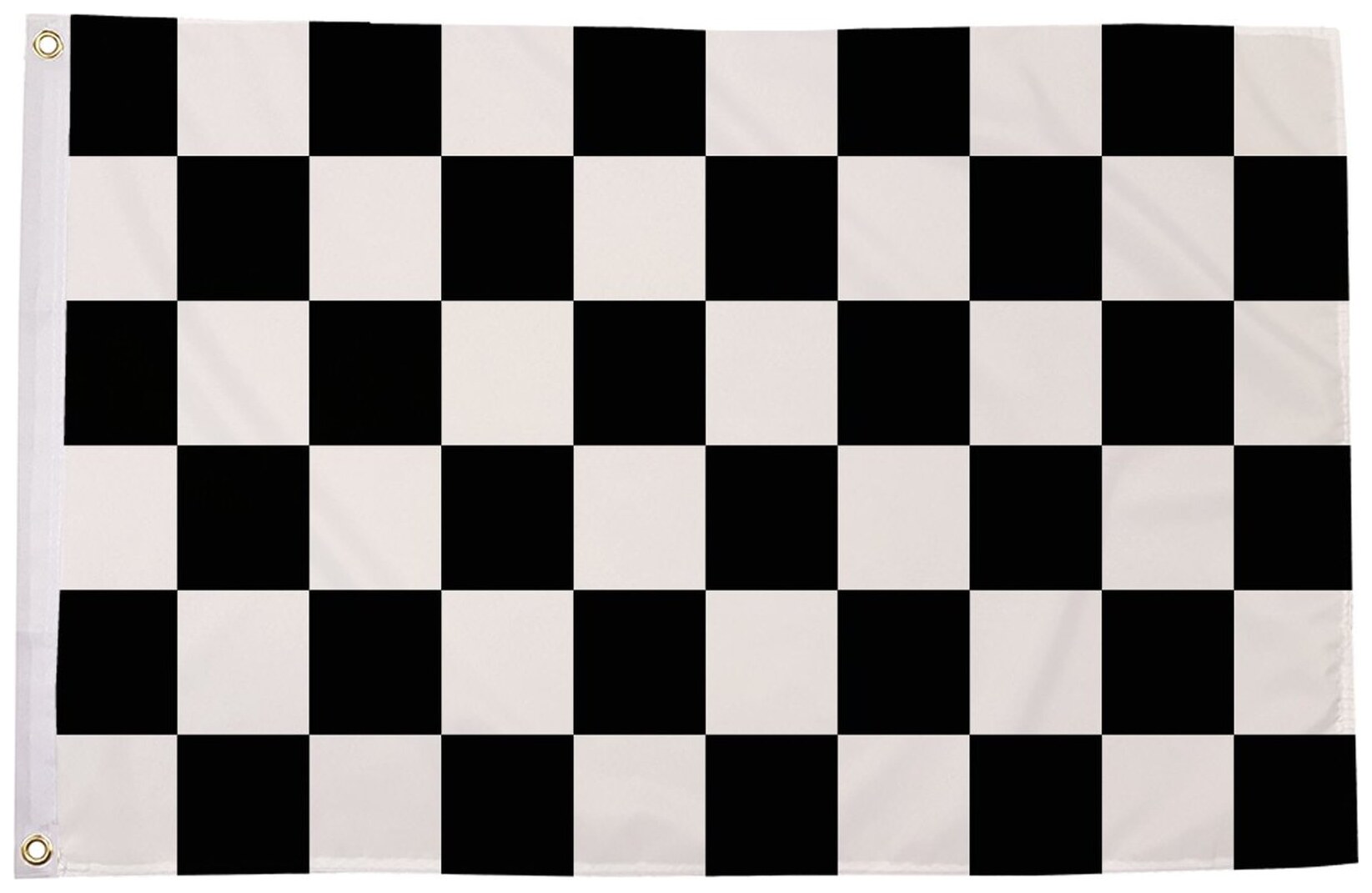
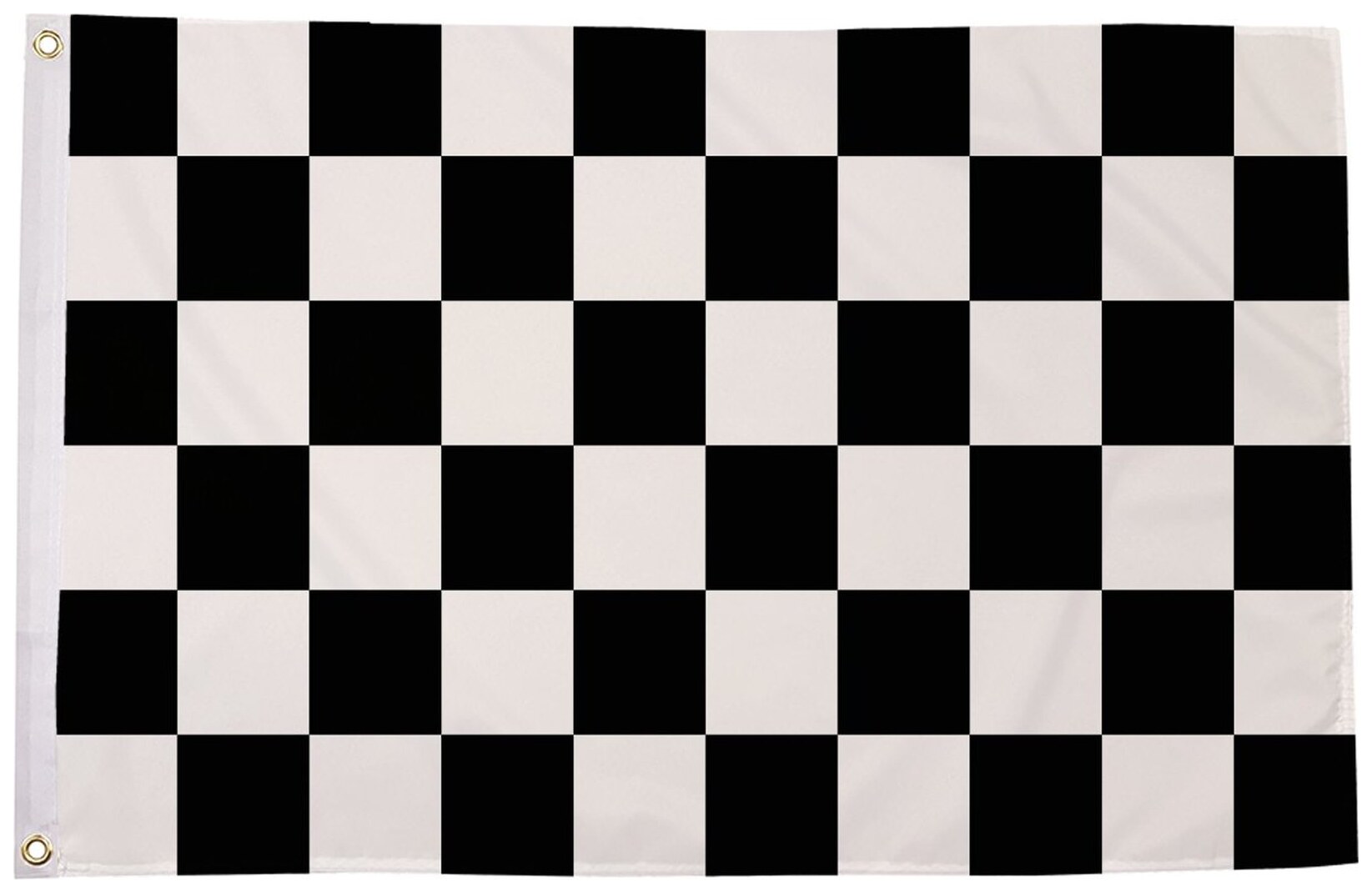
| Chequered (black and white squares) | End of the race or session | Complete a slow-down lap and return to the pits or parc fermé |
Exact procedures vary between championships and are set out in each series' sporting regulations. Many circuits now use electronic light panels alongside or instead of flags, with the same colours and meanings.
UK and US differences
UK circuit racing, governed by Motorsport UK, broadly follows the FIA flag system, though club events can have their own supplementary rules, and karting and rallying use different procedures. American series such as NASCAR and IndyCar differ in places. The best-known example is the white flag, which in American oval racing signals the final lap rather than a slow vehicle. If you're watching an American race and see a white flag, the leader is about to start the last lap.
Where did the chequered flag come from?
Nobody knows for certain. The earliest known photograph of a chequered flag ending a motor race comes from the Vanderbilt Cup on Long Island, New York, in 1906. A popular theory traces it to the Glidden Tours, early American reliability runs, where officials at checkpoints used chequered flags around the same time. Other stories link it to 19th-century cycling or horse racing, but there's no firm evidence for those. What is clear is that a black-and-white pattern stands out against almost any background, which is exactly what you need at the end of a race.
Using racing flags at home, at events and at the track
Racing flags are popular well beyond the circuit. Some ideas:
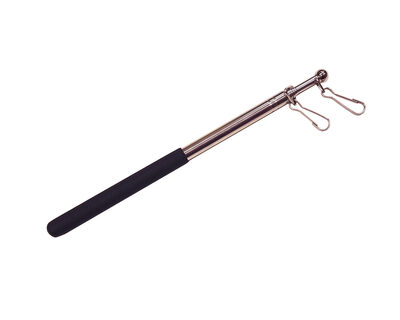
- Grand Prix camping: a 5ft x 3ft chequered flag on a telescopic pole marks your pitch and helps your group find the tent after a long day. Check the campsite's rules on pole height first.
- Watch parties: chequered bunting along the walls, with flags for your favourite driver's nationality.
- Children's parties and school sports days: chequered hand flags for the "finish line", and a green flag to start each race. A full set of plain colour hand flags lets children learn the signals by playing marshal.
- Karting and track days: some independent karting clubs and private events buy their own marshal flags. For competition use, follow the regulations of your governing body.
- Car shows and dealerships: chequered bunting on a forecourt or show stand.
Plain colour flags for marshal-style sets are available in our plain colours range. Most of our printed flags come in 3ft x 2ft and 5ft x 3ft; see our flag sizes guide to pick the right one. For festival pitches and campsites, our festival flags guide covers poles and fixings.
Frequently asked questions
What does a red flag mean in F1?
The session has been stopped, usually because of a serious accident, debris or unsafe weather. Drivers slow down, must not overtake and return to the pit lane. The race may restart once the track is clear.
What is the difference between a single and a double yellow flag?
A single waved yellow warns of danger beside or partly on the track: slow down and don't overtake. A double waved yellow means the track is wholly or partly blocked, or marshals are working there: slow down significantly and be prepared to stop.
What does the blue flag mean?
A faster car is coming up behind. In a race, it usually means a backmarker is about to be lapped and must let the leader past at the first opportunity.
What does a black flag with an orange circle mean?
Nicknamed the "meatball" flag, it tells a specific driver their car has a mechanical problem, such as loose bodywork or a fluid leak, and they must pit to get it fixed.
Why is the chequered flag black and white?
The high-contrast pattern is easy to see from a fast-moving car in any light. Its exact origin is uncertain, but it was in use in American motor racing by 1906.
Bring the grid home
Browse our racing flags, chequered triangle bunting and plain colour flags for marshal-style sets, whether you're dressing a campsite, a party or a showroom.