European Union
 Confederate
 Rainbow
 Other Pride
 Red Ensign
 RAF Ensign
 Yorkshire
 Cornwall
 Union Jack
 England
 Scotland
 Wales
 USA
 Ireland
 France
 Germany
 Italy
 Australia

A World Cup sweepstake is simple: everyone pays the same entry fee, every team in the tournament goes into a hat, and each entrant is drawn one or more teams at random. Whoever holds the winning team takes the main prize. The tricky parts are making the draw fair when the number of people doesn't divide neatly into the number of teams, keeping within the law, and making it fun enough that people still care when their team is 0–3 down. This guide covers all three.
How a World Cup sweepstake works
- Set the entry fee and prizes. Keep the fee the same for everyone and decide the prize split before anyone pays.
- Collect entries in person. Note names and payments on a list everyone can see.
- Hold the draw publicly. Team names on folded slips, or the teams' table flags in a box, drawn in front of the entrants (or during a team meeting).
- Display the results. A wall chart or a flag on each person's desk keeps it visible through the tournament.
- Pay out after the final. Pay the prizes as advertised, with the remainder (if any) handled exactly as agreed at the start.
Fair draws for 24, 32 and 48-team tournaments
The men's European Championship has 24 teams, the Women's World Cup currently has 32 (rising to 48 in 2031) and the men's World Cup has 48 from 2026. Use these splits:
| Tournament size | Entrants | Teams each |
|---|---|---|
| 24 teams (Euros) | 24 / 12 / 8 / 6 | 1 / 2 / 3 / 4 |
| 32 teams | 32 / 16 / 8 | 1 / 2 / 4 |
| 48 teams (World Cup) | 48 / 24 / 16 / 12 | 1 / 2 / 3 / 4 |
If more people want to join than there are teams, sell half-shares or run two separate sweepstakes. If there are fewer people, don't leave teams in a "house" pot: give everyone the same number of teams and run a second, smaller draw for the leftovers at the same price, open to anyone.
Use pots so nobody gets only no-hopers
With two or more teams each, a straight draw can hand one person three outsiders and another three favourites. Instead, rank the teams roughly by world ranking or bookmakers' odds and split them into pots of equal size (one pot per team each person will get). Everyone draws one team from each pot. It is still pure chance, but everyone starts with a fighting hope.
Prize ideas that keep everyone interested
- Winner and runner-up: a common split is 70% to the holder of the winning team and 30% to the runner-up, or 60/25/15 with third place included.
- Wooden spoon: a small prize (or refund) for the team with the worst record keeps the bottom of the table interesting.
- Golden boot: a side prize for whoever holds the top scorer's nation.
- Biggest win: a prize for the team that records the largest winning margin in any match.
Whatever you choose, write it down and pin it up next to the draw results before the first match.
Is an office sweepstake legal?
In Great Britain, a sweepstake is a type of lottery under the Gambling Act 2005, and lotteries normally need a licence. Small workplace sweepstakes usually fall under the "work lottery" exemption, which is generally understood to require that:
- it is organised and entered only by people who work on a single set of premises;
- nobody makes a profit, and all money goes on prizes after reasonable expenses;
- tickets are sold and the draw is held in person, not online;
- every entry costs the same, and teams are allocated by chance, not chosen.
Similar exemptions exist for residential lotteries (people living at the same premises) and private society lotteries (members of a club). Rules differ for sweepstakes run for charity, online or across several sites, and Northern Ireland has separate legislation. This is a general summary, not legal advice: check the Gambling Commission's current guidance on small lotteries before you start, especially if you're a pub or club running one for customers.
Make it visual: flags on desks and bunting overhead
The difference between a sweepstake people forget and one the whole office talks about is usually what's on the walls. A few ideas that work in offices, staff rooms and pubs:
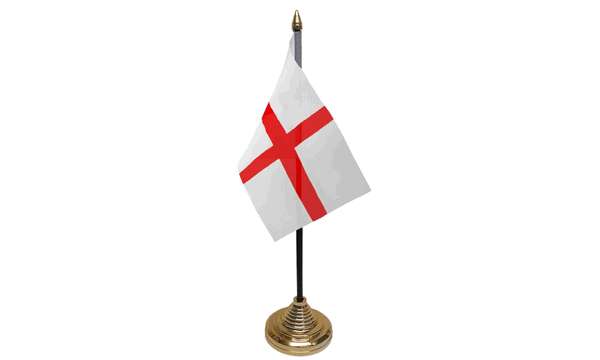
- Draw the flags, not the names. Put a table flag for each team in a box and let people pull out their country. They keep it on their desk for the tournament. Individual world table flags come with a base, or for a big office the 193-country table flag pack covers every nation you're likely to need, tournament after tournament.
- Hand flags for match days. Small 9in x 6in world hand flags on wooden sticks double as desk flags and something to wave during a lunchtime match.
- Bunting across the office. Multi-nation bunting covers most of the field in one go. For a 10m office, two lengths along the main wall plus one across the kitchen is plenty.
- The wall chart. Print the fixture list, add each entrant's name next to their team, and cross teams off as they go out. A knocked-out team's flag can move to a "departures lounge" shelf.

For more on choosing sizes and bases, see our table flags guide. If you're decorating a pub or clubhouse rather than an office, our guide to pub sports event decorations covers outdoor flags and bigger spaces.
Supporting from home
For most fans, a big tournament is watched on the sofa or in the local, not in the stadium. A sweepstake gives people a reason to follow matches they'd otherwise skip, and flags give the room a sense of occasion. Pick a flag for your sweepstake team as well as your own nation and you'll have something to wave whoever is playing. For tournament-specific details, see our guides to the World Cup 2030 and Euro 2028.
Frequently asked questions
How do you run a World Cup sweepstake with 48 teams?
With 48 teams, 12, 16, 24 or 48 entrants divide evenly, giving each person 4, 3, 2 or 1 teams. Split the teams into pots by ranking so everyone draws one strong and one weaker team.
Can I run an office sweepstake legally?
Usually yes, under the work lottery exemption, provided it is limited to people at one workplace, the draw is in person, entries cost the same and all the money goes on prizes. Check the Gambling Commission's guidance for the details.
Can remote workers join the office sweepstake?
The work lottery exemption is generally understood to require tickets to be sold and drawn in person at a single set of premises, which can rule out fully remote colleagues. Check the Gambling Commission's guidance before including them.
What do you do with teams nobody draws?
Avoid leftover teams by choosing an entrant number that divides evenly, or run a second draw for the remaining teams at the same price.
What's a good prize split for a sweepstake?
70/30 between the winner and runner-up is simple and popular. Adding a small wooden spoon prize keeps people interested even after their team goes out.
Get your sweepstake ready
Choose your table flags for the draw, a flag pack for the office and some world bunting for the walls, and you'll be set well before the opening match.