European Union
 Confederate
 Rainbow
 Other Pride
 Red Ensign
 RAF Ensign
 Yorkshire
 Cornwall
 Union Jack
 England
 Scotland
 Wales
 USA
 Ireland
 France
 Germany
 Italy
 Australia

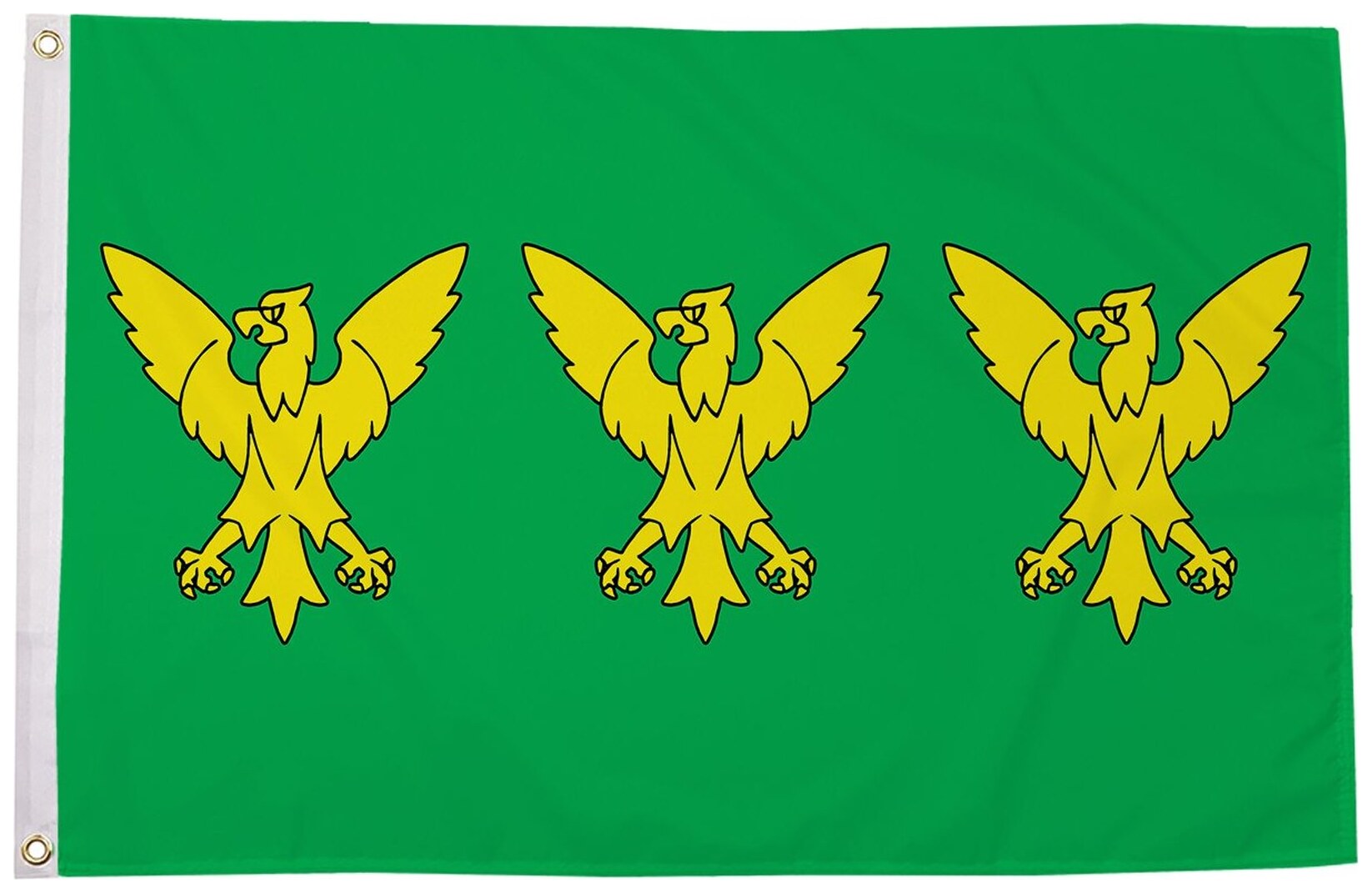
Caernarfonshire Day (Diwrnod Sir Gaernarfon) is marked on 28 November, the anniversary usually given for the death in 1170 of Owain Gwynedd, the most powerful Welsh ruler of his generation. Its flag is three gold eagles on a green field, a badge long attributed to Owain himself, which was registered with the Flag Institute in March 2012.
The historic county takes in Eryri's highest peaks, the slate towns of Bethesda and Llanberis, the Ll?n peninsula, Bangor, Conwy and the walled town of Caernarfon. It is one of the strongest Welsh-speaking areas in Wales, and its flag and county day both look back to the princes of Gwynedd. Here is the story, and how to fly the eagles well.
Owain Gwynedd, the prince behind the date
Owain ap Gruffudd, known as Owain Gwynedd, ruled Gwynedd from 1137 until his death in 1170. He extended his territory east towards the Dee, resisted Henry II's invasion of 1165 alongside other Welsh rulers, and corresponded with the King of France. He is often described as the first ruler to style himself in terms close to "Prince of the Welsh", and he is widely regarded as the most successful prince of north Wales before his grandson, Llywelyn the Great.
His date of birth is not recorded, so supporters of the county flag chose the anniversary of his death for the county day. Medieval sources do not all agree on the exact day (some give 23 November), but 28 November is the date used for Caernarfonshire Day. Owain was buried in Bangor Cathedral, within the historic county.
The three eagles
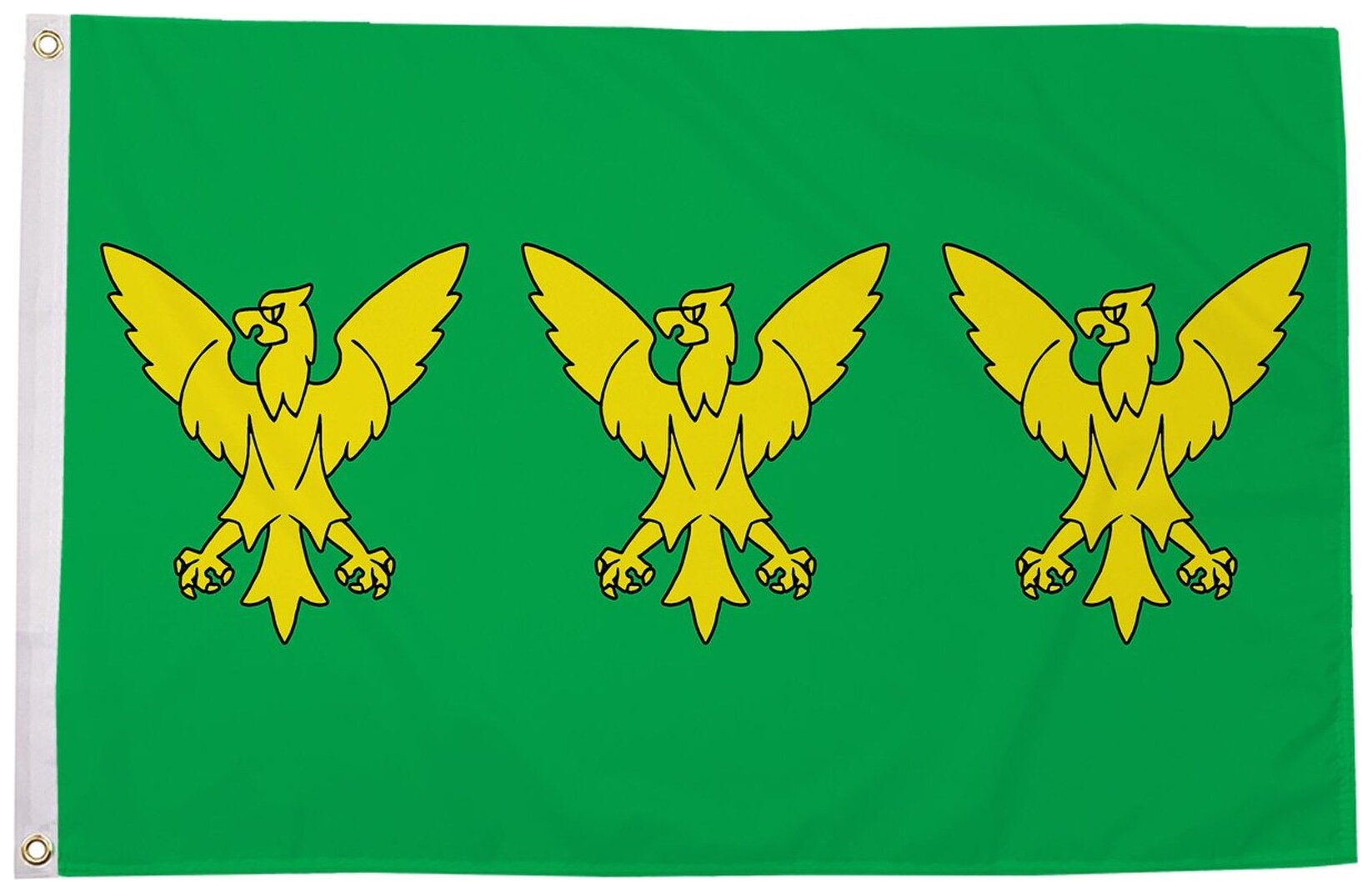
The design is three yellow eagles in a horizontal row on green. The arms were attributed to Owain Gwynedd by later heralds, and the poet Michael Drayton, writing in 1627, described Caernarfonshire men fighting at Agincourt in 1415 beneath a banner of three golden eagles on green. Whether or not that story is literal, the eagles became the county's badge: Caernarfonshire County Council and many local organisations used them in the twentieth century, and they featured at the 1969 investiture ceremony at Caernarfon Castle.
In 2011 and 2012 a campaign, largely run through social media and backed by several local history societies, asked for the eagles to be recognised as the county flag, and the Flag Institute registered it in March 2012. It is a community flag, free for anyone to fly. Note the eagle has another local echo: Eryri, the Welsh name for Snowdonia, is popularly linked with "eryr", eagle, although most scholars think the name actually means highlands.
A county of castles, slate and mountains
Caernarfonshire (spelled Caernarvonshire in English until the 1970s) ceased to be an administrative county in 1974, when it became part of Gwynedd. Since 1996 most of it has been in the Gwynedd council area, while the eastern corner, including Conwy and Llandudno, lies in Conwy County Borough. The historic county is still the frame for the flag and the day. Its landmarks give plenty of material for a school project or a celebration:
- Caernarfon and Conwy castles, built for Edward I and now part of a UNESCO World Heritage Site with the castles of Beaumaris and Harlech.
- Yr Wyddfa (Snowdon), at 1,085 metres the highest mountain in Wales.
- The slate landscape of the Penrhyn and Dinorwig quarries, inscribed as a World Heritage Site in 2021.
- The Ll?n peninsula and Ynys Enlli (Bardsey), the "island of twenty thousand saints" and a pilgrimage destination since the Middle Ages.
- Bangor, with one of the oldest cathedral sites in Britain, where Owain himself lies.
Celebrating on 28 November
Caernarfonshire Day is a community celebration rather than an official holiday, so check with your local town or community council and heritage groups for anything planned. Late November is quiet in Eryri, which makes the day a good occasion for local businesses, cafés and walking clubs to show the eagles in the window. Schools can link the day to Welsh history lessons on the princes of Gwynedd, and the date also gives a natural run-up to St Andrew's Day and the Christmas season.
Flags for mountain weather
Few places in Britain are as wet and windy in late November as the Caernarfonshire mountains and coast. A printed flag is fine for an indoor or one-day display, but anything flying outside for longer should be the Caernarfonshire DuraFlag, with its reinforced header and stitched fly end. A 5ft x 3ft size suits most house poles. When it flies alongside the Red Dragon, the national flag normally takes precedence; our flag order of precedence guide explains the arrangement. For tips on keeping a flag in good shape through winter, read how long a flag lasts.
Bedfordshire celebrates its county day on the same date; see our Bedfordshire Day guide, our Monmouthshire Day guide for south-east Wales, and the full county days calendar. For background on registration, see our guide to UK county flags.
Frequently asked questions
When is Caernarfonshire Day?
28 November each year, the date usually given for the death of Owain Gwynedd in 1170.
What does the Caernarfonshire flag look like?
Three gold eagles side by side on a plain green field. The eagles are the arms attributed to Owain Gwynedd.
Is Caernarfonshire the same as Gwynedd?
Not exactly. Gwynedd is the modern council area, which also includes historic Merionethshire. Most of historic Caernarfonshire is in Gwynedd, but its eastern edge, around Conwy and Llandudno, is in Conwy County Borough.
Can I fly the Caernarfonshire flag with the Welsh flag?
Yes. Many people fly both. With two poles, the Welsh national flag normally takes the position of honour.
See our full range of Caernarfonshire flags, including the printed Caernarfonshire flag, add Caernarfonshire bunting for an event, or browse all our British county flags.