European Union
 Confederate
 Rainbow
 Other Pride
 Red Ensign
 RAF Ensign
 Yorkshire
 Cornwall
 Union Jack
 England
 Scotland
 Wales
 USA
 Ireland
 France
 Germany
 Italy
 Australia

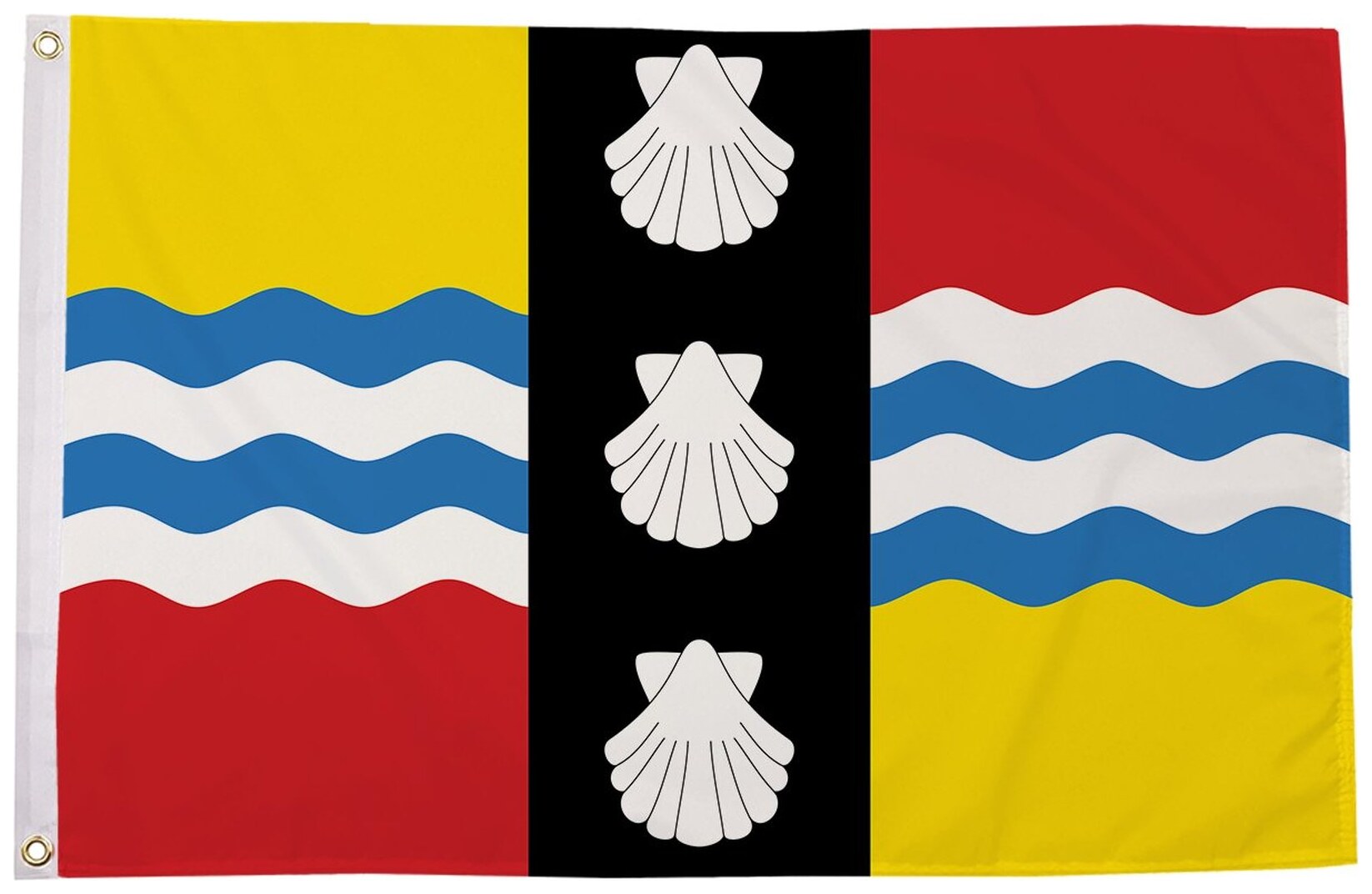
Bedfordshire Day is held on 28 November, the traditional birthday of John Bunyan, author of The Pilgrim's Progress, who was born at Elstow near Bedford in 1628. The date was chosen in a public poll in 2015, and the flag flown is the Bedfordshire flag: gold and red quarters crossed by blue and white waves, with three white scallop shells on a black central band.
Bedfordshire is a small county with a lot packed in, from the Great Ouse at Bedford to the chalk of Dunstable Downs and the hat-making heritage of Luton. Here is why Bunyan was chosen, what each part of the county flag stands for, and how to fly it in late November.
John Bunyan: Bedfordshire's best-known son
Bunyan was born in 1628 in the parish of Elstow, the son of a tinker, and was baptised in Elstow church on 30 November; 28 November is the birth date traditionally given. He served in the Parliamentarian army as a young man, returned to Bedfordshire and became a nonconformist preacher. Because he refused to stop preaching outside the Church of England after the Restoration, he spent around twelve years in Bedford's county gaol.
During his imprisonment he wrote extensively, and The Pilgrim's Progress, published in 1678, became one of the most widely read books in the English language, translated into hundreds of languages. Many readers believe its landscapes draw on the Bedfordshire countryside he knew, though that is tradition rather than established fact. Visitors can still see the Bunyan Meeting church and the John Bunyan Museum in Bedford, and the medieval Moot Hall on Elstow's green.
The Friends of Bedfordshire Society ran a poll to choose a county day, and Bunyan's birthday was announced as the winner in February 2015. Town and parish councils around the county now fly the county flag on the day.
Understanding the Bedfordshire flag
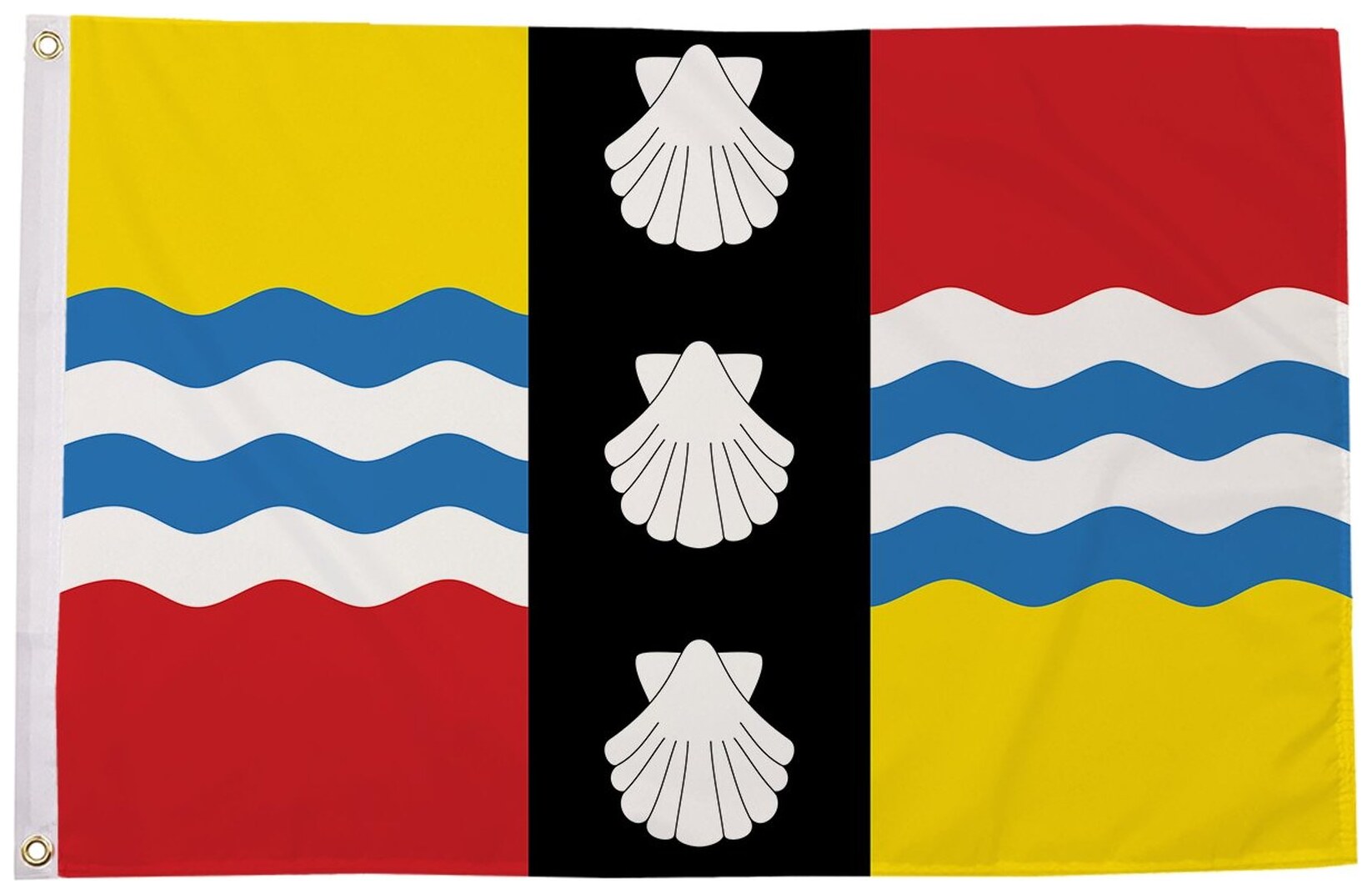
The flag grew out of the arms granted to Bedfordshire County Council in 1951, in Festival of Britain year. The council flew its banner of arms until it was abolished in 2009. In 2014 the Friends of Bedfordshire led a campaign, with the support of the High Sheriff, to register a lightly modified version as the flag of the historic county, and it was adopted in September 2014.
| Element | Origin |
|---|---|
| Gold and red quarters | The Beauchamp family, who built Bedford Castle after the Norman Conquest |
| Blue and white waves | The River Great Ouse, which flows through Bedford |
| Three scallop shells on black | The Russell family, Dukes of Bedford, whose seat is Woburn Abbey |
The change from the council banner is subtle. On the registered flag the blue and white waves on the hoist side were swapped, so that blue never touches red and white never touches yellow, following the heraldic "rule of tincture", and a lighter blue was used. Our "Bedfordshire New" products follow the registered version; we also make the older council-style design. When flying it, the gold quarter should be in the top corner nearest the pole. Our UK county flags guide explains how registration works.
Late-November ideas for Bedfordshire Day
Bedfordshire Day sits at a busy time of year, a few weeks before Christmas, which makes it a good excuse to put up some colour early. Events are run locally and change each year, so check with your town council or the Friends of Bedfordshire. Some ideas:
- Read Bunyan. Schools and libraries can read an extract of The Pilgrim's Progress, or the hymn "He who would valiant be", adapted from Bunyan's words.
- Explore local heritage. Woburn Abbey, the Shuttleworth Collection at Old Warden, the huge airship hangars at Cardington and Whipsnade Zoo all tell part of the county's story.
- Dress the high street. From Ampthill and Biggleswade to Leighton Buzzard and Dunstable, county bunting alongside early Christmas lights makes a cheerful display.
- Raise the flag at work. A county flag outside a business is a simple, visible way to show you are proud of being local.
Which flag, which size?
For most house poles a 5ft x 3ft flag is the right size. With winter weather on the way, the Bedfordshire DuraFlag is a good choice if you plan to leave it up until the new year, as its reinforced header and fly end resist fraying. Indoors, 3m lengths of Bedfordshire bunting suit a classroom or function room, and table flags work well for a Bedfordshire Day lunch. If you are putting up a pole for the first time, read our guide to flagpole planning permission first.
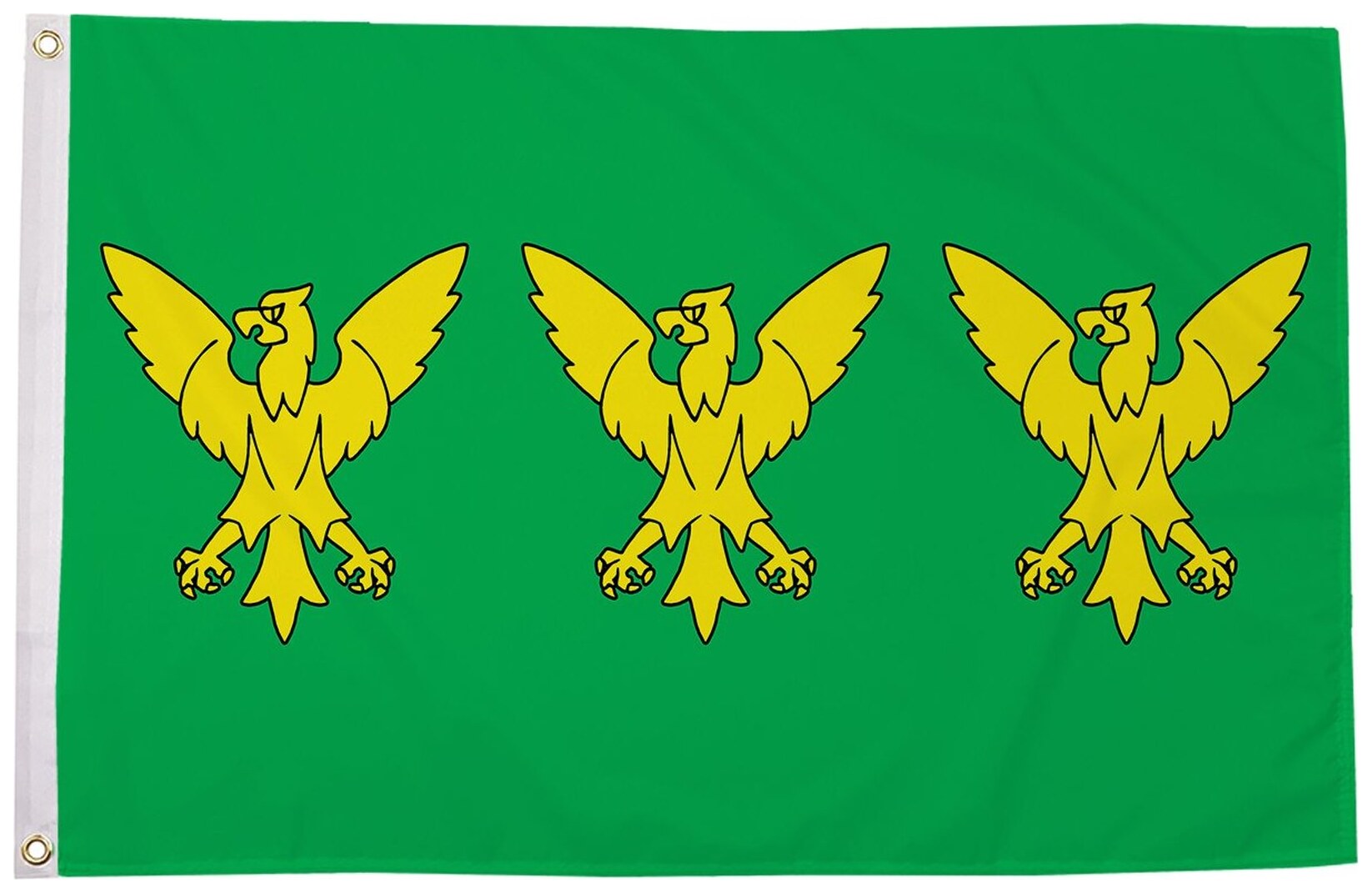
Wales celebrates Caernarfonshire Day on the same date, and Lancashire Day falls the day before. For the full year, see the county days calendar.
Frequently asked questions
When is Bedfordshire Day?
28 November each year, John Bunyan's traditional birthday. The date was chosen in a poll by the Friends of Bedfordshire Society and announced in 2015.
What are the shells on the Bedfordshire flag?
They are scallop shells from the arms of the Russell family, Dukes of Bedford, whose home is Woburn Abbey.
What do the wavy lines on the Bedfordshire flag mean?
The blue and white waves represent the River Great Ouse, which runs through the county town of Bedford.
Why are there two versions of the Bedfordshire flag?
The older version is the county council's banner of arms from 1951. The registered flag of 2014 swaps the waves on one side to follow heraldic colour rules and uses a lighter blue.
Browse all our Bedfordshire flags, including the printed Bedfordshire flag, add Bedfordshire bunting, or explore every British county flag in our range.